Tharathum: Discovering Surat Thani's Rare Botanical Wonder with Dr. Chatthida Wiya
Deep within the serene yet cosmically challenging wetlands of South Thailand, a botanical marvel has emerged, forging its tale within the lush, green narratives of nature. This isn’t just any discovery—it’s a…
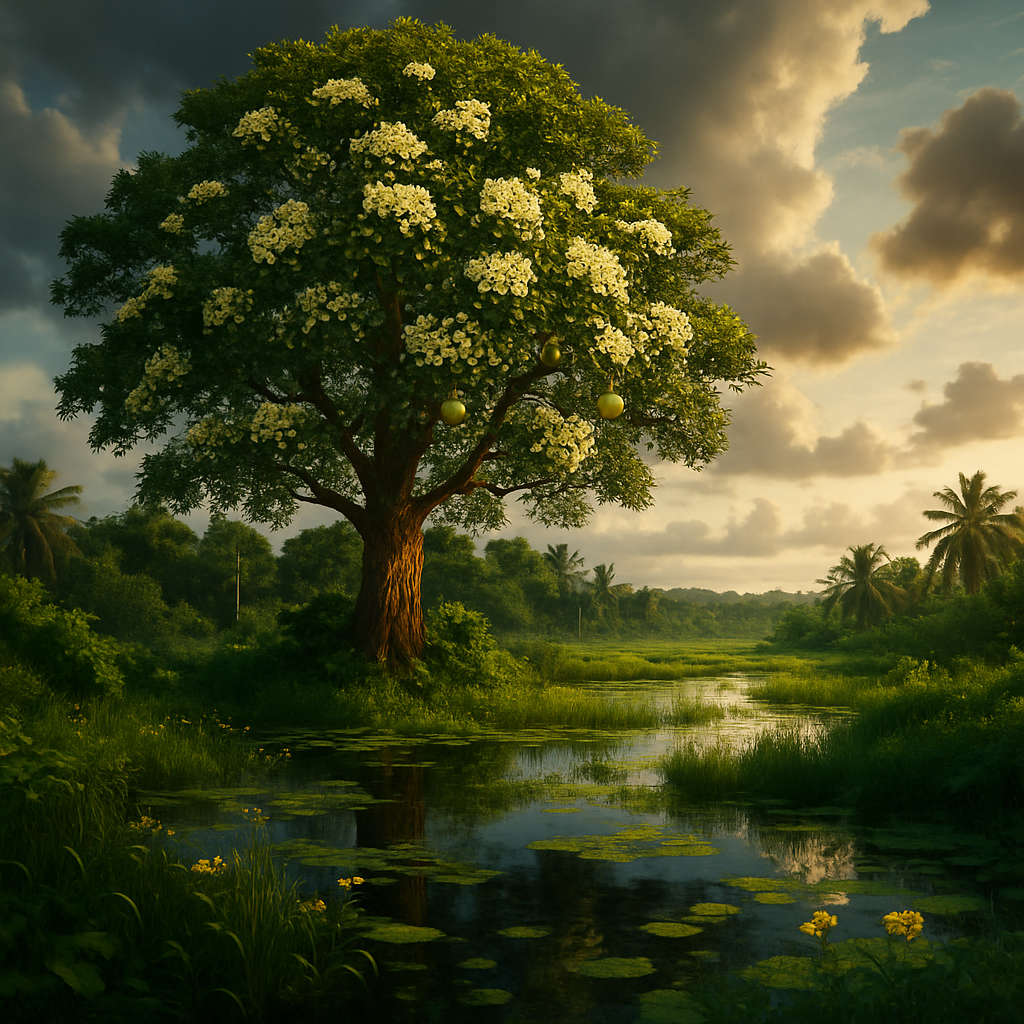
Deep within the serene yet cosmically challenging wetlands of South Thailand, a botanical marvel has emerged, forging its tale within the lush, green narratives of nature. This isn’t just any discovery—it’s a revelation, a proclamation, a veritable shout from the soft, verdant corners of Surat Thani province that mother nature still holds countless secrets. Unearthed in the heart of the flood-prone region near the Tapi River in Khian Sa district, a rare tree species now stands amid scholarly applause and cautious whispers. Named "Tharathum," this poetic moniker, born from the Thai words for water (‘thara’) and tree (‘tham’), pays homage to its watery birthplace, symbolizing its indomitable spirit and delicate charm.
Leading this botanical escapade is the intrepid Doctor Chatthida Wiya, a dedicated plant taxonomist at the Botanical Garden Organisation. Her efforts are in fine company, with partners from Chiang Mai University, Kasetsart University, the Department of National Parks, Wildlife and Plant Conservation, and the Department of Agricultural Extension accompanying her on this green crusade. Their exhilarating findings drew back the curtain on May 1, dancing gracefully onto the pages of the journal Plant Systematics and Evolution.
The new hero of this tale is scientifically christened Sageraea multiovulata Wiya, Sinbumr. & Chaowasku, a towering tribute to its majestic lineage within the Annonaceae family and the Sageraea genus. A vertical spectacle at 18 metres, the Tharathum adorns itself with creamy to pale yellow blossoms and guards large, yellowish-green fruits that dangle like jewels in its leafy tiara. Yet, the true gem lies within its ovaries—each cradling between 19 and 20 ovules, a numerical wonder unmatched within its genus that ordinarily ranges a modest five to 12. Serving nature's higher purpose, this tree thrives in extremes, bathing serenely in river waters for nearly half the year, and timing its seed dispersal with the October floods to perfection—a sublime synergy of life and flow.
However, like many of nature’s treasures, Tharathum now stares into the abyss of endangerment, already classified as "Critically Endangered." Its sole habitat, a single wetland, is slowly being encroached upon by relentless rubber and oil palm plantations, a reality punctuated by the Bangkok Post. Yet, hope springs eternal through conservation efforts, with local supporters and the Botanical Garden Organisation rallying to this noble cause. “We’re nurturing saplings at the Queen Sirikit Botanic Garden in Chiang Mai,” shares Dr. Chatthida, eyes fixed on a horizon of hope, part of a long-term strategy to shield this wonder from oblivion.
While commercial prospects for Tharathum presently remain untapped, researchers see tantalizing potential. “Given time and study, we might uncover compounds promising sustainable conservation through economic value,” they muse, eyes alight with possibility.
In a time where headlines echo tales of human follies and triumphs, perhaps it’s fitting that nature has its moment in the spotlight—a reminder of the mysteries still tethered to our earthly realm, waiting in hushed shadows to be discovered.



Comment verification
Step 1 of 3
Verify your email once to publish your comment. Your email is never shown publicly.
Enter the 6-digit code sent to .
Choose the display name shown next to your comments.