Trial Traffic Lights at Pattaya's Thepprasit–Koh Phai Spark Gridlock
The new traffic lights at Pattaya’s Thepprasit–Koh Phai intersection were supposed to be the calm, rational answer to congestion and danger — a city-led trial meant to tame a notoriously tricky junction. Instead, the…
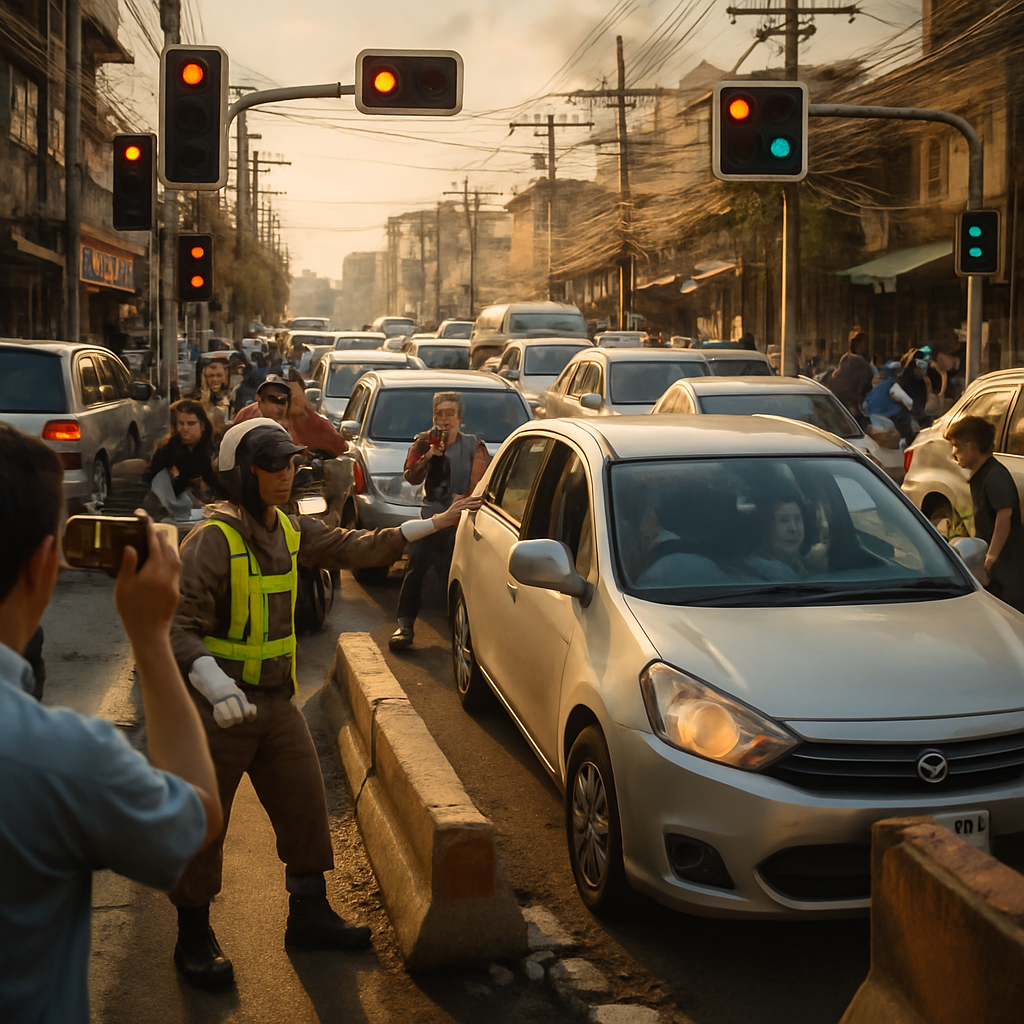
The new traffic lights at Pattaya’s Thepprasit–Koh Phai intersection were supposed to be the calm, rational answer to congestion and danger — a city-led trial meant to tame a notoriously tricky junction. Instead, the junction has become a stage for automotive exasperation, social-media theater and a very public argument about whether blinking beacons can replace human common sense.
Drivers and residents have flooded comment threads with tales of gridlock so slow it tests the limits of passenger patience. One fed-up motorist summed it up bluntly: “With three lanes, one for U-turns and one blocked by parked cars, we’re left with just one lane. Traffic barely moves.” Another commuter — a parent who uses the route daily — said it turned a routine school run into an epic: “Today it took two hours to get through an area that normally flows smoothly.”
Those two hours are the kind of detail that makes everyone grimace. You can almost sense the clocks ticking as impatience and irritation build: horns, hand gestures, and the kind of creative lane‑shuffling usually reserved for action movies. The common refrain isn’t merely that the lights are inconvenient; critics say the trial was rushed and under-researched, a digital-age solution plonked down without enough real-world testing.
“This is a classic case of a plan that looks good on paper but fails on the road,” a resident told local outlets. The phrase is hard to argue with when drivers report yellow-light snubs, red-light zone intrusions and the sort of chaotic cross-blocking that makes intersections resemble playgrounds where nobody’s following the rules. “People ignore yellow lights and jump into the red-light zone, causing traffic to block from all directions. It’s chaos,” said one Pattaya resident.
Pedestrians haven’t been spared the fallout. Blocked walkways, uneven footpaths and a general lack of safe crossing points are stacking the risks against anyone on foot. “It’s not just drivers suffering — try walking here. The pavement’s a mess,” a local added. That complaint elevates the issue from commuter annoyance to public-safety problem: a traffic-signal trial loses its social license fast when sidewalk users are endangered or forced to take risky detours.
Not everyone is unsympathetic to the idea behind the lights. A handful of commenters acknowledged the trial’s underlying intent: if it prevents even a single serious accident, the effort has merit. “If this system prevents even one serious accident, it’s a win,” wrote one hopeful commuter — though they were quick to point out that the current timing and layout need serious revision.
So what went wrong? Observers point to several culprits beyond the mere existence of new lights: inadequate enforcement, poor road behaviour, parked cars eating into lane space and a configuration that hasn’t accounted for real driver habits. Critics argue that a little common sense — and some human traffic officers — might have gone farther than a rushed signal installation.
Suggestions bubbling up from the public and reported in local outlets include practical, low-tech fixes as well as engineering tweaks:
- Sync the traffic lights across the three nearby intersections so flow is continuous rather than a stop‑start gauntlet.
- Redesign U‑turn access to avoid a lane being monopolized by turning vehicles.
- Remove or reconfigure medians that create bottlenecks where traffic should be able to breathe.
- Improve enforcement and educate drivers about yellow‑light behaviour to prevent blocking cross traffic.
- Repair and clear pedestrian walkways to protect people on foot and reduce spillover onto the road.
There’s also the old-school option some residents prefer: station human traffic officers during peak hours. A uniformed officer can read a moment’s nuance that a timer cannot, nudging traffic when a lane is clogged or preventing a dangerous wave of red-light incursions. “Sometimes you need humans, not just flashing lights,” said one local.
City officials now find themselves under growing pressure to reassess the trial or scrap it altogether. Residents insist that any solution must be grounded in how people actually behave on the road, not just how engineers imagine they will. In a town as traffic‑prone as Pattaya, theory must be tested against the messy reality of parked cars, impatient drivers and families trying not to be late for school.
In the meantime, the Thepprasit–Koh Phai intersection remains a microcosm of a wider problem cities face worldwide: the tension between automated fixes and human unpredictability. Whether the lights will be retimed, redesigned or replaced by officers with whistles and reflective vests, one thing is clear — Pattaya’s residents want a solution that moves people forward, not one that keeps them stuck, staring at a blinking red and wondering where the common sense went.



Comment verification
Step 1 of 3
Verify your email once to publish your comment. Your email is never shown publicly.
Enter the 6-digit code sent to .
Choose the display name shown next to your comments.