Unlicensed Coconut Ice Cream Operation Shut Down in Nonthaburi
Just when you thought ice cream was all about summer smiles and sticky fingers, police in Nonthaburi served a very different scoop. A quiet two-storey rental in Sao Thong Hin, Bang Yai, was raided yesterday after…
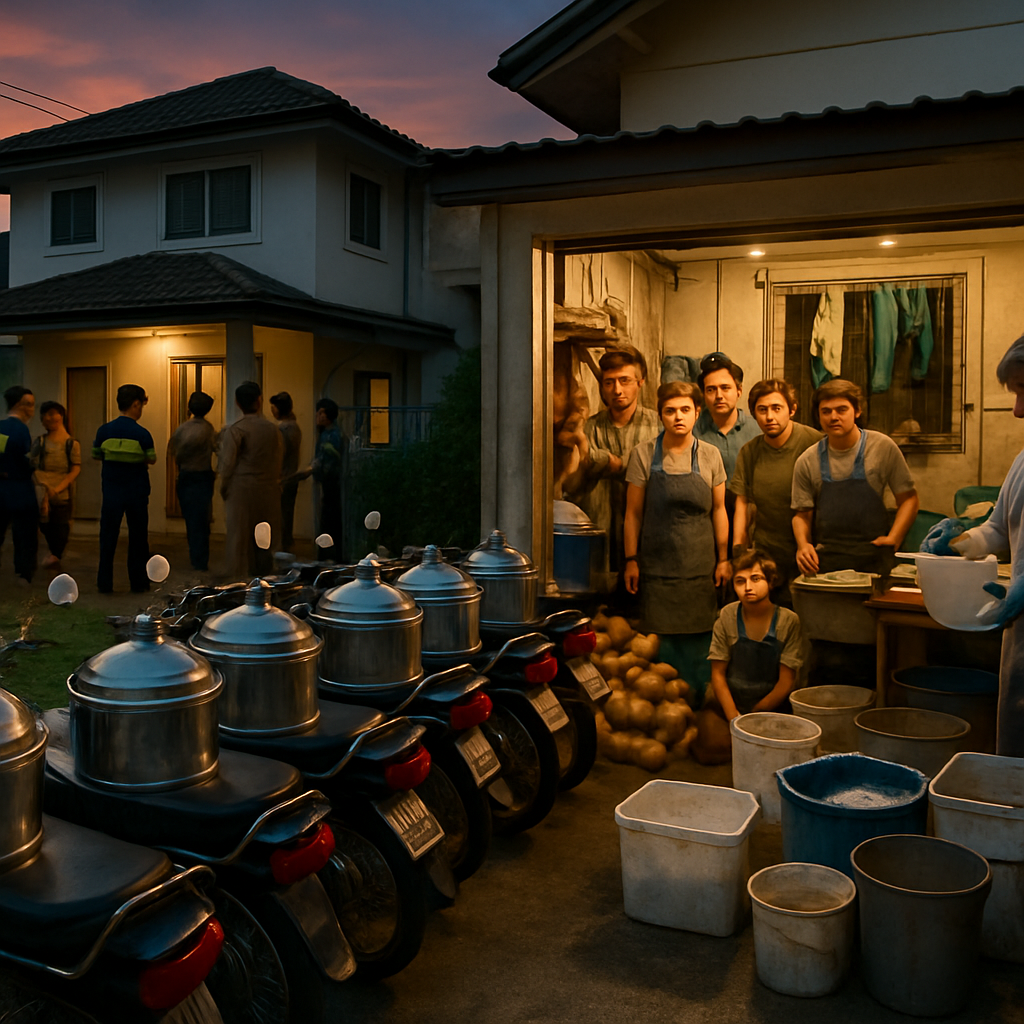
Just when you thought ice cream was all about summer smiles and sticky fingers, police in Nonthaburi served a very different scoop. A quiet two-storey rental in Sao Thong Hin, Bang Yai, was raided yesterday after neighbours tipped off authorities that the house had been quietly converted into a small-scale, and apparently unhygienic, ice cream factory. What the officers found was equal parts ingenuity, risk and, frankly, questionable cleanliness.
Officers from the Bang Yai District Justice Centre responded to complaints that a group of foreigners had rented the property and turned it into an unauthorised production site. Outside the home, six motorcycle sidecars sat in a neat row — each retrofitted into makeshift ice cream carts with stainless-steel buckets bolted in place. Inside, six Vietnamese nationals (five men and one woman) were caught mid-production, churning out tubs of coconut-based ice cream intended for local sale.
Seized as evidence were an ice cream machine, roughly 100 coconuts, four tubs of dry ice and several utensils and containers. Video footage made during the raid reportedly showed food being prepared in close proximity to where the occupants washed and dried their clothes — a red flag for hygiene inspectors. Officers noted dirty stains on cooking tools and storage containers, and concluded the facility failed basic sanitary standards.
The group told police they had rented the house for 4,500 baht per month and had been living there for about two years. They said they learned the recipe and production techniques while working at an ice cream shop in Bangkok and decided to start their own small operation. Their method was simple and distinctly tropical: a mix of coconut milk, fresh milk and sugar, churned for about an hour, a pinch of salt for balance, then packed into tubs to sit for a day before being sold.
Financially, the venture was tiny. The suspects claimed profits of roughly 300–400 baht per day — enough to get by but not enough to justify sidestepping legal and health requirements. They also insisted they were unaware their activities were illegal. Police, however, have different concerns: aside from operating without the proper authorisations, the suspects are believed to be working illegally in Thailand and may have entered the country without proper documentation.
As a result, all six individuals face legal action. Authorities will also investigate the homeowner for allegedly renting the property to people who might be illegal migrants. Local officials from the Sao Thong Hin Municipal Health Department will examine whether these unregulated activities posed health risks to neighbouring residents.
There’s a wider picture here about small-scale food vendors and public safety. Turning a residential space into a food-production facility brings with it regulatory obligations for licences, food-safety training and sanitation that are designed to protect consumers. Even with the best intentions, producing food in a non-commercial environment can expose buyers to contamination risks — from improper storage and equipment to cross-contamination with laundry and household waste.
From an entrepreneurial perspective, the group’s story is one of resourcefulness. They took what they learned in Bangkok and attempted to make a living in the suburbs; the problem was the location, the conditions and the legal blind spots. The makeshift ice cream carts — clever, practical and photogenic — were undone by the very basics of public health that every food business must meet.
The social-media angle added some colour to the raid. Photos and clips shared online (credited to Facebook/โจโฉ) showed the converted carts and the cramped production space, fueling curiosity and concern among locals. In short order, the raid became not just a legal matter but a talking point around community safety and the grey area of informal economies.
What happens next will be telling. Authorities will press charges related to working without permits and potential immigration violations, while the homeowner could face scrutiny for renting to people suspected of entering the country illegally. Meanwhile, the municipal health department’s assessment will determine whether nearby residents were exposed to any health hazards and will likely guide follow-up inspections and possible clean-ups.
For people selling homemade food, this case is a cautionary tale. Good recipes and entrepreneurial spirit are not substitutes for licences, clear documentation and proper hygiene. For consumers, it’s a reminder to look beyond the charm of a local treat and consider how it was made. As for the six Vietnamese nationals, what began as a modest means of earning a living now lands them squarely on the wrong side of the law — and leaves a very sticky situation for local authorities to sort out.
Authorities continue their investigations, and the community awaits the municipal health department’s report. In the meantime, the lesson is simple: even the tastiest idea needs the right permits, clean facilities and a good dose of paperwork before it’s safe — and legal — to sell.



Comment verification
Step 1 of 3
Verify your email once to publish your comment. Your email is never shown publicly.
Enter the 6-digit code sent to .
Choose the display name shown next to your comments.