Vishnu Statue Near Thai–Cambodian Border Sparks India Boycott Calls
What started as a few seconds of shaky phone footage has snowballed into a full-blown online storm. A video that went viral across X and Instagram appears to show heavy machinery partially demolishing a statue of Lord…
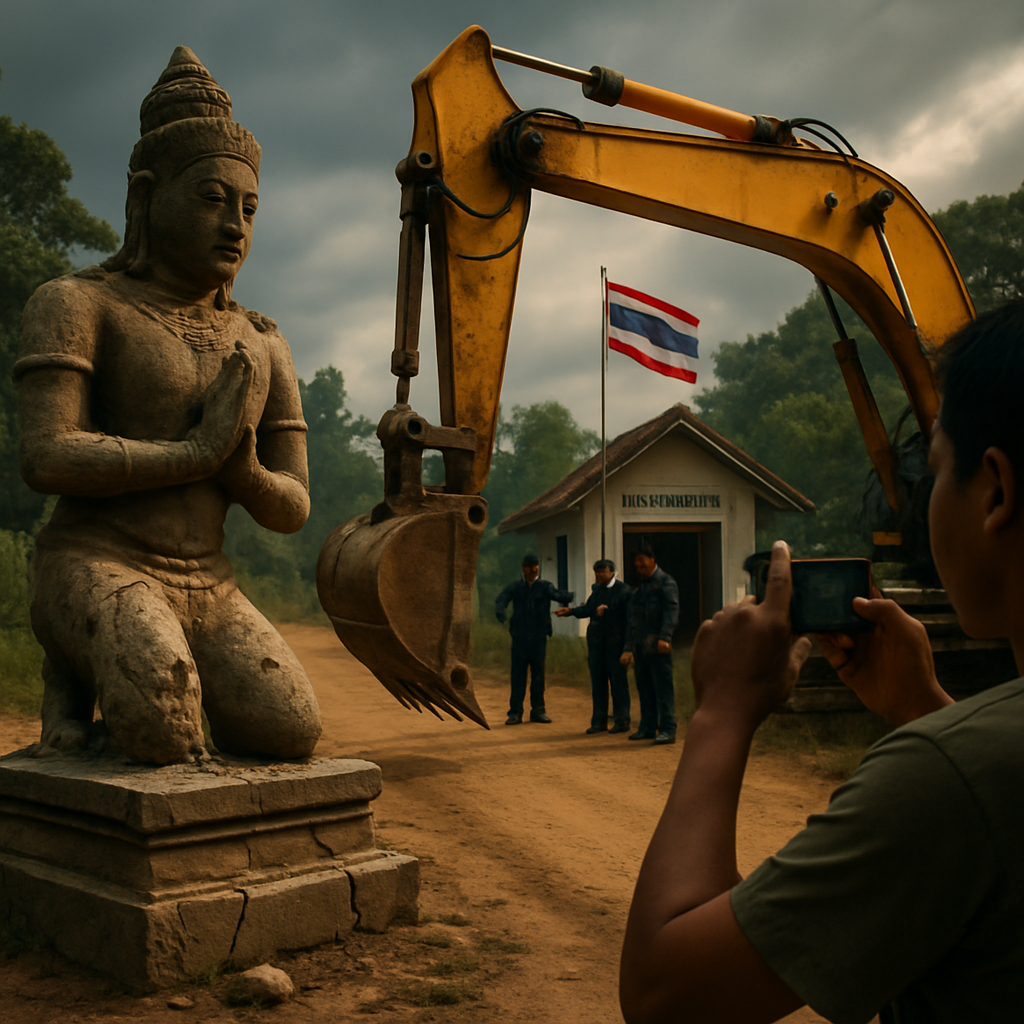
What started as a few seconds of shaky phone footage has snowballed into a full-blown online storm. A video that went viral across X and Instagram appears to show heavy machinery partially demolishing a statue of Lord Vishnu near the Thai–Cambodian border — and within hours hashtags like “Boycott Thailand” and “Boycott Pattaya” were trending among Indian social media users.
The statue, according to Indian media reports citing local sources, was erected in 2014 in Cambodia’s An Ses area, roughly 100 meters from the Thai border. The clip’s spread ignited furious reactions from many who interpreted the images as an affront to Hindu religious sentiment. Calls circulated urging Indian tourists to cancel bookings, boycott Thai businesses and apply economic pressure until answers were provided.
From viral clip to hashtag rebellion
Social media’s outrage moved fast. Within hours the simple act of sharing a two-minute clip escalated into national indignation for some — a classic example of how a single video can take on a symbolic life of its own. Posts framed the demolition as an attack on Hindu heritage, while a few narratives linked the footage to longstanding border tensions between Thailand and Cambodia. The emotional mix made for a combustible online environment: religious sensitivity blended with geopolitical history and a dash of travel-fueled patriotism.
Whether motivated by devotion, nationalism or just plain outrage, the immediate effect was plain to see — suggestions to cancel trips, pressure tourism operators and boycott Pattaya began to trend. Travel-related businesses in Thailand watched nervously as the wave gathered momentum, even as authorities scrambled to clarify the situation.
Thai clarification — “not meant to target religious symbols”
Thai officials were quick to respond through the Thai–Cambodian border press center, saying the scene shown in the video was part of an area management and security operation, and was not intended to disrespect any faith or sacred object. Their statement said the statue had been built on disputed land and that actions taken fell within Thailand’s claimed jurisdiction. Authorities expressed regret for any misunderstanding or discomfort the images caused and urged people not to interpret the incident as a religious matter.
The Thai response attempted to shift the lens from religion to jurisdiction: a land-management explanation rather than a cultural or religious affront. For some observers this was a calming hand; for others it read as anodyne damage control.
Cambodian authorities push back
Cambodia’s local officials did not accept that framing. A spokesperson for Preah Vihear authorities told local media that Cambodia condemns the destruction of statues and temples revered by both Buddhists and Hindus. They maintained the statue lay within Cambodian territory and emphasized its cultural importance across religious communities. That rebuke underscored how the incident sits at the intersection of cultural sensitivity and a fractured border narrative.
Tensions at the border — more than a single incident
This episode arrives against a backdrop of historically fraught ties along sections of the Thai–Cambodian frontier, where territorial disputes flare up intermittently and stir public passions on both sides. When an object as visible and symbolic as a religious statue is involved, events can quickly move beyond local officials and become matters of national sentiment.
So far there have been no travel advisories issued by either India or Thailand. Thai tourism authorities had not commented on potential impacts to Indian visitors at the time of reporting. But in the social media age, perceptions — particularly when fuelled by viral content — can be as consequential as formal diplomatic notes.
The era of instant escalation
What the incident illustrates is less about who was right or wrong in a complex borderland dispute, and more about how disputes are amplified today. A short clip, a handful of angry captions and a trending hashtag can move public opinion faster than embassies can arrange press briefings. For tourism-dependent locales like Pattaya, that speed can translate directly into economic anxiety.
At the same time, the reactions underline the deep cultural ties and sensitivities that transcend national borders in Southeast Asia. Symbols matter. So do the narratives people build around them — and those narratives are increasingly constructed in public, in real-time.
Takeaway
Until a clear, mutually accepted investigation is published or the governments involved reach a definitive common account, the video will remain a flashpoint — a reminder of how fragile border narratives can be and how quickly social media can turn local incidents into international controversies. For now, cooler heads and careful diplomacy will matter more than trending hashtags. The simplest, most constructive step may be to wait for verified facts while respecting the cultural importance this statue appears to hold for many.
Source: Times of India.



Comment verification
Step 1 of 3
Verify your email once to publish your comment. Your email is never shown publicly.
Enter the 6-digit code sent to .
Choose the display name shown next to your comments.