Wishulada Panthanuvong: Transforming Waste Into Art and Social Change in 2025
The realm of art laid a roadmap for Wishulada Panthanuvong, an industrious artist whose journeys have been animated by the colorful canvas of recycling and creativity. Growing up under the care of parents who were…
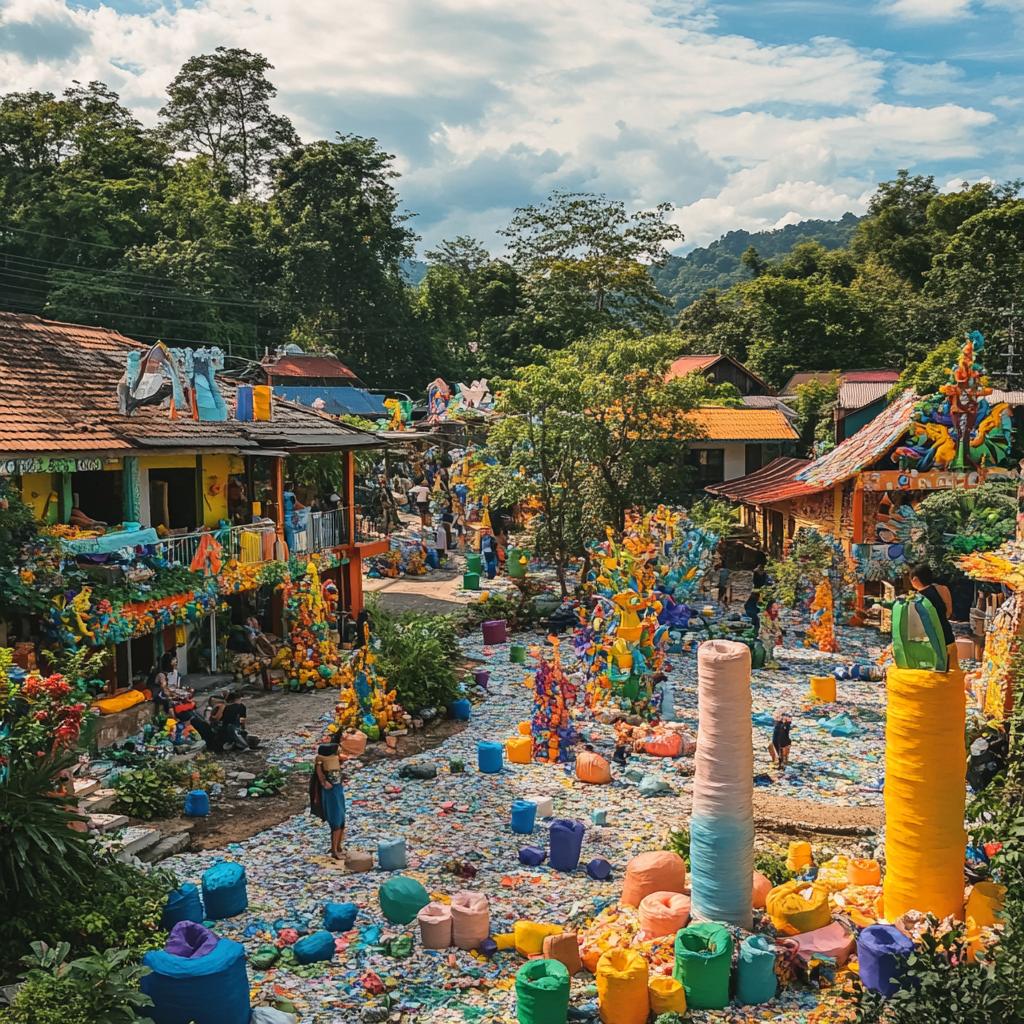
The realm of art laid a roadmap for Wishulada Panthanuvong, an industrious artist whose journeys have been animated by the colorful canvas of recycling and creativity. Growing up under the care of parents who were remarkable at scouring the hidden potential in discarded materials, Wishulada found herself in a world where reinvention wore the crown of everyday life. "When our house underwent renovation, my parents salvaged wooden fragments, crafting them into unique pieces of furniture. Where others saw emptiness in emptied syrup bottles, my parents saw potential and repurposed them with finesse," Wishulada reminisced, her voice tinged with learned wisdom.
Inquisitiveness soon crept into her views on everyday resourcefulness. "Why the inclination to reuse?" she'd often asked herself. The answer she found was as elegant as it was compelling – the discarded could also hold undiscovered worth. As her childhood home overflowed with these exciting materials, she found her own artistic propensity leaned more towards mixed media creations. Unlike her college peers at Chulalongkorn University's Faculty of Fine and Applied Arts, who zealously expressed their visions with paints, Wishulada stood out with sculptural compositions made from the world’s remnants.
Her passion and talent bore fruit when a piece from her thesis, birthed from recycled materials, caught the discerning eye of an art collector and was whisked away into a collection.
"Working with diverse materials is my haven. Each one—be it cloth, treasured metals, or humble plastics—offers a dance of textures and possibilities that kindle my imagination constantly," she declared with brimming enthusiasm.
While her solo endeavors carved significant strides in the artistic community, a remarkable turn came when Wishulada took to the streets—quite literally. Her speaking engagements in communities such as Khon Kaen and Chai Nat were more than just lectures; they were invigorating missions to illustrate why waste should be sorted and stored strategically. Connecting local environmental issues with quotidian life, she sparked a dialogue that resonated deeply. When explaining these principles, she noted, "These are not just distant problems; they directly affect them, and that realization fosters change."
Her community projects thrived as she transformed local waste into extraordinary art. In Khon Kaen, the saga of silk scraps left from traditional production often ended in charred ashes, but Wishulada's interventions breathed new utility into these delicate leftovers. Innovation danced around her and the locals as they fashioned silk scraps into valuable small products. Meanwhile, in Rai Pattana, Chai Nat, her collaboration with villagers wielded snack bags as their medium, sculpting artificial flowers that rivaled any garden’s offerings. She guided them in curbing environmentally hazardous spray paint and excessive glue, making the art process as green as the leaves on a tree. "The result was splendid and overwhelming; their waste was turned into a bloom of creativity," Wishulada expressed, recalling how these ventures flourished so zestfully that the village soon sought waste snack bags from neighboring areas to sustain their art.
"Together, we can weave threads of change," she mused. "Though our footprint may feel small now, it could blossom into a widespread movement. Imagine a 'One Tambon, One Waste Material' initiative—a dream I would gladly vouch for at the governmental level."
Her ventures escalated to finer artistic flights when, just last year, Bangkok Art Biennale—a pinnacle of Thailand's art festivals—hosted her installation, "The Illusion Of Beauty And The Price of Consumption: A Plastic Elegy." With a striking conceptual portrayal of monsters suffocated within plastic enclosures, the piece adeptly critiqued the shadows of overconsumption. Her more recent opus, "Adaptation: The Coexistence Of Trace And Transformation," exhibited her prowess in reimagining construction offcuts like steel, pipes, and bricks into transformative art pieces.
Self-identified as a crusader of social change harnessed through art, Wishulada’s works resonate with a symphonic advocacy of environmental awareness. "I firmly believe art can morph the societal landscape," she said, her gaze an archipelago of hope and determination. "My art aspires to inspire—showing how waste can morph into creative expressions and how dismissed objects can be reborn as either functional artifacts or ornamental wonders."



Comment verification
Step 1 of 3
Verify your email once to publish your comment. Your email is never shown publicly.
Enter the 6-digit code sent to .
Choose the display name shown next to your comments.