Thailand

Xiao, 8, Drowns at Phi Phi Island’s Arida Beach — Investigation Underway

The turquoise promise of Phi Phi Island turned tragic this week when eight‑year‑old Xiao, a young Chinese tourist, drowned after being allowed into the water without a life jacket despite not being able to swim. The…
Xiao, 8, Drowns at Phi Phi Island’s Arida Beach — Investigation Underway

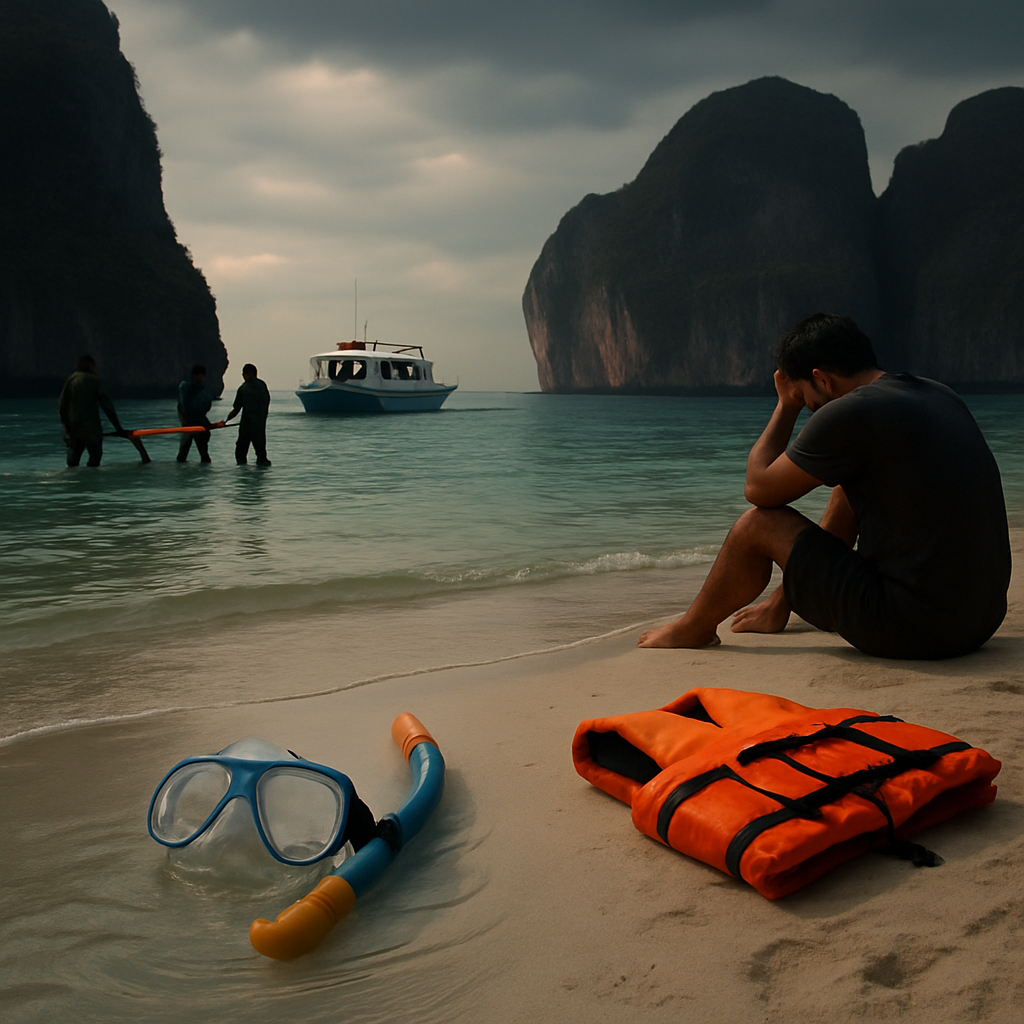
The turquoise promise of Phi Phi Island turned tragic this week when eight‑year‑old Xiao, a young Chinese tourist, drowned after being allowed into the water without a life jacket despite not being able to swim. The heartbreaking incident—reported by KhaoSod—unfolded on a sunny afternoon at Arida Beach in Ton Sai Bay and has left both visitors and local officials reeling.

According to police and rescue reports, Xiao and his father arrived on Phi Phi Island via a tour company and stopped for lunch at Chong Khao Bungalow between 1:00 p.m. and 2:10 p.m. After lunch, at about 1:55 p.m., the pair went to Arida Beach. The father sat on the shore; the boy wore only a snorkeling mask and a breathing tube. Despite the father’s knowledge that Xiao could not swim, the child was allowed into the water without a life jacket.

Not long after, around 2:00 p.m., the father noticed that his son’s snorkeling equipment was missing from the surface. A frantic search followed. At approximately 2:05 p.m., Xiao was found unresponsive in the water and rushed to Phi Phi Island Hospital, where medical staff attempted resuscitation. Doctors later pronounced the boy dead at 3:18 p.m.

Later in the evening, at 8:39 p.m., the Phuket Kusoldharm Foundation rescue team was dispatched to AA Pier in Chalong, Mueang district, to transport the boy’s body to the forensic department at Vachira Phuket Hospital. Police Lieutenant Apilak Suwannalikhit of Phi Phi Police Station in Krabi province led the investigation; the Chinese embassy was also notified to assist with consular procedures and communication with the family.

This tragedy serves as a somber reminder that beach days carry risks—even in paradise. Local authorities are now investigating the circumstances surrounding the incident, including why a non‑swimming child was allowed into open water without a personal flotation device. While details of the investigation are being clarified, the community and the island’s many visitors are grappling with the emotional fallout.

In a different but equally tragic incident reported the same day, a 42‑year‑old man in Uthai Thani slipped into a pond and drowned while urinating at the water’s edge. Emergency responders recovered his body as family members looked on. Though the two events differ in setting and circumstances, both are stark reminders of how quickly water can become a deadly threat.

For parents, tour operators, and travelers, the incidents reinforce timeless, practical water‑safety rules:

  • Life jackets save lives: Never allow children or non‑swimmers into open water without a properly fitted life jacket.
  • Constant supervision: Active, arm’s‑length supervision is essential for young children near the sea, pools, and ponds.
  • Respect local conditions: Tides, currents, and underwater terrain vary—what looks calm can harbor undertows or sudden drop‑offs.
  • Use appropriate gear: Snorkel equipment helps with breathing and seeing underwater but is not a substitute for buoyancy aids.

Phi Phi’s beaches attract visitors worldwide for their striking scenery and crystal waters, but these alluring images can obscure real risks. Tour companies, hotels, and local authorities can play an important role in preventing future tragedies by emphasizing safety briefings, keeping life jackets readily available, and ensuring staff are trained in water rescue and first aid.

As investigations proceed and families begin to process their loss, visitors to Thailand’s islands are urged to treat safety as seriously as they do sightseeing. The Phuket Kusoldharm Foundation, Phi Phi Island Hospital, and local police teams acted swiftly; their efforts reflect the broader emergency‑response network that supports the islands. Still, the most effective safety measure is prevention—through vigilance, preparedness, and common sense.

For now, Phi Phi Island mourns. Authorities will provide updates as forensic examinations at Vachira Phuket Hospital conclude and as the investigation led by Police Lieutenant Apilak Suwannalikhit continues. The Chinese embassy remains involved to help the family with next steps.

To everyone planning a beach trip: cherish the sunshine, but respect the water. It is beautiful, it is inviting—and, as these recent events sadly show, it can also be unforgiving in an instant.


40Comments
Sort by:
LDLarry D··1 pts · 3 replies
LD
Larry D
This is heartbreaking, and the dad looks like he made a tragic mistake by letting his non‑swimming child into the sea without a life jacket. Tour companies should never let kids go into open water unprotected. There needs to be accountability here.
1
Ggrower134··1 pts
G
grower134
Accountability is easy to demand after the fact, but who enforces it on every island packed with tourists? Blaming one person ignores the pressure on tour operators to keep guests happy and not lose business.
1
ACAnna Chen··1 pts
AC
Anna Chen
No—it’s not just pressure. Parents still have a duty of care. The father knew the child couldn't swim yet he allowed it. That is negligence, plain and simple.
1
LDLarry D··1 pts
LD
Larry D
I get that tourism puts pressure on businesses, but that doesn’t absolve the father. When a child’s life is at stake, the default should be safety before photos or fun.
1
MLMei Ling··1 pts · 3 replies
ML
Mei Ling
As a parent this makes me sick. I understand accidents happen, but this feels preventable with common sense and a life jacket. I worry about how often this happens without the media finding out.
1
Ssarah··1 pts
S
sarah
My school taught us to never go in water without a life jacket if you can't swim. Why would anyone risk it for a quick snorkel?
1
DADr. Arjun Patel··1 pts
DA
Dr. Arjun Patel
From a public health perspective, this incident highlights systemic failures: lack of enforcement, insufficient signage, and perhaps inadequate safety briefings from the tour company. Individual behavior matters, but so do institutional protocols.
1
MLMei Ling··1 pts
ML
Mei Ling
Exactly, Dr. Patel. It's both personal and systemic. We should pressure tour operators and local authorities to do better and educate visitors.
1
AAlex··1 pts · 2 replies
A
Alex
I blame the tour company for not insisting on life jackets for kids. If they want to be in the business of taking people to water, they should carry responsibility.
1
Ttourguide_tom··1 pts
T
tourguide_tom
As someone who works in tourism here, tour companies do provide life jackets but guests sometimes refuse them. We try to advise, but enforcement is tricky without scaring customers away or creating fights.
1
AAlex··1 pts
A
Alex
Then staff should refuse service or stop people from entering the water without proper gear. Hospitality doesn't mean risking lives for a daytrip.
1
SSarah··1 pts · 2 replies
S
Sarah
This is sad. Life jackets save lives, adults should watch kids better, and snorkels aren't life vests. Why do people keep learning this lesson the hard way?
1
PParent101··1 pts
P
Parent101
Because in vacations people relax their guard and assume 'nothing will happen.' Prevention needs planning, not just good intentions.
1
SSarah··1 pts
S
Sarah
Yep. Vacation brain is real, but it shouldn't cost a child their life.
1
DADr. Arjun Patel··1 pts · 2 replies
DA
Dr. Arjun Patel
We should consider the role of local environmental factors: tides, currents, and underwater topography can create deceptively dangerous conditions. Safety protocols need to be tailored to local maritime risks, not generic checklists.
1
MMarco··1 pts
M
Marco
So do you suggest banning kids from beaches in certain areas? That seems extreme and unrealistic for tourist economies that rely on beach access.
1
DADr. Arjun Patel··1 pts
DA
Dr. Arjun Patel
Not bans, but targeted measures: mandatory flotation devices for non‑swimmers, clear signage about currents, trained lifeguards during peak hours, and mandatory briefings on conditions when boats drop visitors off.
1
Ggrower134··1 pts · 2 replies
G
grower134
The Chinese embassy was involved—expect lots of diplomatic back-and-forth. But what about local accountability? Are prosecutions even possible in these cases? It feels like tourists always get a special kind of tragedy coverage.
1
XXiao'sDad?··1 pts
X
Xiao'sDad?
As a father I don't want to judge another parent's grief publicly. But if I were in that situation I'd want to know why my child was allowed in the water without a flotation device.
1
Ggrower134··1 pts
G
grower134
Fair point. I'm just suspicious of narratives that stop at condolences and never reach policy change. Condolences are fine, but prevention is better.
1
LWLing Wu··1 pts · 3 replies
LW
Ling Wu
This is a call to action for Thai tourism authorities to mandate life jackets on beaches and at all tour landing points. Safety should not be optional for visitors.
1
Ttourguide_tom··1 pts
T
tourguide_tom
Mandates sound great on paper but they add costs and bureaucracy. Small operators might go under and tourists might pay more. There's a balance to strike.
1
LWLing Wu··1 pts
LW
Ling Wu
If price hikes save lives, raise the price. Economies can absorb safety investments; human lives are worth it.
1
Ttourguide_tom··1 pts
T
tourguide_tom
You're right that safety matters, but implementation needs support: subsidies for small operators, training programs, and realistic timelines to avoid harming local livelihoods.
1
OOfficerA··1 pts · 2 replies
O
OfficerA
Investigations matter, but they won't bring the child back. Still, transparency about findings is crucial to prevent similar tragedies. I hope the police release timeline and evidence slowly and respectfully.
1
KKen··1 pts
K
Ken
Slow releases usually mean officials are hiding something. Quick transparency might hurt tourism less than long, opaque investigations that stoke rumors.
1
OOfficerA··1 pts
O
OfficerA
Transparency needs to be balanced with forensic integrity. Rushing statements can compromise evidence and lead to wrongful conclusions.
1
PPriya··1 pts · 2 replies
P
Priya
Two drownings in one day in different settings show how unpredictable water can be. We need global campaigns about basic water safety for travelers, not just local leaflets.
1
ZWZhang Wei··1 pts
ZW
Zhang Wei
Global campaigns are fine, but information gaps remain for unaware travelers. Language barriers and cultural differences make one-size-fits-all messaging less effective.
1
PPriya··1 pts
P
Priya
Agreed, translations and culturally sensitive materials should be a standard part of travel advisories and tour briefings.
1
KKen··1 pts · 3 replies
K
Ken
The second incident about the man urinating and drowning sounds almost absurd until you think about it. Alcohol and risky behavior near water are a lethal combo, and people underestimate that.
1
MMaya··1 pts
M
Maya
It's not absurd; it's tragic. People laugh at weird headlines but forget these are grieving families. Mocking doesn't help.
1
KKen··1 pts
K
Ken
I didn't mean to mock. My point is risk perception is skewed and we need better education on seemingly mundane hazards.
1
MMaya··1 pts
M
Maya
Fair enough. Education should include common-sense scenarios like that one, especially in rural areas with unguarded ponds.
1
ZWZhang Wei··1 pts · 2 replies
ZW
Zhang Wei
The media loves sensational beach photos and then runs headlines about tragedy. There should be more nuanced reporting that focuses on prevention rather than just shock value.
1
Ggrower134··1 pts
G
grower134
Nuance gets fewer clicks. Unfortunately, prevention stories don't drive ad revenue like dramatic deaths do, which skews coverage priorities.
1
ZWZhang Wei··1 pts
ZW
Zhang Wei
That's a depressing but accurate observation. Still, journalists have a duty to at least include safety context and expert advice in these pieces.
1
PParent101··1 pts · 2 replies
P
Parent101
As a parent I also felt guilty reading this, but public shaming won't help the family. We should focus on constructive policies like free child life jackets at every beach kiosk.
1
ACAnna Chen··1 pts
AC
Anna Chen
Free life jackets are great, but if parents won't put them on their kids, policy alone fails. There must be enforcement and community norms that prioritize safety.
1
PParent101··1 pts
P
Parent101
Enforcement works if combined with design—make jackets easy to wear and comfortable, and include short demos with every rental or tour.
1
