Yala Delivery Crisis: Warehouse Parcel Backlog After Mass Resignations
Chaos quietly stacked itself into neat cardboard piles inside a Yala warehouse on December 28, as tens of thousands of parcels sat waiting — some for days, others for an unknown stretch — while frustrated customers,…
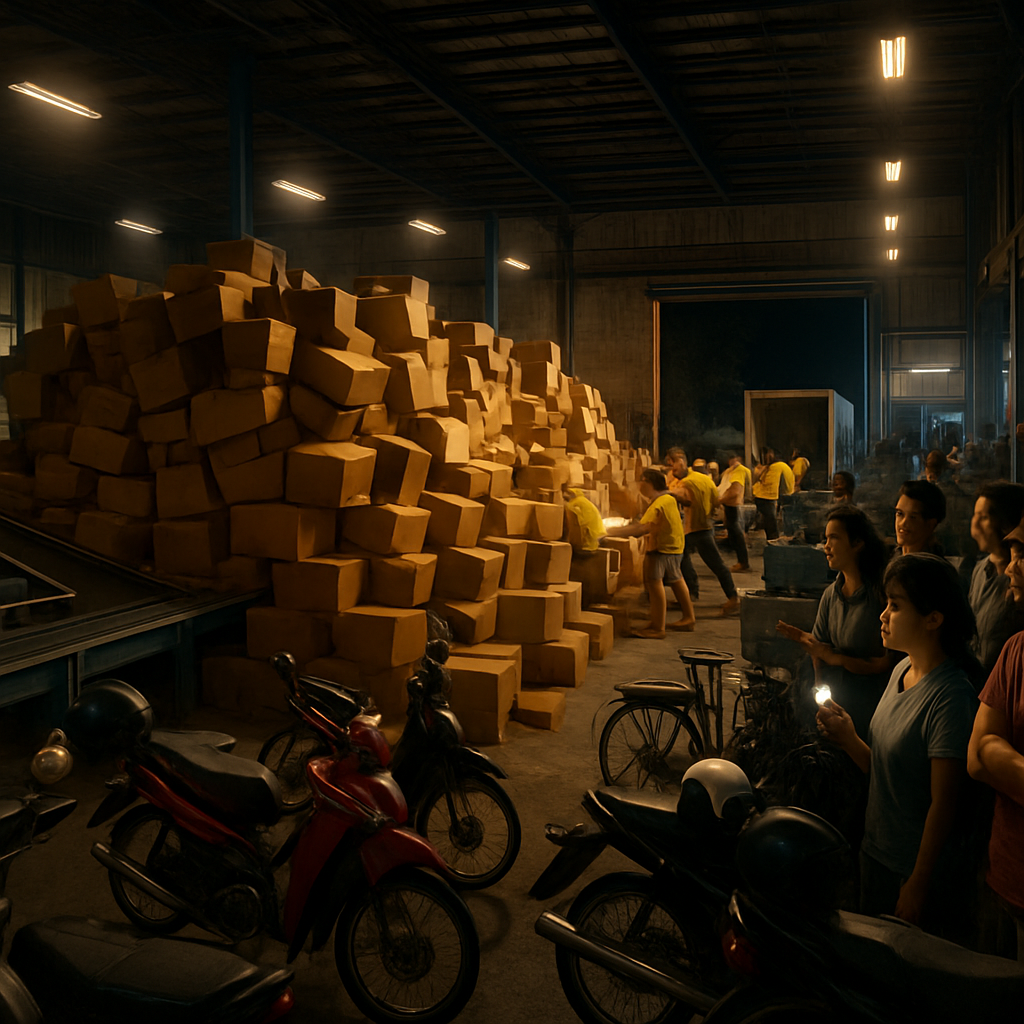
Chaos quietly stacked itself into neat cardboard piles inside a Yala warehouse on December 28, as tens of thousands of parcels sat waiting — some for days, others for an unknown stretch — while frustrated customers, reporters and local officials scrambled for answers. What began as delivery delays rapidly ballooned into a full-blown logistics crisis after a sudden mass resignation of delivery drivers and sorting staff effectively ground operations to a halt at a major shipping company’s regional hub.
Inside the backlog: a warehouse full of questions
Reporters who toured the facility found corridors of boxes crammed into sorting bays and storage areas, a visible sign that last-mile delivery had become last-mile limbo. With far too few hands left to process incoming shipments, the inflow of packages quickly outpaced any ability to move them onward. Customers told of missed delivery dates, tracking updates that froze mid-transit, and phone lines that went unanswered — or worse, looped back to generic promises of “we’re working on it.” Some consumers, tired of automated replies, drove to the warehouse themselves hoping to reclaim purchases that had vanished into the stacks.
What went wrong: the human factor
Sources inside the company and local residents attributed the meltdown to a sudden wave of resignations among delivery riders and sorting personnel. Whether driven by pay, working conditions, scheduling or a mix of grievances, the exodus exposed a hard truth about modern logistics: even the slickest systems still depend on people. When manpower evaporates, technology and conveyor belts can only do so much. With the essential human cogs gone, parcel sorting slowed to a crawl and last-mile delivery was pushed to the brink.
Public reaction and mounting pressure
Online, the incident lit up social media. Angry customers demanded transparency and compensation; critics pointed fingers at the company’s labor practices and emergency planning. Locally, officials said they were monitoring the situation closely. The scale of the backlog — measured not just in boxes but in household inconvenience, missed gifts and stalled small-business sales — elevated the problem from a corporate hiccup to a community concern.
What authorities and the company are considering
Behind the scenes, multiple emergency options are being explored. Reported measures under discussion include temporary staffing support (possibly through third-party providers), redistributing parcels to nearby hubs to balance workloads, and internal management reviews to identify bottlenecks and restore normal flow. The shipping company has not released a full public accounting of the incident but has said it is working to resolve the backlog “as quickly as possible.”
Why this matters beyond Yala
The Yala warehouse stoppage is more than a local news item — it’s a reminder of how fragile the modern supply chain can be when labor becomes the weak link. Online shopping has woven parcel delivery into daily life; consumers expect speed and predictability. When that expectation breaks down, the ripple effects touch small businesses that depend on reliable couriers, families waiting on crucial items, and the public trust in logistics brands. The incident underscores the need for contingency plans that go beyond algorithms: cross-training, scalable staffing agreements, and transparent customer communication protocols.
What customers want — and deserve
At the top of the public’s list are clear information, fair compensation for delays, and assurances that deliveries will resume without further disruption. People don’t just want their packages; they want to know what happened, why it happened, and how similar breakdowns will be prevented in the future. For many, the absence of timely updates has been as frustrating as the delay itself.
How this could be fixed — quickly and sustainably
- Short-term: mobilize temporary staff, re-route shipments to nearby hubs, and open a dedicated customer service channel with real-time updates.
- Medium-term: audit working conditions and workforce policies to address retention issues, and negotiate contingency staffing agreements.
- Long-term: diversify last-mile options (community lockers, pickup points, local micro-hubs) to reduce dependence on a single facility or workforce pool.
For now, Yala residents, affected customers and national observers are watching closely to see how fast the backlog can be cleared and whether the company transforms this setback into an opportunity for stronger operations. If handled transparently and decisively, the incident could prompt much-needed reforms across the industry. If ignored, it risks eroding consumer confidence just as deliveries become ever more central to daily life.
Whatever the outcome, December’s pile-up in Yala is a practical lesson: even in an age of slick tracking apps and overnight promises, the human element remains the backbone of logistics. When that backbone falters, the aftermath stacks up — cardboard tower by cardboard tower — until someone takes responsibility to sort it out.



Comment verification
Step 1 of 3
Verify your email once to publish your comment. Your email is never shown publicly.
Enter the 6-digit code sent to .
Choose the display name shown next to your comments.