Thai Tourism Minister Says Ordinary Holidaymakers Are Not Kidnap Targets After China Embassy Advisory
Surasak Phancharoenworakul says ordinary Chinese holidaymakers are not the people scam gangs try to move toward Myanmar, after the embassy warned of missing-person and job-lure cases.
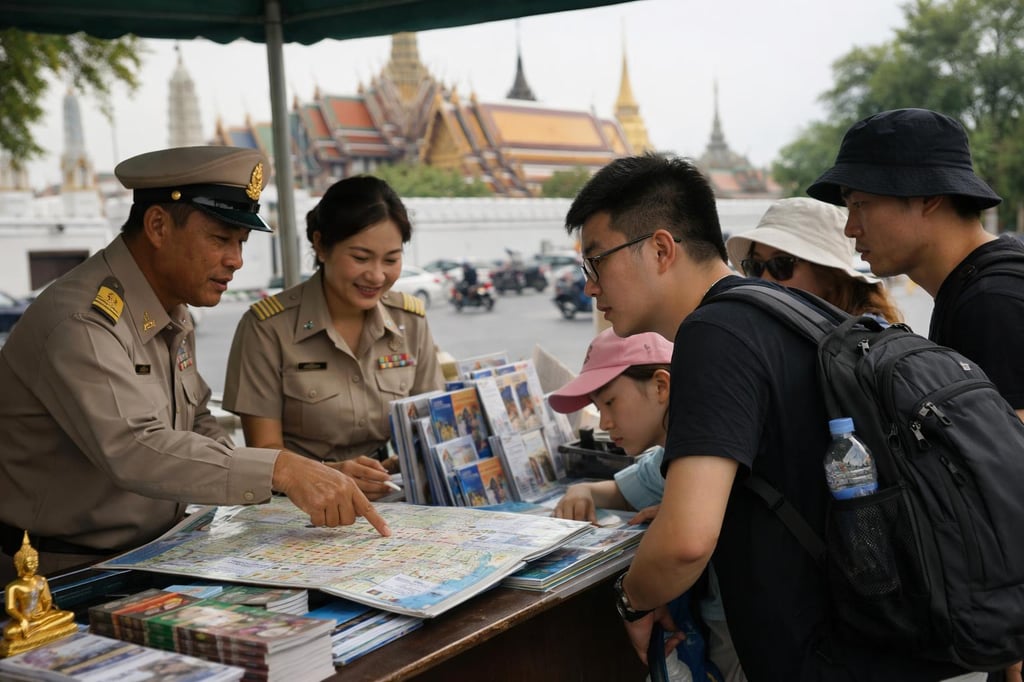
Tourism and Sports Minister Surasak Phancharoenworakul used a 20 October briefing at Government House to answer a Chinese Embassy safety notice that has unsettled operators who depend on China, still Thailand's largest inbound market. He said he was aware of the advisory, posted on the embassy website on 16 October, and drew a hard line between ordinary holiday travel and the job-lure cases that keep turning up on the Myanmar frontier.
The embassy did not tell Chinese citizens to cancel trips to Thailand. It did tell them to treat some journeys as higher risk. The 16 October notice described recent cases in which Chinese nationals lost contact after entering the country, were held against their will, or were deceived into onward travel toward the Thai-Myanmar border. Recruiters have used high-salary job ads, business inspection tours, investment partnerships, and project invitations as cover, with a further warning aimed at livestreamers and entertainers offered filming work.
That pattern sits on a known trafficking route. Scam compounds in Myanmar's Myawaddy belt, including sites visible from Mae Sot across the Moei River, have for years pulled in workers with fake digital-marketing and IT jobs, then moved them over unofficial crossings. United Nations reporting has put around 120,000 people in forced-scam conditions across Myanmar, and the UN Office on Drugs and Crime has estimated the regional fraud economy at close to US$40 billion a year. Thailand has cut power and fuel to some border complexes and helped move victims home. The embassy notice is a reminder that the pipeline is still open.
What Bangkok Told the Market
Minister Surasak's public case, recorded in a Royal Thai Government readout, was that Thailand already watches ordinary sightseeing closely, and that the known cases are not holidaymakers touring Bangkok, Phuket, or Chiang Mai being bundled into a car and driven bound to a border post. Where deception happens, he said, the approach often starts in the source country, and both the offenders and the people they target are frequently Chinese. Thai officers at official frontier checkpoints, he added, have been able to step in when people call for help. That is the minister's reading of the pattern, not a court finding.
He also conceded the reputational cost. A notice that mentions missing persons and illegal detention can land on Chinese social media as a general Thailand-is-unsafe story, even when the text is about recruitment scams rather than temple tours. Chinese arrivals remain a strategic market. The Tourism Authority of Thailand recorded 3,149,889 visitors from China between 1 January and 5 August 2026 and expects the full year to exceed five million, after 4.24 million Chinese arrivals through mid-December 2025. TAT's Trusted Thailand programme is built around safety messaging for exactly this reason.
The ministry's answer is coordination rather than a new statute. Surasak said Interior, Foreign Affairs, the Royal Thai Police, Tourist Police, Immigration, and TAT would tighten screening of job, investment, business, filming, and performance offers used as lures. Thailand, he said, would not accept being used as a transit corridor, operating base, or support zone for transnational crime, fraud, or trafficking. MOTS would also work more closely with the Chinese Embassy and push the Tourist Police 1155 line, which already answers in eight languages including Chinese, around the clock.
What This Means for Expats and Travelers in Thailand
If your trip is hotels, restaurants, islands, and licensed transport, the embassy notice is a caution about a parallel economy, not a verdict on walking around Chiang Mai. Use metered taxis from official ranks, airport rail, Grab, or hotel cars. Decline free rides from strangers and from acquaintances who appear only after you land. Do not hand over your passport, phone, or bank cards for safekeeping.
Treat unsolicited job, investment, or filming offers as a trafficking flag, not a side hustle, especially ads that promise airfare, free housing, no experience, and pay far above the market. Verify any employer in writing, independently, before you fly. If a contact you met only online wants to collect you at Suvarnabhumi or change the meeting point at the last minute, refuse. Keep a family member copied on flights, hotels, and daily plans, and stay reachable.
Treat Tak province, Mae Sot, and other Thai-Myanmar border districts as high-risk unless you have a documented, legitimate reason to be there. Refuse any itinerary that routes you toward unofficial crossings. If a friend or relative goes silent after entering Thailand, call the police on 191 with identity details, last contact, and last known location, and notify the relevant embassy. Tourist Police 1155 is staffed 24 hours in English, Chinese, Korean, Japanese, Russian, Hindi, German, and French. Emergency medical is 1669. The Chinese Embassy consular line in Bangkok is +66-2-245-7010. China's 24-hour consular hotline is +86-10-12308.
Ordinary visitors who book through known channels and stay on the tourist map are not the cohort described in the embassy notice. The people who are at risk are those who accept a too-good job, a too-easy ride, or a last-minute detour toward the border. That distinction is what the minister is trying to sell. Travelers should still behave as if the lure can be aimed at anyone who says yes.
Comment verification
Step 1 of 3
Verify your email once to publish your comment. Your email is never shown publicly.
Enter the 6-digit code sent to .
Choose the display name shown next to your comments.