AOT CEO confirms 3-month bonus, 30 Nov payout
Airports of Thailand will pay a 3-month FY2026 staff bonus plus a 1.8x special allowance on 30 November, with CEO Paweena Chariyatipong citing PSC investment, true operating performance, and a staff mindset shift.
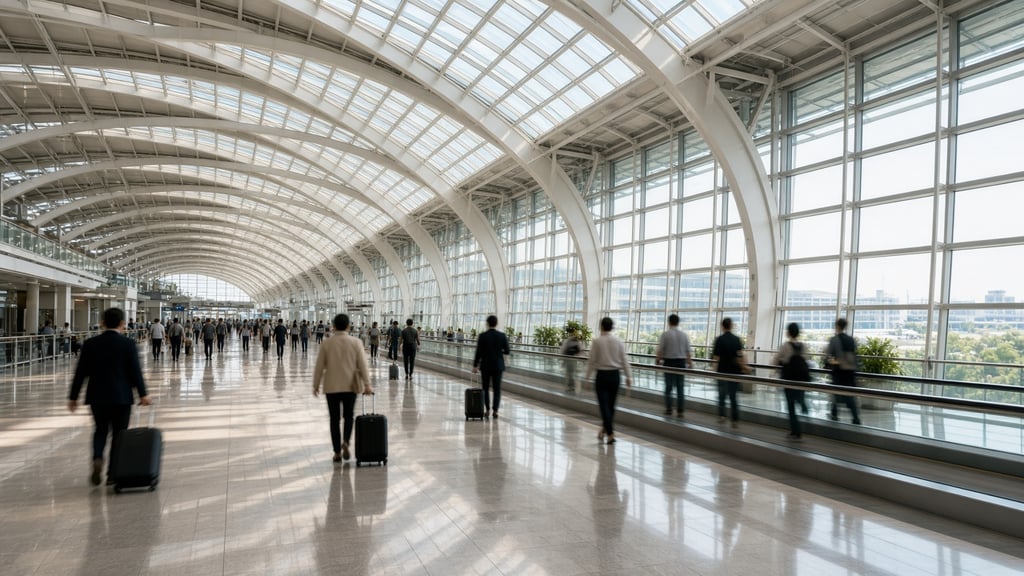
Airports of Thailand will pay staff a three-month fiscal 2026 bonus plus a separate special allowance equal to 1.8 times monthly salary on 30 November, chief executive Paweena Chariyatipong confirmed on Sunday. The listed operator, known as AOT or ทอท., is holding the package at that split after its board approved the terms on 12 November, even as full-year net profit rose and groups of employees pressed for at least five months paid as a single bonus.
The money is due tomorrow for employees at Suvarnabhumi, Don Mueang, Chiang Mai, Phuket, Mae Fah Luang Chiang Rai, and Hat Yai. Combined, the two lines equal 4.8 months of salary. That is still a cut from six months in fiscal 2025 and eight months in fiscal 2024, the two years that followed AOT's return to profit after three pandemic seasons with no bonus at all.
Three reasons the CEO is defending the split
Paweena, speaking as president of the SET-listed company, said the board was not treating the international passenger service charge as bonus fuel. AOT raised that departure fee from 730 baht to 1,120 baht from 20 June 2026 at all six airports. She said the extra cash is ring-fenced for airport works, that about 85 percent of it comes from foreign passengers, and that the inflow should let AOT fund the next three years of expansion without fresh borrowing that would land as public debt.
The second reason is a tighter definition of operating performance. Management is separating the fee hike from the rest of the revenue stack. Bonus math, she said, should track the business AOT actually ran: flights, concessions, and cost control. If geopolitical shocks or weaker duty-free shares hit those lines, the award should fall with them. Fiscal 2026 net profit of 19,309.41 million baht, up 1,184.21 million baht or 6.53 percent, was lifted by the PSC increase, not by a matching jump in underlying traffic. Flights slipped 0.15 percent to 786,879 while passenger numbers rose only 0.69 percent to 126.85 million, with India, Russia, and China still the main inbound supports.
The third reason is cultural. Paweena argued that staff pay has to match service to passengers and value for shareholders and the state, which still holds a controlling stake. She said AOT can lose money when costs outrun revenue, pointed to thinner concession income and higher upkeep, and framed the 3-plus-1.8 structure as a balance between profit retention and morale rather than a return to the richer multiples of the late 2010s.
How this compares with recent AOT bonuses
State-enterprise airport bonuses have long been a public scoreboard. Fiscal 2013 paid 11 months, the modern peak, before awards settled around 6.5 to 7.75 months through 2019. Covid erased the cheque for fiscal 2020 through 2022. Recovery brought seven months in 2023, eight in 2024, and six in 2025, when net profit was 18,125.20 million baht. This year's headline bonus is half of last year's, even though audited profit is higher. The 1.8x allowance is labelled as economic-hardship aid rather than profit share, with management still setting who qualifies.
That labelling is the flashpoint. Operational staff wrote to the board on 13 November asking for the 1.8x to be folded into a bonus of at least five months, warning that a later eligibility test could leave lower-paid airport workers out. The AOT labour union later told members it had filed a request on 20 November seeking a larger payment and clarity on gratuity for 2026 retirees. On Sunday, Paweena said she and the board had not received an official letter asking them to reopen the award.
Traffic, duty-free, and the capex bill
AOT's own year-end briefing shows why the argument is about mix, not just the profit line. Total revenue was 69,519.66 million baht, up 1.36 percent. Aviation revenue rose 9.60 percent, with passenger-service-charge income up 11.24 percent to 29,268.05 million baht. Non-aviation revenue fell 6.47 percent, led by a 10.73 percent drop in concession share from duty-free shops, a hangover from contract resets after the King Power dispute. Operating profit still increased 3.54 percent to 26,773.70 million baht because expenses barely moved.
That cash is being talked about as construction money. The Suvarnabhumi East Expansion, still awaiting Cabinet clearance, is meant to lift that airport toward 70 million passengers a year. Don Mueang Phase 3 is designed to take the older Bangkok airport to 40 million. Both projects were cited when the PSC rise was gazetted in May. For travelers, the fee is already in the ticket. For staff, the company is now saying the same baht cannot also rebuild last year's six-month bonus.
What This Means for Expats and Travelers in Thailand
Anyone leaving Thailand through the six AOT airports is already paying the 1,120-baht international departure charge. Sunday's briefing is the clearest public statement yet that AOT intends to spend that increment on terminals and runways, not on restoring staff bonuses to 2024 levels. If the ring-fence holds, passengers should look for progress on the Suvarnabhumi east wing and Don Mueang's third phase rather than a quieter week at immigration. If it does not, the higher fee will look like a pure tariff.
The duty-free squeeze matters in the concourse as well as on the income statement. Concession revenue is down, so shops and prices at Suvarnabhumi and Phuket may keep shifting while AOT hunts for cargo income on land near the airports. A smaller bonus after a profitable year is already a morale fight at Thailand's main gateways. Travelers will notice it, if at all, in queues and attitude, not in a cancelled flight tomorrow. The 30 November transfer is an internal payroll event. The policy choice, how much profit stays in the building versus going home with staff, will shape the expansion visitors are already funding at the departure gate.

Comment verification
Step 1 of 3
Verify your email once to publish your comment. Your email is never shown publicly.
Enter the 6-digit code sent to .
Choose the display name shown next to your comments.