SET Short-Sale Rules Under Fire After 90-Point Drop
Investors want the SET to revisit short-sale rules after nine sessions cut the index by 90 points and about 1.2 trillion baht.
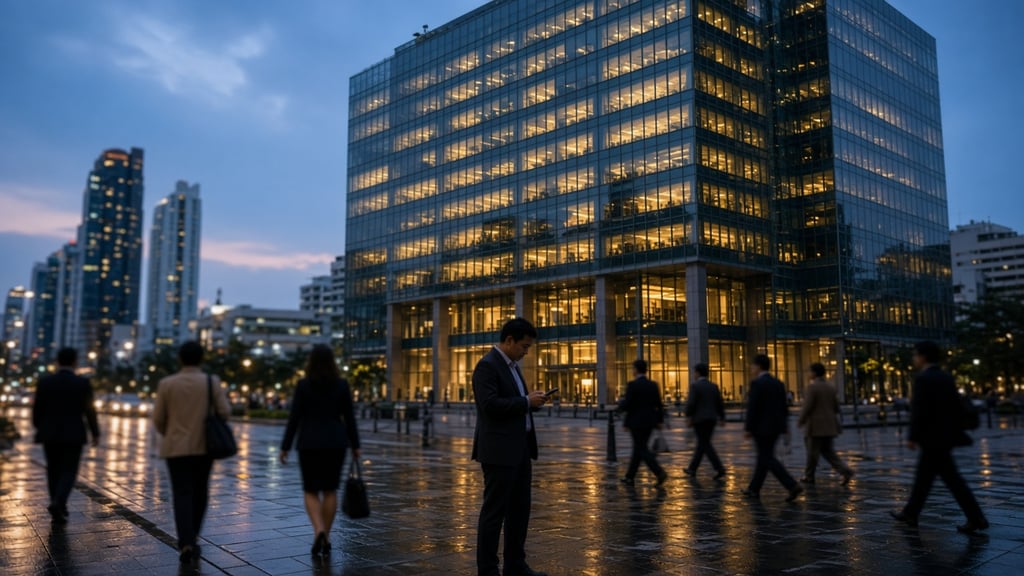
Investors and fund managers are pressing the Stock Exchange of Thailand to revisit the short-selling price rule that took effect on 16 November. Over the nine sessions that followed, the SET Index fell 90.44 points, and brokerage research put the loss of listed value in that window at about 1.2 trillion baht.
The index closed at 1,504.88 on 13 November, the last session before the new rules, and at 1,414.44 on 26 November, down 14.06 points, or 0.98 percent, on the day. That is about 6 percent under the earlier close. The exchange did not ban short sales. It changed the price at which they can hit the bid.
Eight measures, cleared by the Securities and Exchange Commission after a May consultation, were announced on 9 October and switched on from 16 November. In normal conditions a short sale may be priced at or above the last trade, the zero-plus tick standard. The stricter uptick test, a price above the last trade, returns only the next session, and only after a stock closes down 10 percent or more. Short sales stay limited to SET100 names, single-stock futures underlyings, depositary receipts, and exchange-traded funds. Tick sizes were narrowed for shares priced from 5 to 50 baht.
SET president Asadej Kongsiri said the short-sale share rose from 3.47 percent of turnover between 2 and 13 November to 11.02 percent afterward, a rise the exchange had expected. Fund managers put the new pace near 7 to 8 billion baht a day, about 12 percent of turnover, up from about 1.7 billion baht. On 26 November Krungthai Bank led at 711.75 million baht, 23.38 percent of its turnover, followed by Delta Electronics (Thailand), Kasikornbank, GULF, and Kiatnakin Phatra Bank.
Asia Plus put foreign net selling across those nine sessions at about 13 billion baht and the market-value loss at about 1.2 trillion baht, with the year-to-date index gain down to about 12 percent. Prakit Siriwattanaket of Merchant Partners wants an alert when short sales spike, including on stocks whose open positions keep building. A name can fall all week without a 10 percent drop, so the uptick rule never switches on. In 2020 and 2021, when short sales neared 15 percent of turnover, he says the market stopped rising once that share held above 10 percent.
Teeraseth Prompong, a macro strategist at Maybank in Bangkok, calls the rule an accelerant, not the cause. Zero-plus tick makes it easier to sell short again at the last price on a bounce. He puts more weight on technology valuations, artificial-intelligence spending, and US chip-export controls that dealers say reach Thailand, and he puts the market near 12.4 times earnings.
On 19 November Kongsiri said the weakness lined up with the chip worries and with news after the US midterm elections. Narrower ticks, the exchange argues, should cut trading costs over time, and short volume has to be read beside positions that must be bought back. On 23 November he said it was too early to judge the price rule alone, and that the SET would discuss a wider uptick test if the selling did not cool. The SEC has warned against blaming one measure. A study it cited found the old tick size was binding on about 74 percent of Thai stocks.
The Finance Ministry is describing the buyers. Pan Anantapibut, a deputy spokesman at the Fiscal Policy Office, said markets were still volatile. Through 25 November, retail investors were net buyers of 22.12 billion baht in the month and 81.45 billion baht for the year. Local institutions are net sellers of 80.11 billion baht for the year, almost a mirror of that retail bid. Proprietary books sold a net 11.02 billion baht from 1 to 25 November. Foreigners sold a net 11.92 billion baht in that span, yet they remain net buyers of 6.59 billion baht for 2026 so far.
October goods exports tell a different story. The Fiscal Policy Office put them at 36.86 billion US dollars, up 27.5 percent from a year earlier, a 28th straight monthly gain. The Commerce Ministry published the same total, 36,859.2 million dollars, on 27 November. Excluding oil-related goods, gold, and military items, exports still rose 24.5 percent. Imports rose faster, leaving a deficit of 12.34 billion dollars, and exports for January through October are up 20.4 percent.
Friday did not end the argument. On 27 November the index rebounded 25.85 points, or 1.83 percent, to 1,440.29. A bounce does not restore the value lost over nine sessions. It shows the retail bid meeting a tape that can still reverse inside one day. The question for the exchange is whether a short-sale share near 12 percent of turnover, on a rule that tightens only after a 10 percent down close, needs a faster brake.
What This Means for Expats and Travelers in Thailand
A short-stay visitor will not feel a 90-point move at the airport. Foreign arrivals in the October indicators were 2.27 million, down 12 percent, which matters more to a holiday than the tick rule. Headline inflation was 3.90 percent, core inflation 1.58 percent, and reserves were 272.8 billion dollars at the end of October. Residents with a Thai brokerage account, a provident fund, or a local equity fund are the people who need the rule.
Short sales are limited to SET100 names, single-stock futures underlyings, depositary receipts, and ETFs. A bank deposit or an offshore fund is not in that flow. Buying Thai shares on the dip is. Retail investors have supplied the bid this year. Local institutions have been the other side. A strong export month is not the same bet as a falling SET100 bank.
Two mechanics matter before the next sharp session. A 10 percent down close forces short sales in that stock above the last trade on the following day. A slow grind never flips the switch. Open shorts have to be bought back, so the outstanding position matters as much as the day's percentage. That is a map of trading since 16 November, not a forecast.


Comment verification
Step 1 of 3
Verify your email once to publish your comment. Your email is never shown publicly.
Enter the 6-digit code sent to .
Choose the display name shown next to your comments.