Thai Swine Raisers Warn US Pork Imports Could Hurt Farmers Already Running at a Loss
The Swine Raisers Association of Thailand is urging Bangkok not to trade US pork access in the unfinished reciprocal trade deal, saying farms have lost money since 2023 and feed grains would be a safer concession.
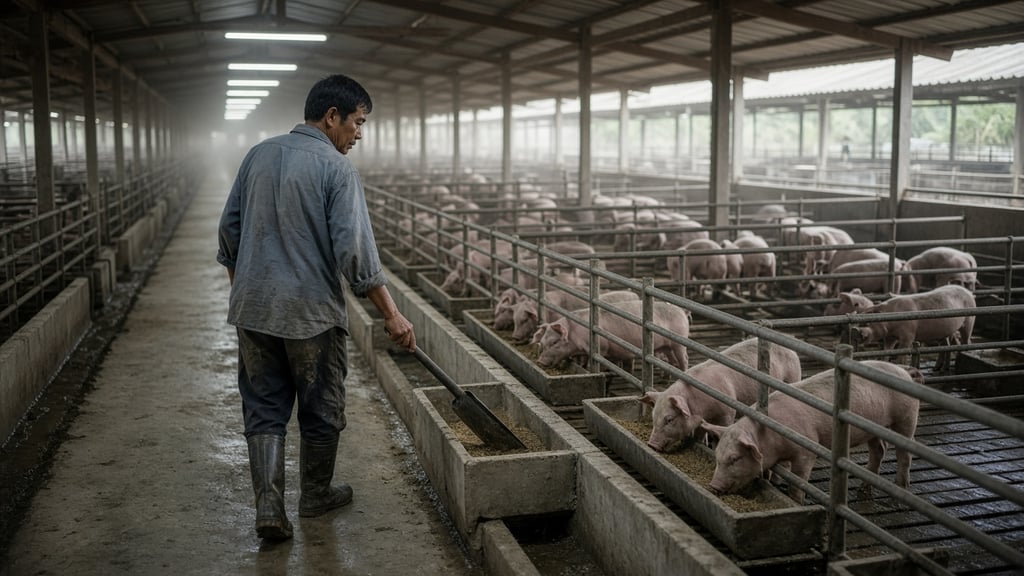
Thailand's main pig-farm lobby has told Bangkok not to open the country to US pork as a concession in the still-unfinished Agreement on Reciprocal Trade, warning that cheaper American carcasses would squeeze farms already running at a loss.
The Swine Raisers Association of Thailand published its position on 19 November 2026, two days after Prime Minister Anutin Charnvirakul and US President Donald Trump signed a joint statement in Manila. That paper confirmed substantial conclusion of talks. It did not put the ART into force, cut any tariff, or publish a product schedule.
Why pig farmers say they cannot absorb another shock
The association argued that domestic output already covers Thai consumption and that farms have been upgraded to mandatory standards while the industry tries to sell more pork next door. Extra imports, it said, would unbalance supply and demand with little cash buffer left.
Farmers have recorded accumulated losses for three calendar years from 2023 through 2025 and expect a fourth loss-making year in 2026. Feed maize prices in Thailand sit among the highest in the world, soybean-meal costs have stayed elevated, and officials have asked producers to keep farm-gate pig prices close to cost.
Instead of pork, livestock groups had already written to Thailand's chief negotiator proposing more US feed maize, soybeans, and soybean meal. Brazil currently supplies more than 90 percent of those soybean imports. Switching some orders to US suppliers, the association argued, would help Washington without flooding Thai wet markets.
The ractopamine fight behind the tariff talk
The other flashpoint is ractopamine, a beta-agonist used in some US hog-finishing programmes to keep carcasses lean. Thai law bars lean-meat growth promoters. The Codex Alimentarius Commission, jointly run by FAO and WHO, voted in July 2012 to set residue limits of 10 micrograms per kilogram in muscle, 40 in liver, and 90 in kidney. The vote was 69 in favour, 67 against, and seven abstentions. The association wants Bangkok to lodge a reservation so domestic law is not treated as a trade irritant.
What Manila signed, and what it did not
The 17 November joint statement, posted by the White House and confirmed by Government House, is a political close-out, not the legal text. The Ministry of Commerce said on 18 November that US goods still pay the same Thai import duties as before. Cuts would start only after legal scrubbing, signature, Cabinet approval, a public hearing, and parliamentary consent.
The outline dates to an October 2025 framework. Thailand committed to eliminate tariff barriers on about 99 percent of goods, including US food and agricultural products, and to expedite access for meat and poultry certified by the US Food Safety and Inspection Service. The two sides also noted planned purchases of US feed corn, soybean meal, and dried distiller grains with solubles worth an estimated $2.6 billion a year. Those agriculture clauses are why pig farmers read Manila as a live risk.
Commerce officials say not every line would open on day one. Some farm products would get a transition period. Agriculture, finance, and SME agencies already hold adjustment funds. Exact pork quotas, if any, remain undisclosed.
Commerce draws a line on treated pork, not on the product itself
Permanent Secretary Poonpong Naiyanapakorn said the ministry had not negotiated opening for products that would harm public health, and that Thailand will not permit imports of pork produced with ractopamine. Director-General Chotima Iemsawasdikul would not confirm whether ractopamine-free US pork would be allowed once the legal text is finished. That distinction is the gap farmers are watching.
On feed, Thailand grows about 5 million tonnes of maize a year against domestic demand of about 9 million tonnes, so extra import sources could lower ration costs if maize growers are shielded. The United States is Thailand's largest export market. Commerce has put shipments there above 2.37 trillion baht and linked the corridor to more than 1.25 million jobs. Reciprocal US tariffs on Thai goods were set at 19 percent in the 2025 framework. Rice, cassava, and shrimp exporters have more to gain from that fight than pig farmers do.
What This Means for Expats and Travelers in Thailand
Supermarket pork prices will not change this week. The Manila paper does not alter duties, and any opening still has to survive Cabinet, a public hearing, and Parliament. Shoppers who want to avoid ractopamine should keep reading labels and buying from Thai wet markets and certified farms. The ministry's public line is that treated US pork stays out.
If ractopamine-free US cuts arrive later, expect more frozen loins and bacon in Big C and Makro before they show up at a morning stall. Residents who cook moo satay, and restaurants that advertise Thai-farm pork, may see origin claims on menus. Travellers do not need to change dinner plans. The live issue is whether Bangkok trades a slice of the pig sector to defend a much larger US export book.
Comment verification
Step 1 of 3
Verify your email once to publish your comment. Your email is never shown publicly.
Enter the 6-digit code sent to .
Choose the display name shown next to your comments.