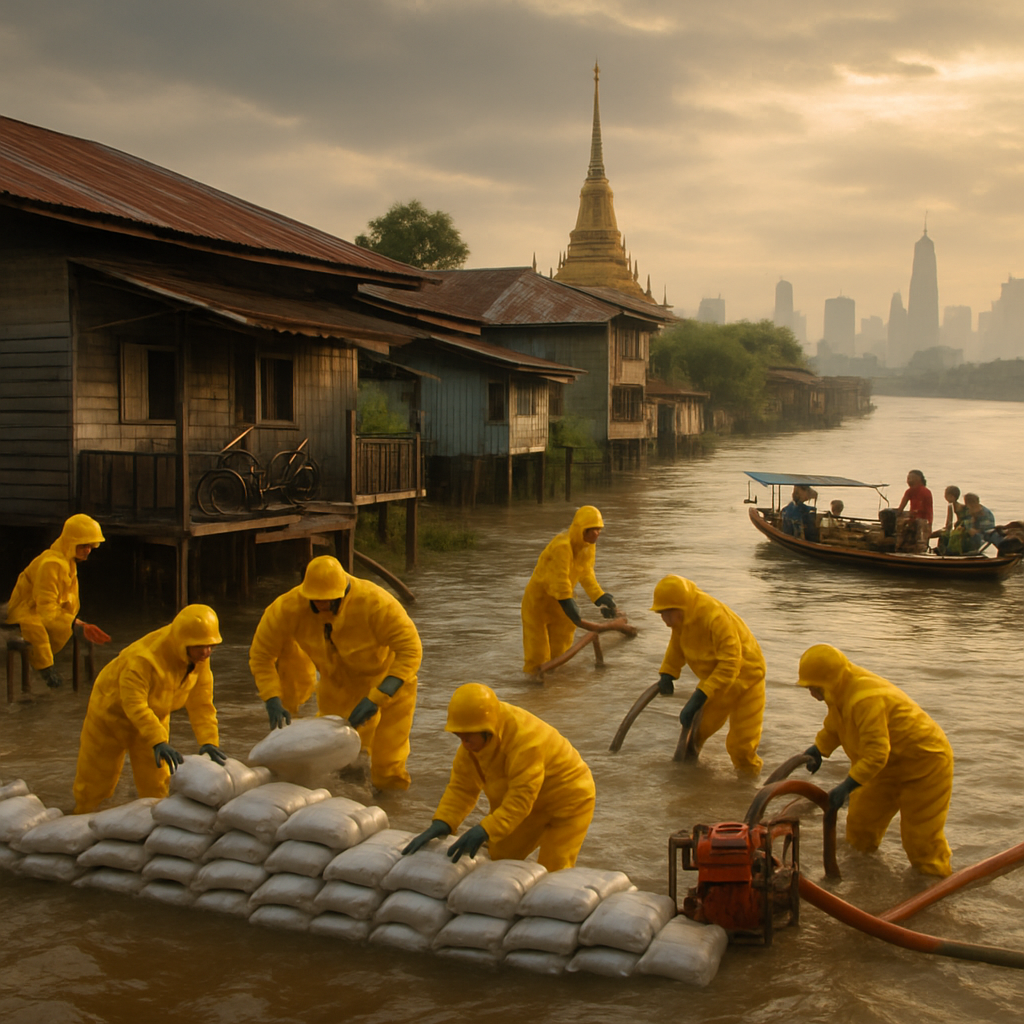
Bangkok’s riverside hum may sound the same, but this week the city is paying extra attention to the Chao Phraya’s rise. The Bangkok Metropolitan Administration (BMA) has mobilised teams and is closely monitoring a predicted high-tide surge expected through today until 12 December 2025, with particularly high water between 08:00 and 14:00. The Royal Thai Navy’s Hydrographic Department has already issued a clear advisory: water levels will climb — and some neighbourhoods could feel the squeeze.
Here’s the snapshot you need: 11 riverside communities across six districts lie outside the city’s flood-protection embankments and are considered at risk. More than 320 households — roughly 1,070 residents in total — live in these low-lying pockets along the Chao Phraya River, Khlong Bangkok Noi and Khlong Mahasawat. If riverbanks overtop, those neighborhoods in Dusit, Phra Nakhon, Bang Kho Laem, Yan Nawa, Bangkok Noi and Khlong San will be the first to see water in streets and yards.
That may sound worrying, but the good news is that the BMA isn’t waiting to see what happens. Drainage and emergency crews are on alert, monitoring water levels in real time and standing by to assist anyone who requests help. The message is simple: stay informed, get ready, and reach out quickly if flooding starts to threaten your home.
How to stay updated (fast)
Official, real-time water levels and emergency channels are already live. Bookmark these and check them during the high-tide window (08:00–14:00):
- BMA Drainage Department — Water level updates
- BMA Public Relations — Alerts and news
- BMA Facebook updates — community posts and live notices
If you see flooding in Bangkok, report it immediately to the Flood Prevention System Control Centre at 02-248-5115 or use the Traffy Fondue reporting platform. Quick reports help rescue teams prioritise and respond faster.
Practical readiness tips — quick and useful
You don’t need to build a sandcastle to get ready. Here are quick, practical steps that help keep people safe and speeds responders to those who need help most:
- Move valuables, important documents, medicines and chargers to higher shelves or upper floors.
- Bring outdoor furniture, motorbikes or bicycles to safer ground — if you can do it safely.
- Prepare a small emergency bag: torch, power bank, bottled water, basic first aid, essential meds and copies of ID.
- Plug toilets and drains with temporary seals where possible to avoid backflow into homes.
- Keep channels open: save the Flood Prevention number and the Traffy Fondue app link on your phone.
- If you’re in one of the named districts (Dusit, Phra Nakhon, Bang Kho Laem, Yan Nawa, Bangkok Noi, Khlong San), confirm evacuation routes with neighbours and local community leaders.
Communities outside embankments have the most immediate risk. If you live there, plan to relocate temporarily to higher ground or an evacuation centre if authorities advise it. Don’t wait until water is at your doorstep — early action keeps families and pets safe.
What the authorities are doing
The BMA’s Drainage Department is tracking flow and tide data in near real time and coordinating with the Hydrographic Department and local community units. Emergency crews are prepared to deploy sandbags, pumps and rescue teams where needed. The emphasis is on measured, rapid response — preventing water from breaching critical access points, and getting help to affected households as soon as possible.
If you’re a community leader or volunteer, your role right now is crucial: help keep communication lines open, assist vulnerable neighbours with transport or carrying supplies, and relay accurate updates from official BMA channels to people who may not have internet access.
Keep calm, stay connected
Bangkok has handled tides and floods before, and the city’s network of responders is active and ready. The next 24–48 hours are the window to stay alert and act early if needed. Follow the BMA links for live updates, make a simple plan, and be prepared to call 02-248-5115 or submit a report through Traffy Fondue if you need assistance.
For now, watch the tide times — the critical hours are between 08:00 and 14:00 — keep an eye on your neighbourhood, and check official channels frequently. A little preparedness goes a long way when the Chao Phraya rises, and with the BMA and Hydrographic Department sounding the alarm, Bangkok’s communities have the best chance to stay safe and dry.
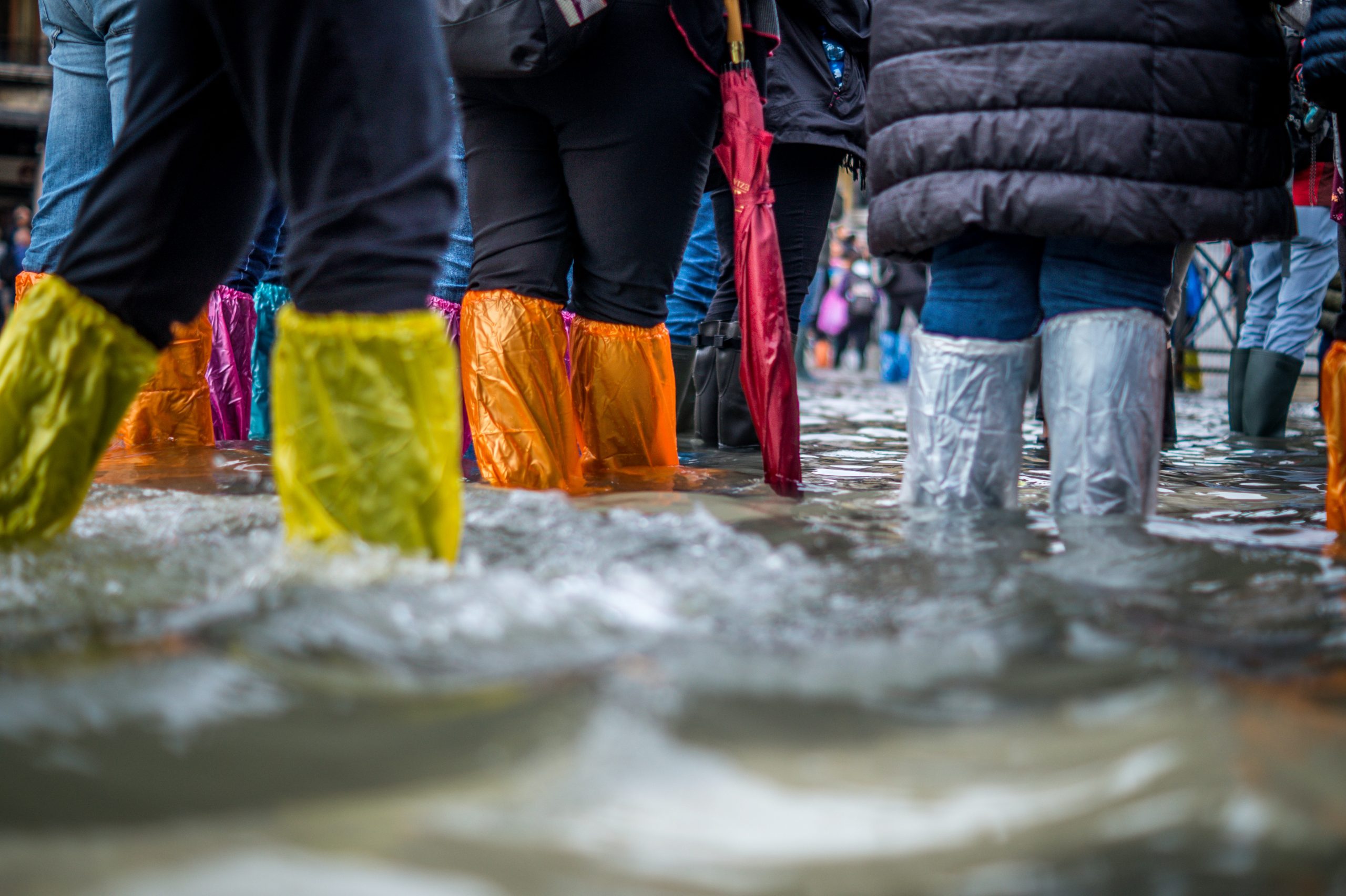

















Official warning: high tides on the Chao Phraya could push water into 11 riverside communities today between 08:00 and 14:00. BMA and the Hydrographic Department have crews on standby and emergency numbers are live. Please check BMA links and call 02-248-5115 if you see flooding.
Is this serious or just another loud headline? My grandma lives in Bangkok Noi and I’m worried. Should she move for a few hours?
Every year they ring the alarm and people get stressed for nothing. I think the BMA wants attention, not solutions.
That sounds cynical. Data shows rising tides and more frequent floods, not just PR. Being prepared doesn’t hurt.
I live in Bang Kho Laem and this is not overblown. We had street flooding last season and it smelled awful for days.
Tide-surge events are interacting with higher baseline sea levels and altered river discharge, so precautionary monitoring is warranted. Local readiness and early reporting reduce rescue time and secondary health risks. Use official channels rather than unverified social posts.
Quick clarifier: this advisory is based on hydrographic forecasts and surge timing, so the 08:00–14:00 window matters. If you live in the named districts, check evacuation plans with neighbours now.
Why are so many communities still outside the embankments? This is a planning failure. Officials always fix things only after people lose stuff.
Because retrofitting a city is expensive and messy. Tough choices every budget cycle. Still, maybe prioritize the most vulnerable first.
It’s not just money — it’s political will and land use. Low-income communities are often left in harm’s way while developers get safe land.
Exactly. I’ve seen pumps installed near malls but not near poor neighbourhooods. Local leaders need to be honest about priorities.
If the BMA published an easy map of at-risk homes we could crowdsource help faster. Traffy Fondue is useful but needs better visibility.
Evacuation centres are fine in theory, but who helps elderly or disabled people move? Community volunteers need transport plans now. Don’t wait until streets fill.
Local temples and schools often step up, but coordination with BMA could be better. Volunteers get drained when the city doesn’t support logistics.
Preparedness is as much social as technical. Mapping vulnerable households and assigning volunteer teams ahead of time cuts response delays dramatically.
I’ll go door to door in Bangkok Noi this morning and help older neighbours pack. If others pitch in, we can avoid panicked exits.
Long-term resilience requires integrated river management and coastal adaptation, not just sandbags. But short-term early warnings do save lives. Share official hydrographic updates with neighbours.
Agreed. Could the government push automated SMS alerts for registered addresses in the six districts? That would reach non-internet users.
SMS alerts would help older residents. I’ve seen people ignore Facebook posts because they don’t check it regularly.
SMS with geotargeting exists; scaling is the challenge. Advocates should press for its use during critical tide windows.
They say ‘stay calm’ but the reality is some people lose everything and never recover. Why isn’t compensation or long-term relocation discussed?
Relocation is complex and often resisted by residents tied to jobs and community. Compensation schemes also get messy and slow.
My cousin had to move after a flood and got nothing. The paperwork was endless and the money tiny.
That’s what I mean — talk big about help, but delivery fails. The BMA needs transparent compensation plans before disasters.
Practical tip: tape plastic bags of documents into zip-locks and keep them high. A small torch and power bank saved my neighbour’s medicines last time. Don’t underestimate simple prep.
Good advice. Also leave keys on a high hook by the door so you can grab them fast. Panicked searches waste time.
Exactly. Pack essentials into a small backpack that’s always ready by the exit.
I get angry when officials call it a ‘managed response’ while streets flood and traffic collapses. Are pumps and sandbags enough or just theatre?
Theatre. The pumps are often small and designed for short events, not sustained surges. We need real investment.
If people keep voting for short-term fixes, we keep getting short-term fixes. Policy needs voters pushing for durable change.
This alert is a call to neighbours, not just officials. If you can help move bikes and elderly people to higher ground, do it now. Small acts save time for responders.
Why does flooding always hit poor areas harder? Feels unfair and scary for families who can’t afford to rebuild.