Bangkok MRT Will Drop Plastic Tokens for QR Tickets on 1 January
BEM will trial single-journey QR tickets on the Blue and Purple lines in December, then stop accepting plastic tokens from 1 January 2027. QR journeys will not get the 17-45 baht fare cap.
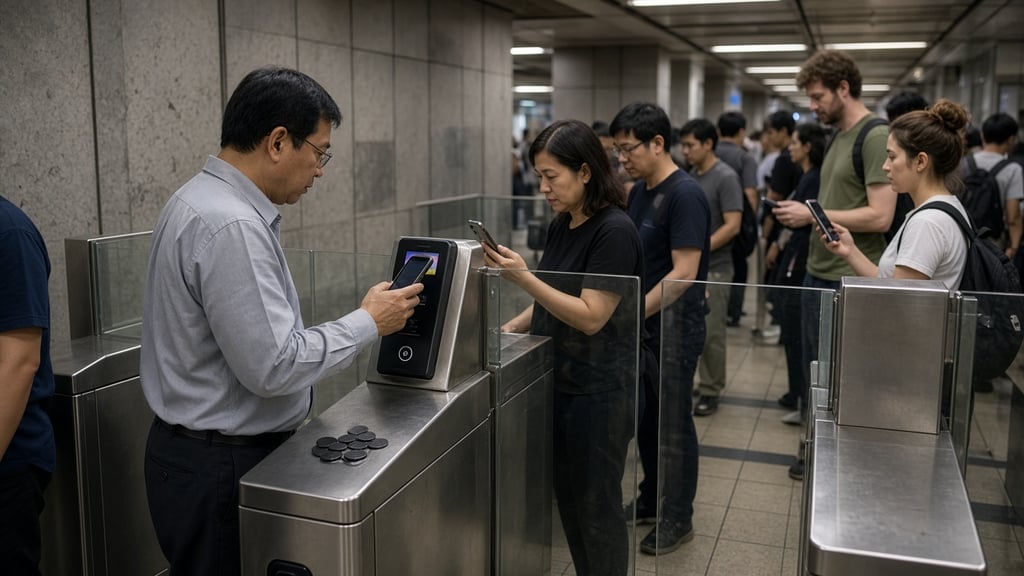
The round plastic token that Bangkok riders have tapped and dropped at MRT gates since 2004 is on a countdown. Bangkok Expressway and Metro, operator of the Blue and Purple lines for the Mass Rapid Transit Authority of Thailand, has installed QR readers on automatic fare gates and is testing them. If those tests hold, single-journey QR tickets will run beside tokens through December 2026. From 1 January 2027 the gates on both lines will stop accepting tokens.
The switch is for one-off cash trips, not for people who already tap a bank card. Riders using an EMV contactless credit or debit card, or a Mangmoom EMV stored-value card, can keep tapping. Tokens have been the tourist and cash path: buy a chip, tap in, drop it at the exit. QR tickets are meant to take that single-journey slot, not to replace contactless cards.
How the December trial and January cutoff work
BEM's ticket pages still describe today's token as an electronic plastic chip touched at entry and returned at exit. That method stays through the December overlap. The operator will increase station posters on how to buy and scan a QR ticket before the January cutoff. Notices had not locked in paper versus phone display, so riders should treat December as a live trial rather than a finished product.
The Blue Line, the Chaloem Ratchamongkhon Line, runs 48 kilometres and 38 stations from Lak Song through Hua Lamphong and Bang Sue, looping at Tha Phra. The Purple Line, the Chalong Ratchadham Line, opened in 2016 and covers 23 kilometres with 16 elevated stations between Khlong Bang Phai in Nonthaburi and Tao Poon. BEM's November briefing put Blue Line ridership at 500,000 to 600,000 passengers a day and Purple Line ridership at 70,000 to 80,000. About 40 percent of riders on those two lines still enter with a token.
Three ways to pay after 1 January, and the 17-45 baht caveat
From 1 January, gates will take EMV contactless cards, Mangmoom EMV cards, and single-journey QR tickets. Credit cards from Thai and overseas issuers under Visa, Mastercard, and listed UnionPay products can tap if they show the contactless mark. Debit is narrower. BEM lists only Krungthai Bank, United Overseas Bank, Bank of Ayudhya (Krungsri), Kasikornbank, and Siam Commercial Bank among Thai debit issuers, on the BEM EMV Contactless page.
That split matters because of the planned 17-45 baht rail fare measure, also targeted at 1 January 2027. The Ministry of Transport has been lining up the Common Ticket Management Act 2025, a Thai Account-Based Ticketing QR standard, and a 2027 first phase for electric rail. BEM has been clear: a QR ticket will not qualify for the 17-45 baht scheme. Eligible Thai commuters need an EMV contactless card, with any fare difference reimbursed through the Pao Tang app. Foreign visitors pay the published distance fare on a credit tap or a QR ticket.
The token plan follows an earlier card cull. From 1 June 2026, BEM and MRTA stopped accepting old MRT and MRT Plus cards at the gates. Holders can still swap an old card for a Mangmoom EMV card at station ticket offices with the issue fee waived until 31 December 2026, one card per person. MRTA's ticket FAQ notes that Pao Tang identity checks are built for Thai ID holders.
What This Means for Expats and Travelers in Thailand
If you already tap a contactless Visa or Mastercard at Sukhumvit, Silom, or Hua Lamphong, keep the same card on 1 January. Use one card in and out. Register it on BEM's EMV page or mangmoomemv.com for a 60-day trip history. Foreign debit cards are not on BEM's accepted debit list, so a UK or Australian debit card that works in a 7-Eleven may still bounce at the gate.
If you buy a token today because you do not want to tap a bank card, watch the December trial and station posters. A dead phone, a cracked screen, or a tourist without mobile data is the obvious failure mode. Keep a charged handset, or a printed code if paper is offered. Families with children and seniors who now collect concession tokens at the ticket office should ask whether those discounts move onto QR or stay at the window.
Do not buy a QR ticket expecting the 17-45 baht cap. That cap, if it starts on schedule, is for Thai riders on eligible EMV cards via Pao Tang, not for a one-off QR. Short-stay visitors should treat QR as the cash replacement and EMV credit as the fastest lane. Anyone still holding an MRT or MRT Plus card should swap it at a Blue or Purple Line ticket office before the fee waiver ends on 31 December.

Comment verification
Step 1 of 3
Verify your email once to publish your comment. Your email is never shown publicly.
Enter the 6-digit code sent to .
Choose the display name shown next to your comments.