
Thailand Sounds the Alarm: PM2.5 Spikes Hit Bangkok and Beyond
On January 15, Thailand’s government issued a clear and urgent warning: fine particulate matter (PM2.5) levels are climbing, and the worst of the haze is expected between January 14 and 16. Deputy Government Spokesperson Lalida Pairsawetthawana confirmed that the Air Pollution Solution Communication Centre (APSC) under the Pollution Control Department has recorded a notable surge in PM2.5 — especially across Bangkok, the upper Central Region, and pockets of the Northeast.
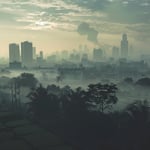
What’s to blame? A stubborn cocktail of stagnant air and low wind speeds has allowed tiny dust particles to accumulate close to the ground. Think of it like a slow, invisible fog of tiny particles — unpleasant and unhealthy. Officials predict the situation should begin to improve after January 16, but in the meantime the government is rolling out a multi-pronged response and asking residents to take sensible precautions.
Government Moves: Prevention, Cloud-Seeding and Cross-Border Coordination
Officials are taking several practical steps to tackle the spike. The Pollution Control Department has been instructed to coordinate tightly with provincial environmental offices to reinforce pollution-control measures — chief among them, cracking down on open burning during these atmospheric stagnation periods. Open fires for agricultural clearing and waste disposal are a major contributor to short-term spikes in PM2.5, and preventing them while the air is trapped is a priority.
The Bangkok Metropolitan Administration (BMA) has also been urged to consider expanding Low Emission Zone (LEZ) measures and to evaluate extending work-from-home (WFH) arrangements to reduce traffic volumes and vehicle emissions in the capital. Less rush-hour congestion equals less exhaust — and every little bit helps when the atmosphere refuses to cooperate.
Perhaps the most cinematic measure: the Royal Rainmaking and Agricultural Aviation Department has been mobilised to conduct cloud-seeding operations. The aim is to disrupt temperature inversion layers that trap pollutants near the surface. Cloud-seeding isn’t a magic wand, but in combination with emission controls and behavioral measures it can help break the stagnant air pattern that’s allowing PM2.5 to build up.
The Foreign Ministry, meanwhile, has contacted the ASEAN Secretary-General to seek regional cooperation on cross-border haze — a reminder that air pollution doesn’t respect lines on a map.
Where It’s Worst — And What Residents Should Do
Midday readings showed significant rises in PM2.5 across many locations. Within Bangkok, districts such as Bang Rak, Pathumwan and Sathorn were flagged in the red zone — levels above safety standards and associated with potential health risks. Dozens of other areas slipped into the orange zone, indicating moderate health impacts and the need for caution.
The APSC’s public guidance is straightforward:
- Monitor air quality reports frequently — the Air4Thai website and mobile app provide up-to-date readings.
- Avoid outdoor activities when pollution is high, especially strenuous exercise that increases inhalation.
- Use public transport when possible to cut down on traffic emissions.
- If you must go outside, consider wearing a protective mask rated for particulate filtration (e.g., N95 or equivalent).
- Limit open burning and encourage neighbors and local businesses to do the same.
Why This Matters — And a Sobering Reminder
Short-term spikes in PM2.5 can aggravate respiratory and cardiovascular conditions, and prolonged exposure carries larger health risks. The government’s response is a mix of emergency maneuvers (cloud seeding, temporary WFH) and longer-term policy nudges (LEZs, cross-provincial coordination) — a sensible approach that pairs immediate relief with structural changes.
Thailand and neighboring countries have seen worse episodes. As Thairath and other outlets have noted, a similar crisis last March forced strict measures in parts of Nan province, including curfews and lockdowns, after the Air Quality Index shot into the red. That painful precedent is a reminder: acting early and collectively can prevent harsher restrictions down the line.
Practical Takeaways
Be air-aware. Check Air4Thai before heading out. Cut unnecessary car trips; if your employer can accommodate WFH this week, consider it a public health favor to everyone. Keep masks handy, and avoid outdoor exercise during high-alert periods. If you live near agricultural areas or see open burning, report it to local authorities — preventing even a few local fires can make a measurable difference when the air is stagnant.
Most importantly, stay informed and stay patient. The forecast calls for improvement after January 16, but public cooperation and sensible local policies will speed the recovery and protect vulnerable people until the skies clear.
















This haze is terrifying, my kid’s asthma flared up today and hospitals are packed. The government should close schools for a few days if it gets worse. People burning fields need to be fined, it’s dangerous for everyone.
I saw ambulances near Lumpini this afternoon, it was scary and smelly outside. Schools should at least send kids home early or keep them indoors until it clears.
As someone who lives near farms, burning is a last resort for many smallholders. You can’t just fine poor farmers without giving them alternatives and support.
I get that smallholders struggle, but public health is at stake now. The state should subsidize safe disposal methods if they want to stop open burning.
Cloud seeding sounds dramatic but also like a PR move to make it look like officials did something. Science can help, but you can’t cloud-seed away bad urban planning or heavy traffic. We need systemic fixes, not just one-off stunts.
Cloud seeding can break inversions in some conditions but it’s unpredictable and limited in scope. It should be paired with strong emission reductions, real enforcement of open burning bans, and public advisories. Relying on rainmaking alone is poor policy design.
Exactly, thank you. It feels like a band-aid that distracts from long-term measures like LEZs and better public transport.
Blaming all farmers is lazy. Many burn because they have no cheap disposal or machinery for crop residue. Offer incentives or loans for straw management before criminalizing them.
I run a small plot and agree, alternatives cost money. If the government helped with subsidies we would stop burning, but telling us to ‘just not burn’ is unrealistic.
Support for farmers is important, but so is enforcement during extreme episodes. A combined approach of subsidies, education and temporary bans works best according to several regional programs.
Fine, subsidies plus enforcement sounds fair. But don’t cut us out of the conversation when policies are drafted.
Short-term spikes in PM2.5 increase hospital admissions for cardiac and respiratory events, and they also carry long-term mortality impacts. Monitoring, public communication, and targeted interventions for vulnerable groups are essential. Policy mixes should include transport demand management, industrial controls, and agricultural transition programs.
Well said, doctor. But how do we balance economic activity in Bangkok with strict LEZs and WFH requests? People depend on mobility for work.
We can use telecommuting and staggered shifts more widely without killing the economy, especially for white collar jobs. The app data suggests a short-term WFH pilot would reduce peak emissions noticeably.
Exactly, targeted short-term policies during spikes can be low-cost and effective while longer-term shifts in transit and industry are planned.
I can’t breathe this morning.
Take the kid to the clinic if breathing stays bad and use N95 masks when you must go out. Check Air4Thai and keep windows closed at home until levels drop.
Thanks, I’ll get masks at the drugstore now.
We support immediate measures like cancelling outdoor events and expanding LEZs, but we also demand a timeline for phasing out harmful agricultural burning. This can’t keep repeating each dry season. Cross-border cooperation is necessary too.
Cross-border blame often misses local sources. We need to be honest about Bangkok’s own emissions from traffic and industry as well. LEZs will hit lower-income commuters unless public transit improves first.
Agreed, public transit must be scaled up and made affordable. Policies should protect vulnerable workers while reducing emissions.
Organisations always want more transit money. Who pays for it? Someone will, usually taxpayers or commuters through fares.
My toddler’s daycare said they’ll keep kids indoors but parents are still going to offices. If more workplaces allowed WFH this week we’d all be safer. Masks are doable, but toddlers can’t wear N95s properly.
Employers need to step up. A few days working from home is a small cost compared to health bills and lost school days for kids.
Exactly, Karen. It’s about public health and common sense, not politics.
Air4Thai data is great but most people ignore apps. The government should push push notifications and simple color alerts on phones during spikes. Data-driven alerts save lives, but they must reach ordinary users.
Push notifications sound good until they’re overused. People will start ignoring them if they get spammed every other day.
True, but thresholds can be set to only alert when health risks are significant. Smart alerts combined with clear actions work well in pilots elsewhere.
I’m skeptical about cloud-seeding being the silver bullet. It might help in marginal situations but it’s weather-dependent and costly. Officials should focus on enforceable emission cuts instead of betting on rain.
Cloud seeding can be politically attractive because it’s visible action, but environmental policy needs systems thinking. Enforcement and incentives are less glamorous but effective.
Exactly, and let’s be careful about diverting funds to short-term spectacle rather than infrastructure and farmer support.
A mix of immediate and structural measures makes sense, but policymaking will fail without transparent data and accountability. Who enforces open burning bans, and how will violations be tracked and penalized? Clear metrics are needed.
Transparent monitoring is crucial. Satellite data can track fires and hotspots, and linking that to local enforcement and public dashboards creates accountability. Policy experiments like temporary LEZs coupled with subsidies for low-income commuters should be evaluated rigorously.
Good point on satellites. If the public can see data and outcomes, political pressure will push for meaningful reforms.
Work-from-home is easy for some jobs but impossible for service workers. The government must combine WFH recommendations with support for those who can’t. Cash transfers or protective work shifts might help.
Many offices can do WFH with little fuss. Managers just need to trust staff. It’s time to modernize how we work.
Trust and infrastructure, yes. But don’t forget the taxi drivers, market vendors and others who still commute in bad air.
I live near the Northeast and the smoke just hangs low for days. Local authorities sometimes do nothing until it’s too late. Community reporting tools should be easier to use.
Community reporting apps exist but need promotion and quick local action. If reports go nowhere, people stop using them. Authorities must respond within set timelines.
That’s the problem exactly, responses are slow. Faster follow-ups would make reporting worthwhile.