Thailand

Bangkok's High-Speed Rail Project: Makkasan Residents Seek 10% Land Allocation for Relocation

Residents near the bustling railway tracks in Bangkok's Phaya Thai district are calling on the State Railway of Thailand (SRT) to earmark 10% of its expansive 500-rai Makkasan property for them before embarking on a…
Bangkok's High-Speed Rail Project: Makkasan Residents Seek 10% Land Allocation for Relocation

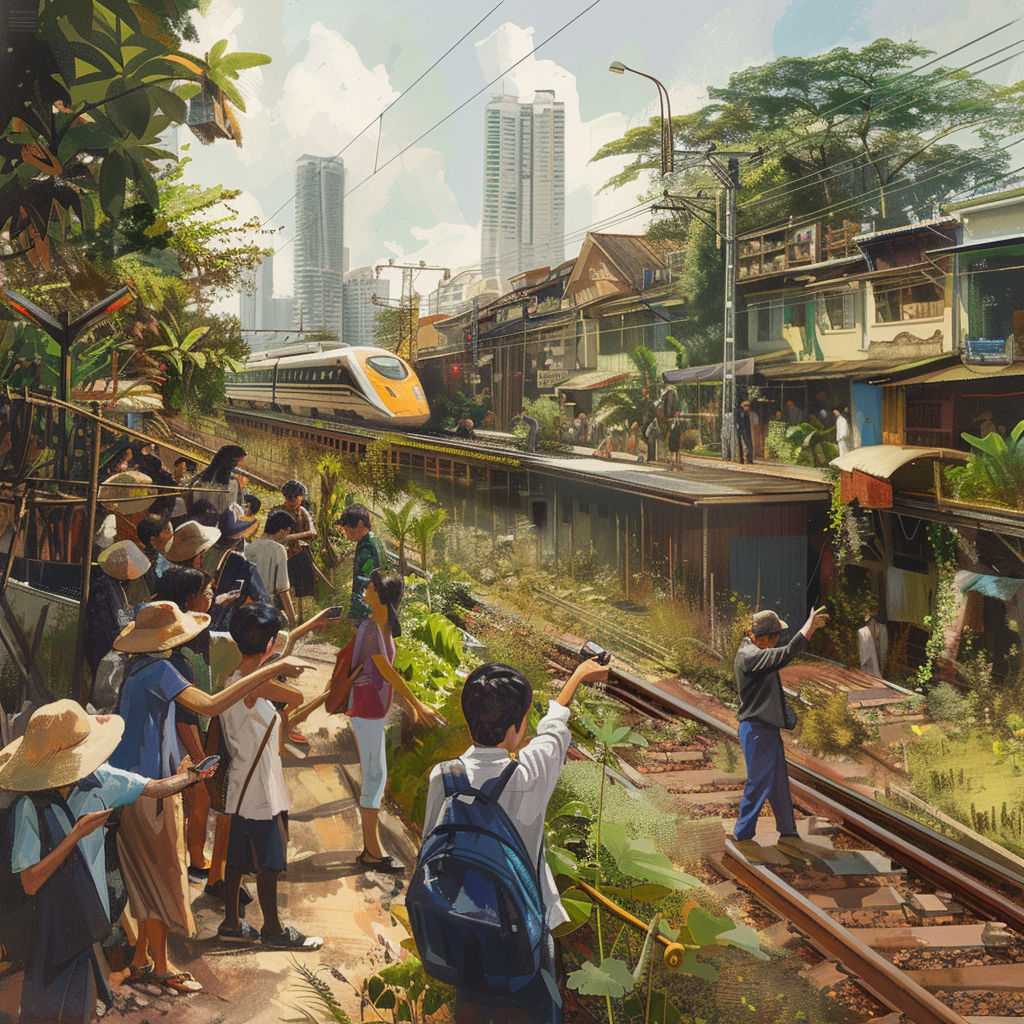
Residents near the bustling railway tracks in Bangkok's Phaya Thai district are calling on the State Railway of Thailand (SRT) to earmark 10% of its expansive 500-rai Makkasan property for them before embarking on a high-speed rail project. This ambitious venture aims to seamlessly connect three major airports: Don Mueang in Bangkok, Suvarnabhumi in Samut Prakan, and U-Tapao in Rayong.

Last March, the cabinet greenlit a housing initiative designed for low-income residents in communities impacted by the city's high-speed rail development. This project is a collaborative effort between the SRT, the Ministry of Social Development and Human Security, and the Community Organisation Development Institute.

Chao Kerdaree, a prominent figure in the Bun Romsai community located in Phetchaburi Soi 5, voiced his concerns. "Over 100 households in our community will be affected by this airport link project," he shared. Many of these residents, originally from rural areas, survive by taking on various odd jobs around the city. Affordable housing remains an elusive dream for them. Remarkably, some have resided on SRT land as squatters for an astonishing 60 years.

Given these circumstances, the community is urging the SRT to allocate a portion of the Makkasan land for their relocation. "We are lower-income workers," Chao explained, "and we have no idea where else to go. We plea to the SRT to set aside roughly 10% of the Makkasan land for us to live legally. We are even willing to pay a modest rent."

Jiraporn Phumpanya, president of the railway community behind Decha Hospital in Phaya Thai, highlighted the plight of approximately 87 households in her area. These families are currently awaiting financial compensation from the SRT to facilitate their relocation. "Ideally, we hope to move to the new leased land within the Makkasan area this year," she mentioned.

Jiraporn emphasized the importance of state agencies in establishing a formal community for them. "If we relocate to SRT's Makkasan land, having a recognized community would entitle us to various forms of assistance from city agencies," she noted. This support is pivotal for these families to rebuild their lives amidst the rapid urban development of Bangkok.


30Comments
Sort by:
JPJoey Pet··1 pts · 4 replies
JP
Joey Pet
I think it's reasonable for the residents to ask for 10% of the land. They’ve been living there for decades!
1
MMegan··1 pts
M
Megan
Sure, but the city needs to grow. High-speed rail will benefit so many more people.
1
JPJoey Pet·1 pts
JP
Joey Pet
Can’t growth and people’s livelihoods coexist? Displacing so many is just heartless.
1
DWD. Wallace·1 pts
DW
D. Wallace
Heartless? These residents have been squatting for years! Compensation is fine, but gifting land sets a bad precedent.
1
LDLarry D··1 pts
LD
Larry D
I agree. They’ve contributed to the community. Why should they be pushed out without adequate help?
1
RRaymond··1 pts · 4 replies
R
Raymond
Why should the government prioritize squatters over legitimate urban development?
1
SSally123··1 pts
S
Sally123
Because they are human beings with nowhere to go!
1
AKAndrew K.··1 pts
AK
Andrew K.
Compromise might be key here, but just displacing them doesn’t align with social justice values.
1
RRaymond·1 pts
R
Raymond
Sure, but at what cost? Progress often requires tough decisions.
1
SSally123·1 pts
S
Sally123
People aren’t just collateral damage for progress. There must be a humane solution.
1
LWLinda W··1 pts · 2 replies
LW
Linda W
It’s good to see the government trying to find a solution. But 10% of 500 rai is quite a lot. Why not just offer financial compensation?
1
MGMichael G··1 pts
MG
Michael G
Because financial compensation doesn’t guarantee these folks find another place to live in the city's expensive market.
1
FFarmerJoe··1 pts
F
FarmerJoe
True, especially if they are low-income workers with unstable jobs.
1
Ffuturist_92··1 pts · 3 replies
F
futurist_92
High-speed rail is the future! We can’t let traditions and squatter rights hold us back.
1
KKKate Kingston··1 pts
KK
Kate Kingston
What about the social contract? It’s easy to disregard lives until it affects you.
1
Ffuturist_92··1 pts
F
futurist_92
Social contract changes with time, gotta adapt or be left behind.
1
DDavid··1 pts
D
David
But leaving people behind seems like an abysmal way to move forward.
1
BLBrian Lee··1 pts · 3 replies
BL
Brian Lee
Let's not forget that land is valuable. Using prime real estate for low-income housing might not be the best use.
1
SMSarah M··1 pts
SM
Sarah M
Housing people in need is certainly a valuable use of any land.
1
LLucas··1 pts
L
Lucas
Depends on your priorities. Social good or economic growth?
1
SMSarah M··1 pts
SM
Sarah M
Both can coexist if planned well. Compassion and development shouldn’t be mutually exclusive.
1
MMaxwell··1 pts
M
Maxwell
I think it's a fair solution. 10% isn't asking the world. The government should step up.
1
GGrower134··1 pts
G
Grower134
So the government should give in just like that? What happens when more squatters turn up demanding land?
1
JJoe··1 pts
J
Joe
Why not integrate some sort of community housing within the new development? Best of both worlds.
1
Nnickname43··1 pts
N
nickname43
This kind of entitlement thinking is what’s wrong with the world today.
1
PPamela··1 pts
P
Pamela
Entitlement? These people have roots here. The place holds memories and history.
1
KKenny··1 pts
K
Kenny
Simply moving people isn't always the answer. It's about the manner in which we do it that reflects on us as a society.
1
IImran··1 pts
I
Imran
Perhaps a smaller allocation, less than 10%, along with housing assistance would be a reasonable middle ground.
1
CCarlson_T··1 pts
C
Carlson_T
If the rail project creates more jobs, some residents might find better opportunities. That’s unseen progress.
1
Eelena_b··1 pts
E
elena_b
Job creation is speculative. The immediate problem is affordable housing.
1
