Bangkok's Songkran Festival Sees Surge in Waste: Chadchart Sittipunt Leads Post-Celebration Clean-Up
As the sun rose on Bangkok's bustling streets, the aftermath of this year's Songkran festival—a spectacle of joy, water, and revelry—was quantifiable in more than just memories and moments. The Bangkok Metropolitan…
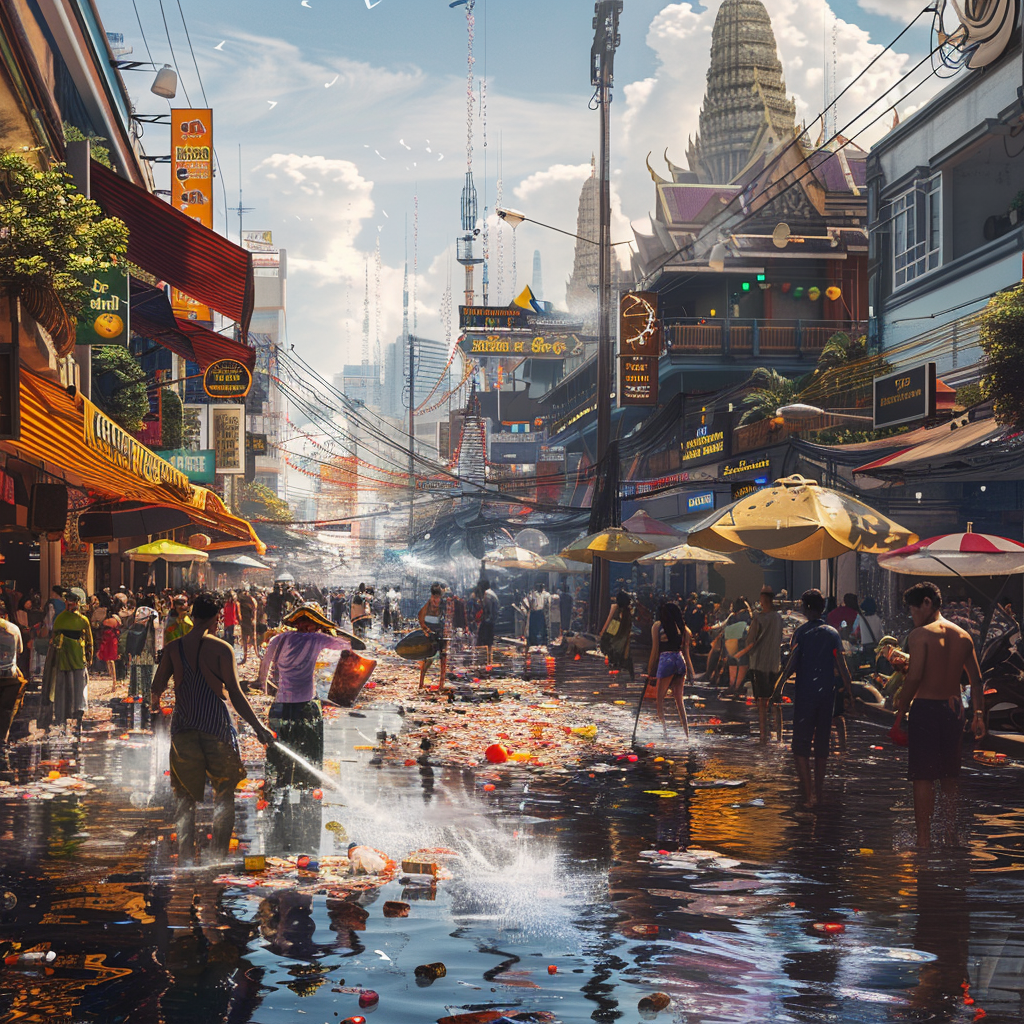
As the sun rose on Bangkok's bustling streets, the aftermath of this year's Songkran festival—a spectacle of joy, water, and revelry—was quantifiable in more than just memories and moments. The Bangkok Metropolitan Administration (BMA) rolled out the stats with a bittersweet note: the festivities from April 12 to 15 saw waste generation soar to figures eclipsing last year's by a hefty 1,000 tonnes. A testament to the celebration's grandeur but a reminder of its environmental footprint.
The vibrant spine of the festivities, Khao San Road, a name synonymous with pulsing energy and the heart of the city's Songkran revelries, was ground zero for 58 tonnes of waste over the four-day extravaganza. But the aftermath wasn't confined to Khao San alone; the surrounding arteries felt the weight too, with an additional 104 tonnes of waste painting a stark picture of the celebrations' aftereffects.
In a city that never sleeps, even in the wake of such colossal celebrations, Bangkok's Governor, Chadchart Sittipunt, was on the frontline. Before the break of dawn on Tuesday, he orchestrated a symphony of cleanliness. Meeting the day with determination, six water trucks and a legion of city officials took to the streets, their mission: to restore the tourist magnet to its pre-festival glory. Governor Chadchart, not one to lead from the sidelines, was there on Khao San Road as early as 4 am. His presence wasn't just supervisory; it was emblematic of his support for the tireless workers dedicating their holiday to the city's cleanliness.
However, it wasn't just about the cleanup. The governor looked ahead, recognizing the chaos amidst celebration. He called for a reflective pause and urged Phra Nakhon district officials to draw lessons from this year's logistical labyrinth. The packed Khao San Road, a merry chaos of water splashing and joy, faced notable challenges—hawkers vying for space, revelers navigating the throng. The solution, according to Chadchart, might lie in better zoning for hawkers and clever redirection of foot traffic through the lesser-known side sois, aiming for a congestion-free celebration in the years to come.
But there's more on the horizon for Bangkok's beloved Songkran hotspot. In a move that blends tradition with modernity, the city plans to dot Khao San Road with 'smart poles.' These aren't your average streetlights. They're technological beacons—heralds of the future, equipped with automatic lighting, CCTV for safety, 5G connectivity to stream the joy to the world, SOS intercoms for immediate help, and environmental sensors that whisper the state of air and noise pollution to those who listen. These smart poles are set to elevate the Songkran experience, ensuring safety, connectivity, and environmental consciousness blend seamlessly into the festivities.
The tapestry of Songkran in Bangkok is one of undying traditions, infectious joy, and spirited gatherings. Yet, as it weaves through the fabric of modern challenges and environmental impacts, the city's leaders and residents alike step up, reflecting, planning, and innovating. The goal is clear: to celebrate the richness of Thai culture while stewarding the health of the planet and the well-being of its people. As Bangkok turns the page on another Songkran, the spirit of renewal is palpable, not just in the cleansing waters but in the collective resolve to host a festival that's as sustainable as it is jubilant.



Comment verification
Step 1 of 3
Verify your email once to publish your comment. Your email is never shown publicly.
Enter the 6-digit code sent to .
Choose the display name shown next to your comments.