Buri Ram rangers race to save Plai Buakhao
Wildlife officers, vets and NWA volunteers in Buri Ram's Dong Yai sanctuary are tracking Plai Buakhao, a 46-year-old wild bull with a suspected front-leg fracture.
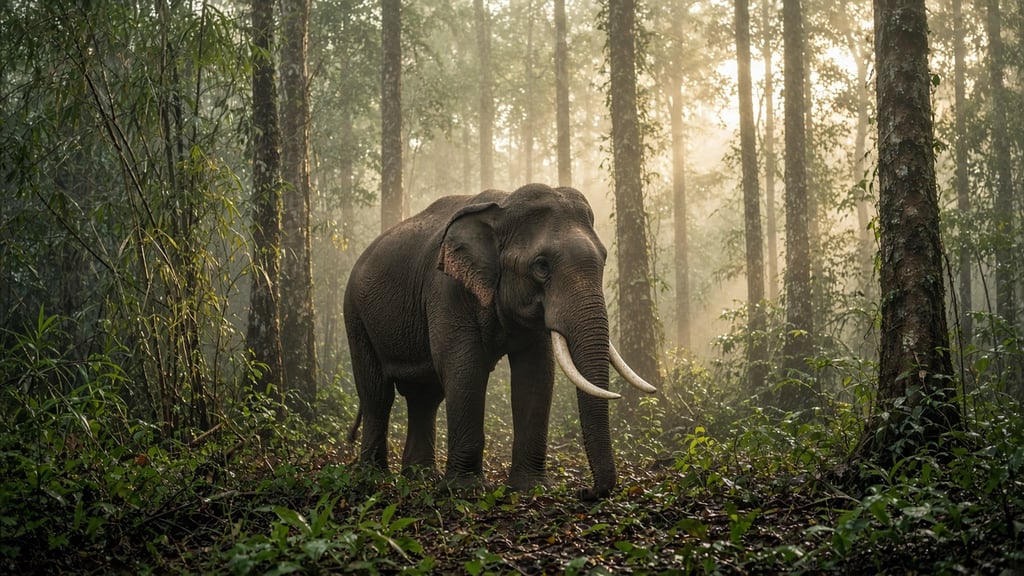
Wildlife rangers and volunteer trackers fanned out through rubber groves and mixed forest on the edge of Dong Yai Wildlife Sanctuary on Sunday after a well-known wild bull, Plai Buakhao, went down with a suspected fracture of his right front leg. The 46-year-old animal had still been moving on three legs a day earlier. By 29 November he was recumbent in woodland about 100 metres off rural highway 4063 at Ban Santi Suk, tambon Samrong Mai, in Buri Ram's Lahan Sai district.
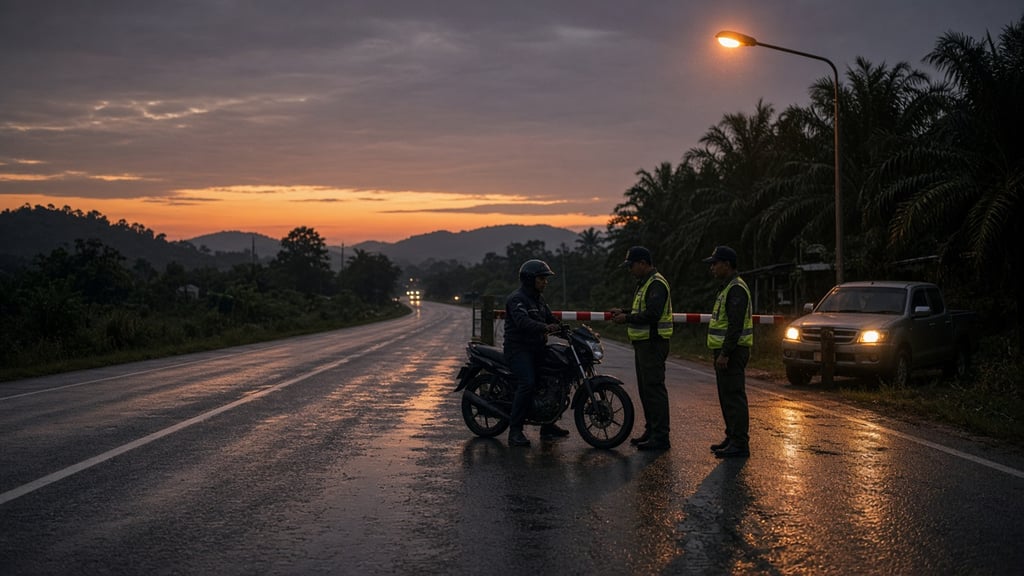
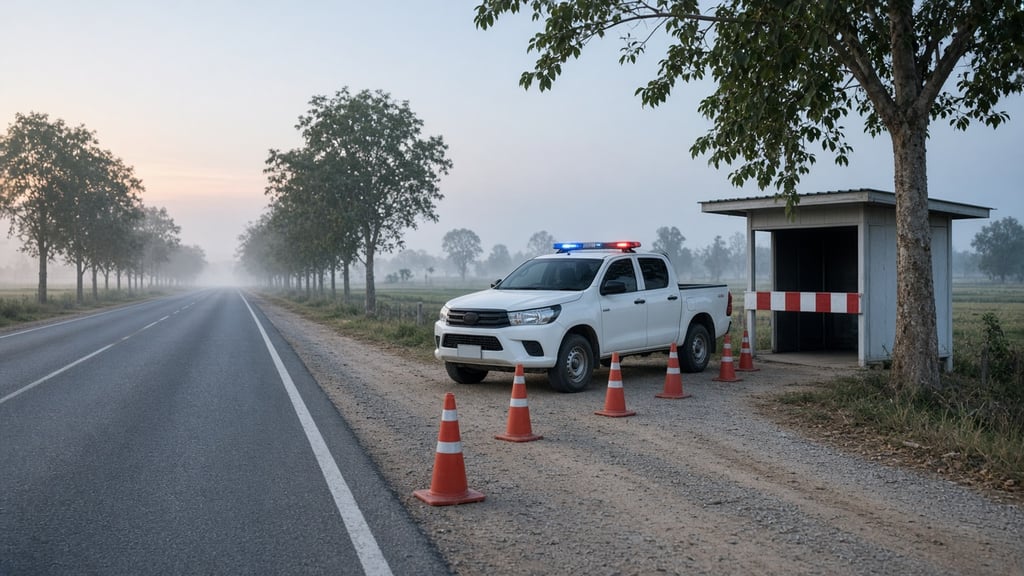
Field teams from Dong Yai, neighbouring Ta Phraya National Park, provincial livestock officers and the NWA volunteer network held a perimeter rather than crowding him. Aerial checks confirmed he could no longer walk normally. Officers staged drinking water nearby and asked motorists to stay off highway 4063 and rubber plantation soi 15 for the afternoon so a veterinary team could pick a moment to close in.
A bull the forest already knew
Plai Buakhao is not an anonymous blip on a camera trap. Villagers around Lam Nang Rong and Non Din Daeng have watched this bull for years. In early June, during musth, he smashed a cattle-watch hut near the Nong Samet reservoir and sent an elderly couple up a Siamese rosewood tree before push-back teams drove him into the forest in about 30 minutes.
That history now shapes the rescue. Ta Phraya staff who located him at 09:00 on 28 November found him standing alone about 50 metres from a road, refusing to load the right foreleg, with no open wound and no blood visible from a distance. He stayed highly alert and warned crews off with vocalisations whenever they stepped closer. Rangers put out bananas to see whether he would feed, then pulled back. A day later the picture had darkened: he had crossed the highway, gone to ground in the rubber-forest mosaic, and could not rise to walk.
Why a front-leg break is so hard in the wild
Adult Asian bull elephants average about four tonnes. Roughly three fifths of that mass rides on the forelimbs. A closed fracture, with the skin intact, still carries a better outlook than an open break, because infection is slower to take hold. Field veterinarians who have treated calves sometimes use a deep water basin to unload a damaged limb for weeks. None of those options is simple for a free-ranging 46-year-old bull who still has enough fight to keep a darting team at a distance.
Thai wildlife veterinarians have spent 2026 walking this line. In Kanchanaburi this month, a bull seen dragging a hind leg recovered enough to rejoin a herd, forcing crews to plan dart-delivered anti-inflammatories from a distance. Earlier, at Khao Ang Rue Nai, another mature bull died after a fractured hind femur, capture myopathy, and a second beating by rivals. Full sedation of a wild adult remains high-risk. Dong Yai's own playbook this year, used on a different injured senior bull, has been a temporary solar-powered electric paddock, round-the-clock watch, and daily wound care rather than a long haul to a hospital.
Until a veterinarian can get a hand on Plai Buakhao, the cause stays unconfirmed. Rangers believe a fight with another bull over a female is the most likely story. A stumble onto hidden debris in the forest has not been ruled out. Musth-season clashes among mature males are a documented feature of Asian elephant biology: bulls leave bachelor groups, join cow-calf units briefly, and test one another with tusks and body weight.
Dong Yai's crowded forest
Dong Yai is the wildlife-sanctuary piece of the Dong Phayayen-Khao Yai Forest Complex, a UNESCO World Heritage property of 615,500 hectares from Ta Phraya on the Cambodian border to Khao Yai in the west. The Asian elephant has been listed as Endangered on the IUCN Red List since 1986. A Kasetsart University team working with the Department of National Parks has put the combined Dong Yai and Ta Phraya population at about 50 animals. After late-season rains in October 2026, sanctuary officials reported dozens of elephants and more than 100 gaurs back on feeding grounds around Khao Krapod.
That herd lives against a hard edge of cassava, rubber, and village pasture. Crop raids, farm electric fences, and night-time encounters have run for years along Highway 348 and the Lahan Sai-Non Din Daeng fringe. An injured bull lying 100 metres off a rural road is both a conservation emergency and a traffic hazard. Wild Asian elephants typically live to around 60 years, so a 46-year-old bull is fully mature, and still heavy enough that a single failed foreleg can collapse the rest of the frame.
What This Means for Expats and Travelers in Thailand
If you are driving Isan backroads this week, treat rural highway 4063 at Ban Santi Suk as closed for the operation and do not stop for photographs. An injured bull that can still trumpet a warning can cover ground faster than a visitor expects. The same rule applies across Dong Yai, Ta Phraya, and the rest of the World Heritage complex: watch wildlife from a vehicle or a ranger-led hide, never on foot at forest edges, and never at night near rubber or cassava.
Residents who find an injured animal should call forest protection line 1362 rather than approaching. Visitors who want to see wild elephants in Buri Ram should arrange access through Dong Yai in advance. Close contact is not a kindness here. The veterinary plan, if it proceeds, will likely involve timed sedation, pain relief, and possibly a temporary enclosure of the kind already used on the sanctuary's farmland fringe.
Recovery, if it comes, will be measured in weeks of three-legged walking and water, not a lift to a tourist camp hospital. For now the kindest thing a passer-by can do is stay off the road, leave the bananas to the rangers, and let a 46-year-old bull keep the last of his dignity in the mist.
Comment verification
Step 1 of 3
Verify your email once to publish your comment. Your email is never shown publicly.
Enter the 6-digit code sent to .
Choose the display name shown next to your comments.