Democrats warn 1m farmers on US corn, pork
Democrat spokesman Pongsakorn Khwanmueang pressed Bangkok to spell out how maize growers and pig farmers would survive cheaper US corn and pork under a still-unfinished reciprocal trade framework.
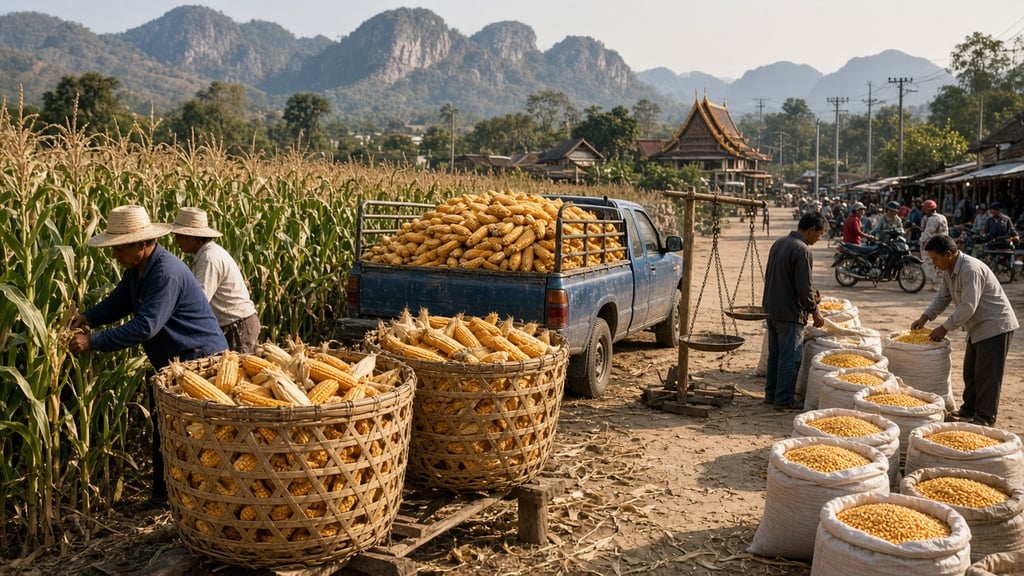
Democrat Party spokesman Pongsakorn Khwanmueang pressed Prime Minister Anutin Charnvirakul's government on 29 November 2026 to explain how Thai maize growers and pig farmers would survive a wider opening to United States corn and pork.
The demand landed twelve days after Anutin and US President Donald Trump signed a joint statement in Manila on a Reciprocal Trade framework, often shortened to ART. Thai readers have heard Washington describe farm-market access first, then waited for Bangkok to publish volumes and safeguards. Khwanmueang's charge is that the concession is agriculture, and that the people who would pay for it still have no survival plan.
He put the exposed workforce at 400,000 to 600,000 maize growers plus 100,000 to 200,000 pig farmers, nearly 1 million people if the two groups are counted together.
Why Thai maize starts behind
The cost gap is not a single customs line. US growers may plant genetically modified seed that Thai rules still keep out of domestic fields. American farms run at a scale Thai smallholdings cannot match. US income insurance is standing policy, while Thai guarantee schemes change with each government and sit on no permanent statute. Stack those three, and US corn arrives with a cost base village plots do not have.
That gap is now a live import window. On 11 November 2026 the Cabinet lifted a US feed-maize quota of 54,700 tonnes at 20 percent duty toward as much as 1 million tonnes at zero. The National Feed Maize Policy Committee, chaired by Deputy Prime Minister and Commerce Minister Suphajee Suthumpun, restated the same design on 27 November: a WTO in-quota band of 1 million tonnes at 0 percent, 73 percent out of quota plus 180 baht per tonne, a three-to-one domestic purchase rule, and a burn-free certificate on every shipment.
Thailand already consumes about 9 million tonnes of maize a year and grows only about 5 million, leaving a structural import gap of roughly 4 million tonnes.
Commerce officials treat that shortfall as a reason to shift cargoes from Myanmar, Laos, and Cambodia toward cheaper US maize. Rangsit University trade economist Ath Phisalvanich has warned that soy and maize can be absorbed if volumes stay inside customary demand, but that overshooting the gap would pull down farmgate prices. The fight is over who captures the saving: feed mills and pig farms, or the households that plant the crop.
Pork, ractopamine, and a four-year loss streak
The Swine Raisers Association of Thailand issued a 19 November statement opposing any use of pigmeat as a bargaining chip.
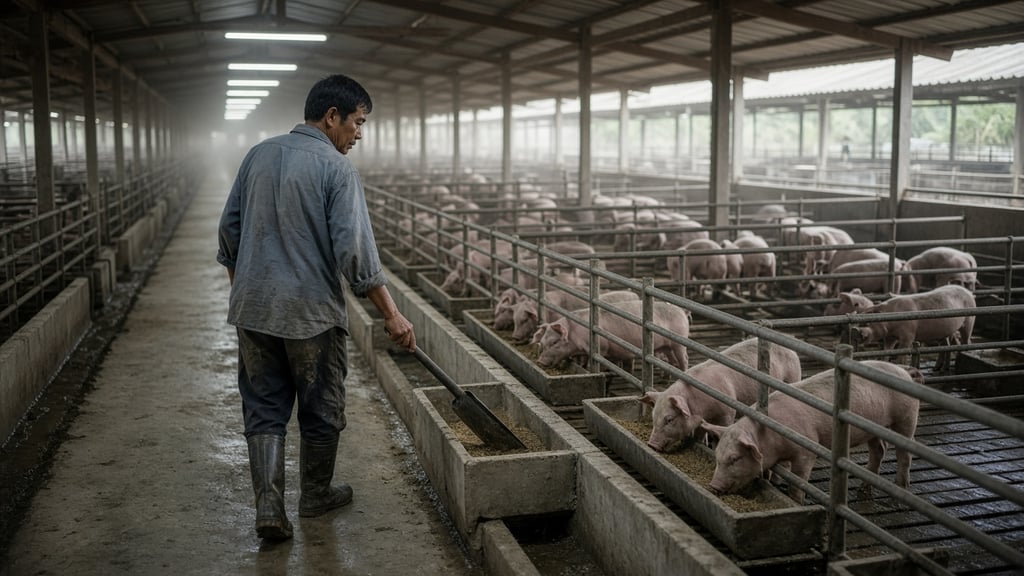
Thai pig farmers, the association said, have already absorbed three consecutive loss years from 2023 through 2025, with 2026 on course to be a fourth. US herds enjoy cheaper feed, industrial barns, and a legal green light for ractopamine, a beta-agonist used to put lean weight on finishing pigs. Thai law still bars that chemical at home and in imported meat. The association said feed maize and soy, which Thailand already cannot grow in volume, were the right swap goods, and asked Bangkok to lodge a Codex reservation on 2012 ractopamine residue limits.
What Bangkok will and will not say
Commerce Permanent Secretary Poonpong Nayanapadorn said the 17 November joint statement confirmed the outline of talks, not a finished treaty, and did not cut import duties overnight.
Deputy Agriculture Minister Watcharapol Khawkhum has repeated the sequence: legal scrubbing, Cabinet, a public hearing, then both houses of Parliament under Constitution Section 178. Ractopamine pork would still fail Thai sanitary rules. Trade Negotiations Director-General Chotima Iamsawatdikul said some farm lines may get a transition period, but she would not name the years or say whether ractopamine-free US pork would be licensed at all. The FTA fund Commerce has proposed is not standing yet. That answer got thinner after Washington announced an 18 percent Section 301 tariff on Thai goods around 25 November, days after Thai officials had spoken of a path from 12.5 percent toward 10 percent. Democrat leader Abhisit Vejjajiva had already asked how a reported $2.6 billion a year of US farm access could be balanced against such a modest cut. Deputy leader Korn Chatikavanich later said the 18 percent levy showed the public still did not know what had actually been agreed.
What This Means for Expats and Travelers in Thailand
For foreigners living in Thailand, the fight is not abstract: it sits in supermarket meat counters, in northern dry-season air, and in the political risk of a trade deal whose legal text is still being scrubbed.
Cheaper US feed grain could ease livestock costs and the retail price of pork, chicken, and eggs. It could also displace hill maize blamed for agricultural burning, a live concern for anyone who spends March in Chiang Mai. The other side is food-label trust. If the ractopamine ban is bargained away, or enforced unevenly, the change will show up in wet markets and convenience-store sausages before any treaty start date. Until Parliament sees the product list, treat US pork on a menu as a rumour and watch the next feed-maize quota notice.
No comments yet. Be the first to join the conversation.