Chiang Rai speeds backup water for toxic rivers
Bangkok is starting four Chiang Rai substitute-water projects in December and drilling wells across the north so villages along the Kok, Ruak and Salween can stop drawing from arsenic-tainted rivers.
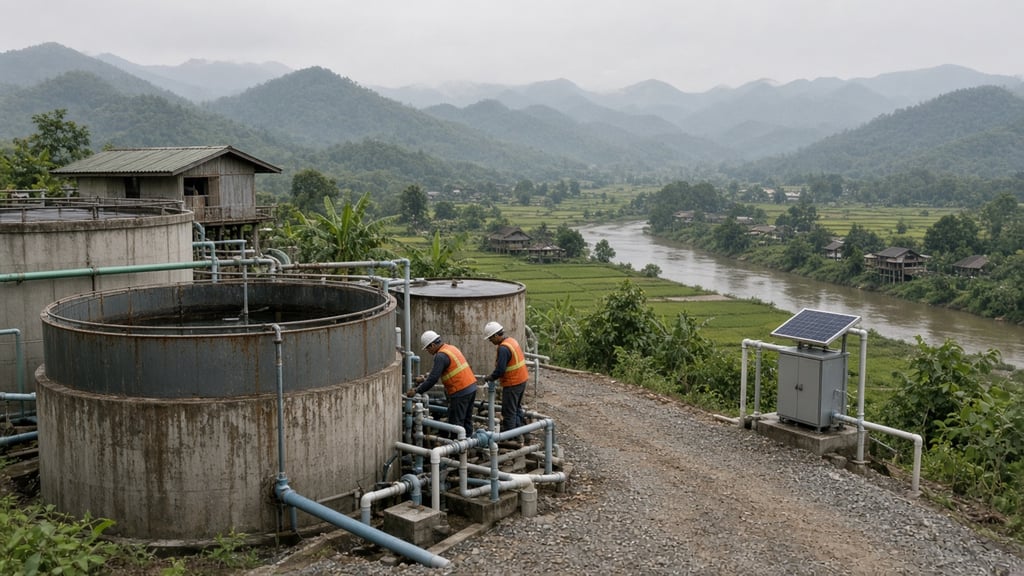
Northern Thailand is moving from river testing to pipe-laying. The Department of Water Resources will break ground in December 2026 on four substitute surface-water systems in Chiang Rai, the first construction wave meant to pull villages off the Kok, Ruak and Salween basins while arsenic and other heavy metals remain above Thai surface-water limits. Prime Minister Anutin Charnvirakul has told the ministry not to wait for a diplomatic finish line with Myanmar. Natural Resources Minister Suchart Chomklin ordered the department's Region 1 office to treat the three basins as one cross-border pollution problem and to stand up clean alternative intakes for drinking, household use and farming.
The December package is modest in household count and large in political signalling. Officials expect more than 1.84 million cubic metres of extra raw water, coverage for about 350 households, and irrigation for 100 rai of farmland. The sites are a solar-powered distribution system at Rong Chok in Chiang Saen, plus village networks at Ban San Sai Ngam in Wiang Chiang Rung, Ban Mueang Ngim in Mueang Chiang Rai, and Ban San That Mai Phatthana in Chiang Saen. New intakes were picked from class 2 and class 3 surface sources whose water-quality index already sits in the fair-to-good range and meets World Health Organization guidance for raw water before treatment.
Backup wells, filters and a risk map
Surface reservoirs are only one track. The Department of Groundwater Resources is advancing ten community well projects so households can stop drawing from the Kok, Sai and Ruak. Nine sites are already in motion, including Ban Rong Yao in Chai Prakan, Chiang Mai, and Chiang Rai villages in Chiang Khong, Mueang Chiang Rai, Wiang Chiang Rung and Mae Sai. A tenth site at Ban San Sai Luang in Mueang Chiang Rai sits in the regular budget queue.
Those wells are not a blank cheque. Department sampling in 2026 found arsenic above 0.010 milligrams per litre in nine of 133 groundwater samples from Chiang Mai and Chiang Rai; the other 124 stayed within the limit. Four wells that failed earlier checks were air-flushed after 2025 inspections of 18 village systems. For 2026 and 2027 the department is preparing community reverse-osmosis units at 11 sites plus one larger agricultural supply, and it has been told to keep mobile RO tap-water trucks ready for districts that cannot wait for new pipes.
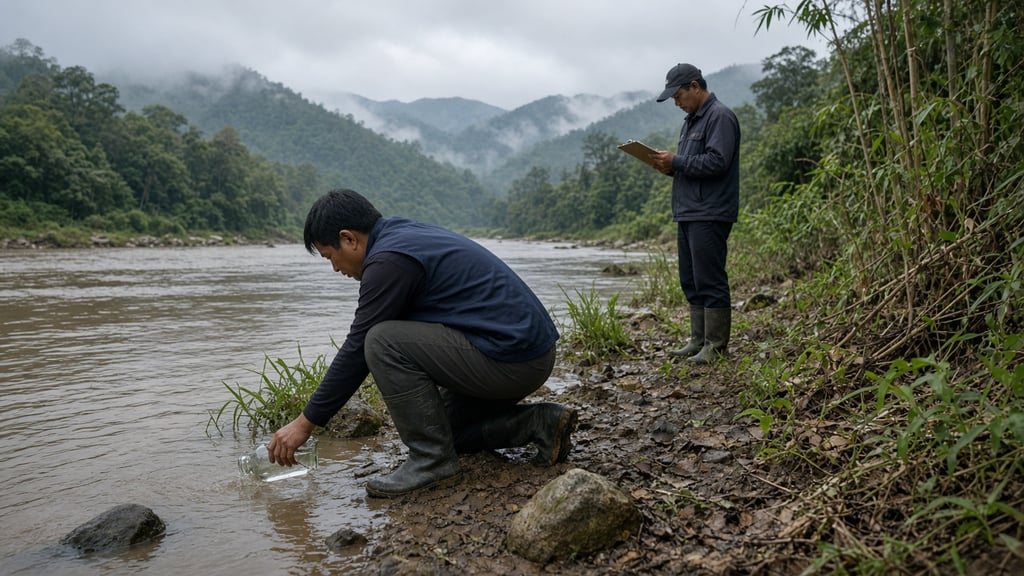
On the Sai River, a Pollution Control Department field kit at Ban Hua Fai in November 2026 measured about 0.017 milligrams per litre of arsenic, down from 0.284 milligrams per litre but still above the 0.010 milligrams per litre surface-water standard. Officials have told residents in marked risk zones that river water may still be used on fields, but not drunk untreated. A public risk map and one-stop water-quality desk were scheduled for 27 November 2026, and the National Environment Board is being asked to declare a pollution-control zone along roughly 150 kilometres of the Kok.
Thai and Myanmar officials brought forward their first joint water-quality working group to 25-26 November 2026 in Bangkok, after signing terms of reference on 6 August 2026, and later agreed in principle on a one-year framework with 12 sampling points. Joint sampling is due from December 2026 into January 2027. Thailand is also drilling deeper wells for 14 villages in Mae Sai. The Ministry of Public Health has opened a forward operations centre in Chiang Rai and distributed 2,000 urinary arsenic screening kits.
The Salween wait is thinner
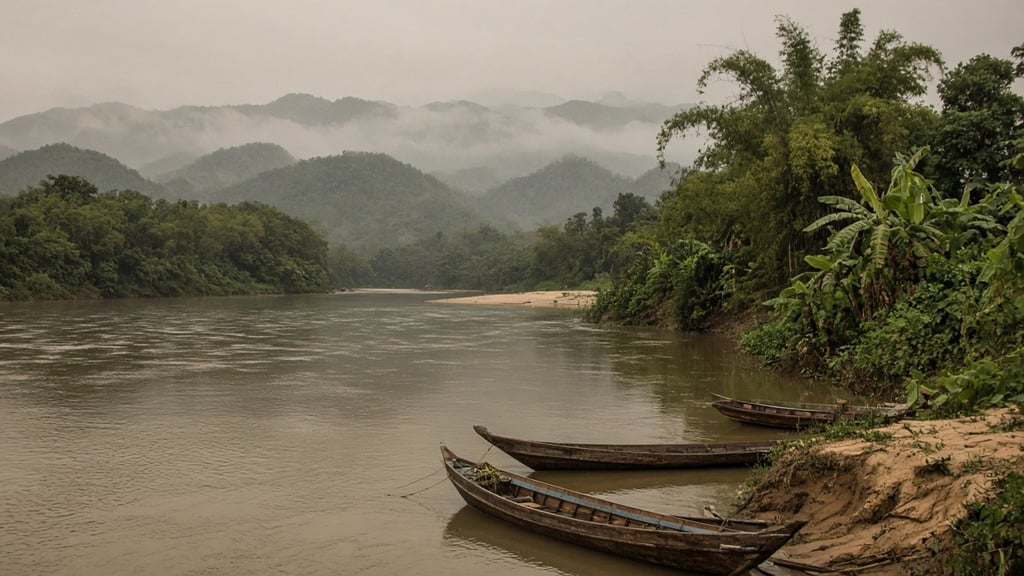
The Kok is a 285-kilometre Mekong tributary that rises in Myanmar's Shan State, enters Thailand at Tha Ton in Mae Ai, Chiang Mai, and meets the Mekong at Sop Kok in Chiang Saen. Contamination alerts have been public since March 2025. The Salween, which forms the Mae Hong Son border through Mae Sariang and Sop Moei, is now inside the same substitute-water order even though its construction list is shorter.
Pollution Control Department Region 1 has logged arsenic above the surface-water standard along the Salween from Pha Tang and Ban Tha Ta Fang in Mae Sariang to Ban Sop Moei in Mae Sam Laep. Recent averages of 0.020 to 0.060 milligrams per litre sit three to four times the 0.010 milligrams per litre cap. Tributaries used as local alternatives, including the Pai, Moei and Mae Sam Laep, have stayed within limits. Mae Hong Son Governor Wiboon Waewbandit says hotels and towns, including Pai and Ban Rak Thai, run on mountain piped systems rather than the Salween. Mae Sam Laep Tambon Administration has still asked the ministry for substitute sources; the file is waiting on budget for riverside clusters at Ban Mae Sam Laep, Ban Sop Moei, Ban Pu Tha and Ban Tha Ta Fang.
The substitution programme is a bridge, not a cleanup. Bangkok is also talking about sediment traps before late-December water releases, village filter upgrades, rapid test kits for local governments, and talks with Myanmar, Shan representatives and China on mine-by-mine tracing, including a planned fingerprint laboratory at Mae Fah Luang University. Until those upstream controls exist, the practical question for northern households is simpler: which tap, well or truck is certified this week.
What This Means for Expats and Travelers in Thailand
Visitors heading to Chiang Rai, Mae Sai, Chiang Saen, Mae Ai or the Salween border should treat river water as off-limits for drinking, cooking and swimming unless a provincial notice says otherwise. Bottled water and supplies certified by the Department of Groundwater Resources or a Provincial Waterworks plant are the safer default. Pai, Ban Rak Thai and most Mae Hong Son hotels are on mountain piped networks, not the Salween, but riverside guesthouses along the Kok in Chiang Rai are a different risk profile.
Long-stay residents in Chai Prakan, Wiang Chiang Rung, Mae Sai and Mueang Chiang Rai should watch district announcements as the ten well sites and four December surface projects come online, and should not assume a new borehole is drinkable until it is tested. Anyone who has used untreated river water for drinking can ask local public health offices about urinary screening. Officials currently allow irrigation in many risk zones while banning untreated drinking, so check the provincial risk map before kayaking or riverside markets, and do not put main-stem river water in a glass.
No comments yet. Be the first to join the conversation.