Korat M.3 student in coma after peer assault
A 14-year-old Mathayom 3 student in Nakhon Ratchasima is on a ventilator after a 3-on-1 assault at the school flagpole. Deputy Education Minister Akkharanan Kannakittinan has ordered a full investigation.
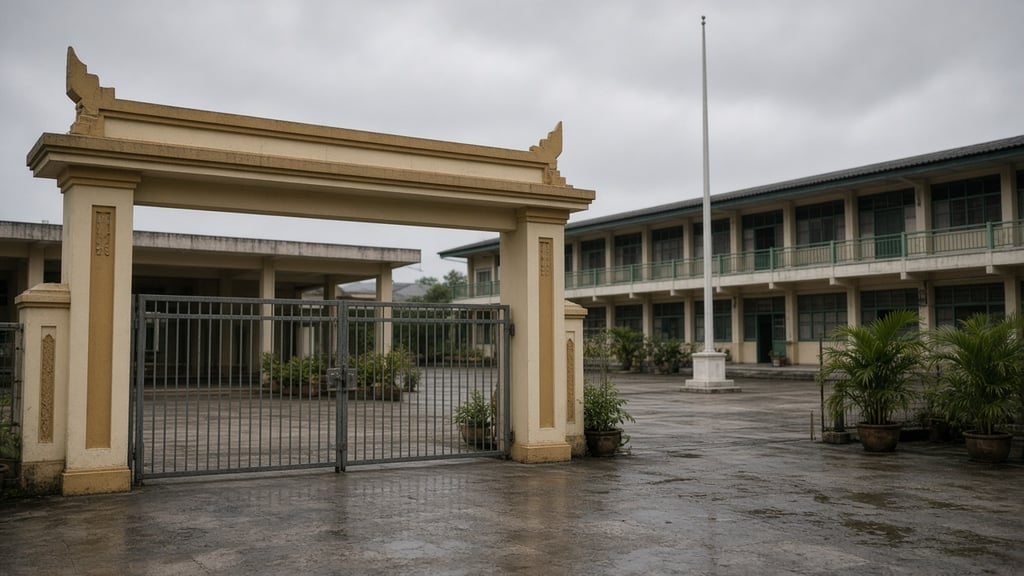
A 14-year-old Mathayom 3 student at a secondary school in Nakhon Ratchasima is in a coma after classmates assaulted him three against one beside the flagpole on 27 November. Deputy Education Minister Akkharanan Kannakittinan has ordered provincial education officers onto the campus and has told staff that describing the attack as an accident will not close the file.
The boy lost consciousness and briefly stopped breathing. Teachers and other students started CPR and called rescue crews, who took him to Maharaj Nakhon Ratchasima Hospital. He remains on a ventilator. Physicians have described brain swelling from a lack of oxygen and have put his chance of survival at roughly even odds. Relatives have asked for a full inquiry and have said courtyard cameras did not capture a clear record of the blows. THAI.NEWS is withholding the school's name and the identities of the children. All of those involved are minors.
What the ministry has ordered
On Sunday, Kannakittinan instructed the Nakhon Ratchasima Secondary Educational Service Area Office to go to the school the same day. A noon briefing was set for 29 November. The Ministry of Social Development and Human Security was asked to sit with the family. The Education Ministry's Centre for Protection of Rights, Freedom and Safety, the unit he activated after a Kanchanaburi kindergarten assault nine days earlier, was told to treat the Korat case as a live child-protection file rather than an internal discipline matter.
Officials around the minister said a teacher had asked relatives to tell police the boy had suffered an accident. That version, they said, did not match material already held by the rights centre. Kannakittinan warned that anyone who steered relatives or witnesses away from a factual police statement would face administrative action. Teachers, he argued, are the adults parents trust during the school day. When a child is critically injured, the duty is to stand with the injured student and let investigators see the record.
The same minister spent 20 November telling provincial offices that peer violence is not a children's game, even when it happens off campus. That public line now meets a morning assembly ground in Korat and an alleged attempt to recast a group beating as a mishap. The Office of the Basic Education Commission already issues anti-bullying circulars. The test is whether a provincial secondary office will override a school's instinct to protect its name.
How a 14-year-old assault case moves through Thai law
Police in Nakhon Ratchasima will build any criminal file under juvenile procedure. The alleged attackers, like the victim, are children. Juvenile and Family Courts, not adult criminal courts, take first instance in cases against people under 18. Multidisciplinary teams (investigators, prosecutors, social workers, and psychologists) typically sit in on interviews. The Department of Juvenile Observation and Protection, under the Ministry of Justice, handles assessment and supervision if charges proceed. Thai child-protection rules also require schools and officials to report serious harm rather than bargain it down to a playground accident. Families who want a police record should still file at the local station. A hospital medico-legal note from Maharaj Nakhon Ratchasima is the document that usually keeps the file open.
Why this is not a one-school story
UNICEF's 2018 school-violence briefing, drawing on Thailand's 2015 Global School-based Student Health Survey, found that 29 percent of students aged 13 to 15 said they had been bullied in the previous month and 26 percent had been in a physical fight in the previous year. The Department of Mental Health has separately put the annual count of Thai students bullied at school at about 600,000, roughly 40 percent, a rate once ranked second globally. Those numbers are older than this coma case. They explain why a flagpole beating that ends in intensive care is read as a system failure, not a private quarrel. Korat is a dense cluster of large public secondary schools, and morning assembly at the flagpole is a daily ritual. In this case it was also the place where a 14-year-old was left without a pulse long enough for classmates and teachers to start CPR.
What This Means for Expats and Travelers in Thailand
If you have a child in a Thai public or private school, treat a "he fell" explanation after a group incident as a reason to demand camera files, medical notes, and a police record, not a reason to let the school close the matter. Enrolment in an international school is not a guarantee. English-language forums for residents describe the same delay until a hospital bed or a leaked clip forces adults to act. Childline Thailand on 1387 takes calls for anyone 18 and under. Tourist Police on 1155 can help route a language-capable officer if you need to reach a station. Do not publish a minor's name, school badge, or identifiable courtyard video.
Visitors passing through Nakhon Ratchasima do not face a new street-crime alert. School gates in Thailand are not automatically safe spaces, and a ministry visit only matters if CCTV, medical records, and juvenile-court paperwork follow. Parents who need a same-day hospital should know Maharaj Nakhon Ratchasima is the provincial trauma centre now keeping this student alive.

Comment verification
Step 1 of 3
Verify your email once to publish your comment. Your email is never shown publicly.
Enter the 6-digit code sent to .
Choose the display name shown next to your comments.