Thailand mailbox QR letters drain bank accounts
Thai Cyber Police warn that correctly addressed home letters now carry QR codes built to open fake bank pages, steal OTP codes, and drain accounts.
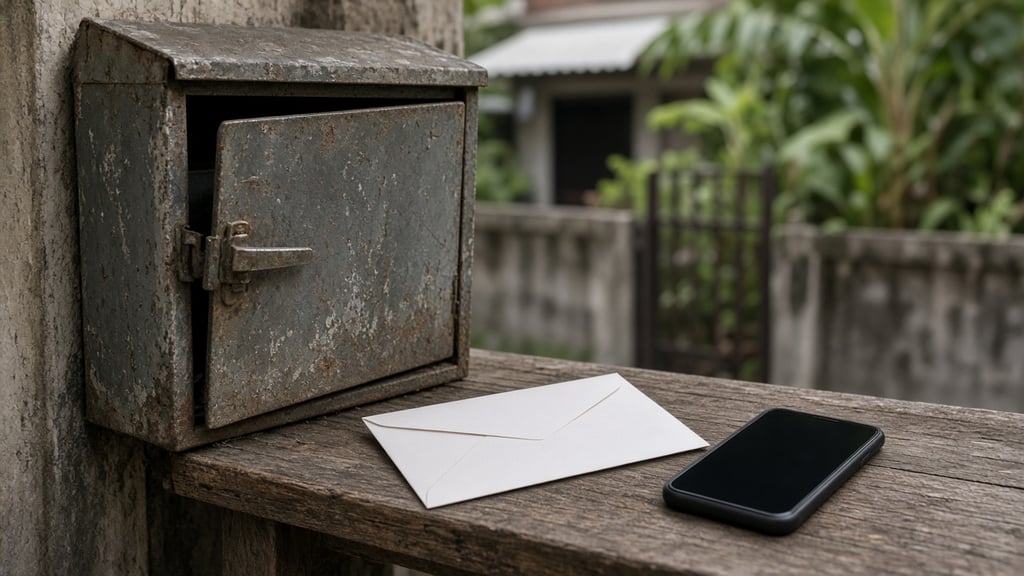
A white envelope in a Thai mailbox is starting to do the work that spam filters used to catch. Thai Cyber Police have warned of a new physical-mail attack in which unsolicited letters arrive at private homes already carrying the recipient's real name and street address. The stationery impersonates a bank or a government office. Inside is a QR code and a short instruction: scan to verify identity, update personal details, or check an account. The page that opens is a replica. Logins, one-time passwords, and, in some versions, a prompt to install an unofficial app are the payload. Money then leaves the account.
Researchers call the method quishing, QR-code phishing, because the destination URL hides inside a pattern the eye cannot read. Postal delivery simply moves that pattern onto paper. In Thailand the tactic collides with a country trained to pay by pointing a camera at a square. PromptPay, restaurant bills, tax kiosks, and parcel lockers have made scanning feel as ordinary as unlocking a phone.
How a mystery letter becomes an emptied account
The envelope is locally addressed, which lowers suspicion among older relatives who still treat named mail as official. The letterhead copies a bank crest or a ministry seal, sometimes with a forged signature. The QR code is sold as a secure channel: freeze a compromised Krungthai NEXT login, confirm a tax or utility bill, track a parcel, or prove innocence in a financial investigation. Once scanned, a lookalike site asks for the banking username, PIN, and the SMS OTP the real bank has just sent. A follow-up call from someone claiming to be a bank officer or a cyber policeman then walks the victim through the rest.
Thai Cyber Police have been explicit on related paper fraud: the force does not post investigation letters of this kind to the public, and numbers printed on the page should not be called back. The Anti-Fake News Center, in an 18 November advisory recirculated by the Civilian Security Organization, warned that a government logo on a QR poster or letter proves nothing. Fake codes push people toward benefit claims, data checks, and fee payments that harvest passwords and OTP codes, or install a dangerous application.
Krungthai Bank closed a specific gap in August 2024 after fake letters claimed an anomaly on Krungthai NEXT and told customers to scan a QR code to suspend the account or prove identity. The bank said it has no policy of mailing QR codes for those tasks. Its 24-hour fraud line is 0-2111-1111, then 108. The new mailbox campaign is not limited to one brand. Letters now borrow whichever logo will make a household panic: a bank, a court-style inquiry, a utility, or a parcel notice.
Why paper still beats a phishing email
A USENIX study summarized in the Wikipedia account of quishing found that almost none of 1,876 test participants spotted a malicious QR code. Paper adds a second trick. Email filters, SMS spam labels, and browser warnings never see the lure. The victim's guard drops because the object is physical, correctly addressed, and sitting next to the electricity bill.
If a scan has already happened, the recovery window is measured in minutes. Contact the bank to freeze transfers, then call 1441. Do not install an app sent by a stranger, and do not type an OTP into any page reached from the envelope.
What This Means for Expats and Travelers in Thailand
Foreign residents are not the primary print-run, but they are easy secondary victims. Condo mailrooms, villa gates, and long-stay houses pile up Thai-language envelopes that a non-reader cannot vet. A helper, landlord, or in-law who means well may scan first and ask later. Tourists with a brand-new Thai bank app, and retirees whose children handle PromptPay, should treat any unexpected QR letter as hostile until the institution confirms it through the official app, a number on the back of the card, or a branch.
Do not scan a QR code that arrived in the post, in a parcel you did not order, or on a card that tells you to see who sent this. Preview the URL if the camera shows it. Walk away from misspellings, extra domains, and shortened links. Never call the number printed on the letter. Tell household staff and older relatives, in Thai if needed, that banks and cyber police do not send account-freeze QR codes by mail. If anyone in the house has already scanned, freeze the account first, then call 1441.
The envelope can look perfect and still be a theft tool. Correct spelling of a Sukhumvit soi is not authentication.


Comment verification
Step 1 of 3
Verify your email once to publish your comment. Your email is never shown publicly.
Enter the 6-digit code sent to .
Choose the display name shown next to your comments.