Chiang Rai Plans River Pollution Control Zone as Hotel Bookings Fall Below Half
Thailand is preparing a pollution control zone along the Kok, Sai and Ruak rivers while Chiang Rai hotels report high-season occupancy below 50 percent. Talks with Myanmar are set for 25 and 26 November.
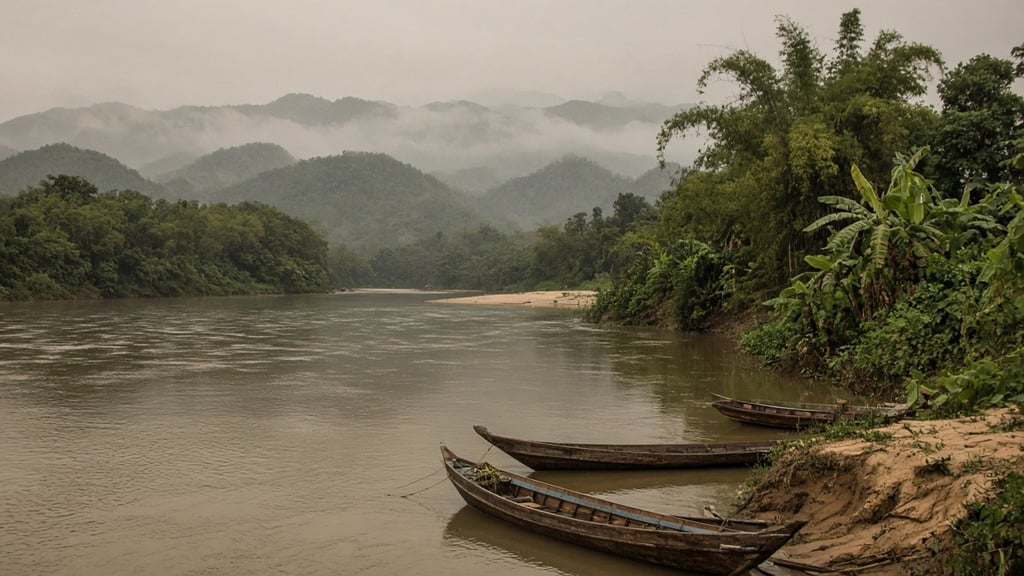
Thailand is preparing a pollution control zone along the Kok, Sai and Ruak rivers so Chiang Rai and Chiang Mai governors can restrict polluting activity, monitor water around the clock, and restore banks that have carried arsenic since early 2025. Thai and Myanmar officials meet in Bangkok on 25 and 26 November, the Pollution Control Committee reviews the zone on 27 November, and the National Environment Board is due to decide on 2 December. Chiang Rai hotels report high-season bookings below 50 percent, even though tourism groups say only four of 18 districts sit on the affected rivers.
Natural Resources and Environment Minister Suchart Chomklin briefed the National Disaster Prevention and Mitigation Command on 21 November 2026 after Prime Minister Anutin Charnvirakul ordered faster action on clean water. The proposed zone covers more than 150 kilometres of Thai riverbank. Approval would be published in the Royal Gazette under Section 59 of the Enhancement and Conservation of National Environmental Quality Act B.E. 2535 (1992). Chiang Rai and Chiang Mai governors would then write integrated action plans under Section 60 so agencies stop issuing mixed messages about which water is safe.
What the rivers are actually showing
The Kok River rises in Myanmar's Shan State and runs about 285 kilometres before joining the Mekong in Chiang Saen. Thai officials have tied unusual turbidity and arsenic to mining activity upstream of the border. The Pollution Control Department has sampled water and sediment at 22 stations on the Kok, Sai, Ruak and Mekong since March 2025. A November 2026 field kit test on the Sai River at Ban Hua Fai returned about 0.017 milligrams of arsenic per litre, down from 0.284 milligrams per litre earlier, but still above the 0.010 milligrams-per-litre surface-water standard.
An earlier PCD round, collected between 27 April and 1 May 2026, found arsenic above that standard at Tha Ton bridge in Mae Ai, Chiang Mai, and at two friendship-bridge sites on the Kok. All three Sai River stations from Ban Hua Fai to Ban Pa Sang Ngam also exceeded the arsenic limit. The Ruak and Mekong stations in that round met the standard. Other metals, including lead and mercury, were mostly within limits.
Cross-border talks and faster testing
Thai and Myanmar officials are due in Bangkok on 25 and 26 November for the first Joint Working Group session on water-quality management hosted in Thailand. The agenda includes a request to inspect upstream sites and a proposal for eight paired monitoring stations, four on each side. A sideline meeting is listed for 24 November. The ministry's 21 November readout said Prime Minister Anutin had raised transboundary water pollution with Chinese counterparts at APEC in Shenzhen on 20 November, and that Beijing offered technical help on monitoring.
Inside Thailand, PCD is to set up laboratories in Chiang Rai and Chiang Mai so samples no longer go to Bangkok, a wait of 20 days to a month. About 20 real-time stations are planned along the Kok, Sai and Ruak. The Department of Groundwater Resources has identified 10 well sites, and 14 village water systems are being expanded to serve about 20,000 people. Disaster officials are to issue twice-daily public water-quality updates so residents are not left comparing rival chat-group rumours.
Tourism takes the hit beyond the riverbanks
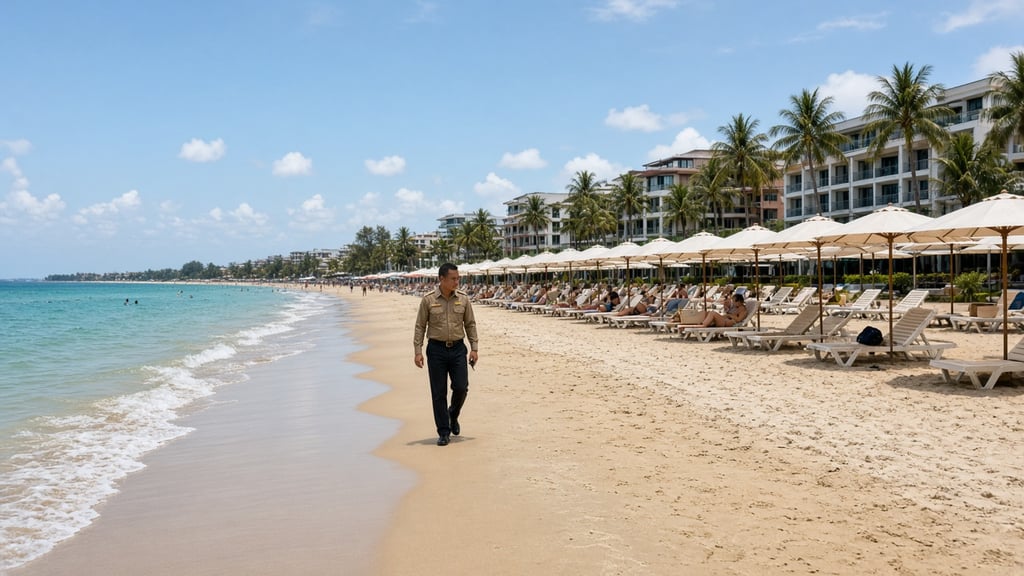
Acting Sub-Lieutenant Mekha Sirichairungruang, president of the Chiang Rai Tourism Business Association, said on 20 November that hotel bookings had dropped to about 40 percent, well below the 70 to 80 percent occupancy the province usually sees when the cool season starts. He said overseas tour operators had turned two-day Chiang Rai stays into day trips from Chiang Mai because guests were unsure about overnight water and food. The association is trying to separate the four river districts from the other 14, including Mae Chan hot springs and Khun Korn waterfall.
Hotels and restaurants generally use treated Provincial Waterworks Authority supply plus in-house filtration, and irrigation officials have funds for alternative raw-water sources so properties do not draw from the Kok. Chiang Rai recorded about 4.9 million visitors from January to October 2026, including just over two million foreigners, against roughly six million arrivals in 2025. In Mae Sai, restaurant groups have separately reported sharp sales drops among hundreds of members.
What This Means for Expats and Travelers in Thailand
Long-stay residents and visitors should treat river water and untreated irrigation canals as the risk, not every tap in Chiang Rai. Municipal tap water is produced from treated sources, and hotels in the city and in 14 districts outside the corridor say they filter again on site. Do not swim, fish for the table, or make ice from the Sai, Kok or Ruak until provincial notices say otherwise.
If you already hold a DTV, retirement, or other long-stay visa and live in Chiang Rai city, Mae Chan, Mae Suai or Thoeng, this designation is a monitoring and cleanup tool, not a travel ban. Keep bottled or filtered water if your building draws from an untested well. Farmers and people who work in the water in the one-kilometre riverside belt remain the groups health officials have screened for arsenic.
Watch the 25 and 26 November Bangkok talks and the 2 December board meeting. A Gazette notice would start provincial action plans, not close the province. City temples, tea plantations, hot springs and most mountain districts remain open; treat the three rivers as a live contamination story until the new stations and labs publish clearer maps.

Comment verification
Step 1 of 3
Verify your email once to publish your comment. Your email is never shown publicly.
Enter the 6-digit code sent to .
Choose the display name shown next to your comments.