Can Foreigners Own a House in Thailand? What the Law Allows in 2026
Thai law still lets foreigners own a house as a building, but not the land beneath it. A 2026 Department of Lands sweep of more than 1,300 companies is making nominee structures far riskier.
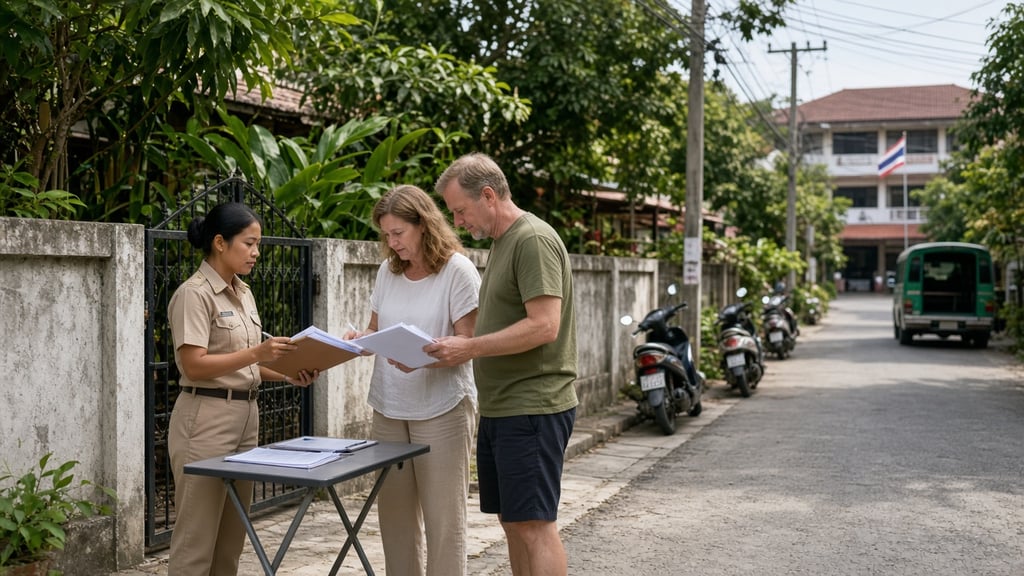
The 2026 answer has not flipped. A foreigner can own a house. A foreigner generally cannot own the land it sits on. That split sits in the Land Code, the Civil and Commercial Code, and the Condominium Act. The Department of Lands is tracing companies suspected of holding plots for non-Thai buyers.
A villa advertisement is not a freehold Chanote. The structure can be registered in a foreign name. The soil, except in narrow statutory cases, cannot.
Land stays Thai unless a statute says otherwise
The Land Code B.E. 2497 (1954) is the starting point. Section 86 allows an alien to acquire land only under a treaty that grants that right, and only with permission from the Minister of Interior. Marriage to a Thai national does not create a co-ownership ticket. A Thai spouse may buy in their own name after declaring the funds as personal property.
Section 96 bis is the rare personal exception. A foreigner who invests at least 40 million baht in activities set by ministerial regulation, keeps that investment for not less than three years, and obtains Interior Ministry approval may acquire up to one rai (1,600 square metres) for residential use. The plot must sit in Bangkok, Pattaya City, a municipality, or a town-plan residential zone. In practice the route is rarely granted to private house hunters.
A Thai-registered company that is genuinely majority Thai-owned may hold land for a lawful business. A company whose Thai shareholders are nominees, or whose foreigner is the true controller, sits on the wrong side of both the Land Code and the Foreign Business Act.
The house is a separate asset
Thai civil law treats buildings as distinct from land. A foreigner can buy, build, and register a house even when a Thai individual, a Thai company, or a spouse holds the Chanote. Register a right of superficies under Civil and Commercial Code sections 1410 to 1416 so the building is yours on someone else's land. Unregistered building rights often collapse against a later buyer or a bank.
The other common path is a registered lease of the land, with house ownership sitting with the tenant. Section 540 caps an ordinary hire of immovable property at 30 years. A lease longer than three years must be registered or it binds for only three years.
Condominiums remain the mass-market freehold. Section 19 bis of the Condominium Act, as amended in 2008, limits alien ownership to 49 percent of the total area of all units in that building, measured at registration. The quota is floor area, not unit count.
BOI, Treasury land, and what is not a back door
Section 27 of the Investment Promotion Act lets a Board of Investment promoted person own land to the extent the Board finds appropriate for the promoted activity. If the project ends, the land must be sold within one year.
The Treasury Department administers state (ratchaphatsadu) land for the Ministry of Finance. Under the State Property Act B.E. 2562, private leases of Treasury plots are generally capped at 30 years. Title stays with the Ministry of Finance. A tenant gets a term, not a Chanote.
What 2026 actually changed
On 19 October 2026 Prime Minister Anutin Charnvirakul, who also holds Interior, launched a nationwide nominee operation. The Government Public Relations Department reported the Department of Lands had identified 1,397 legal entities controlling 2,360 plots valued at about 14.01 billion baht, plus 13,088 entities and individuals in a wider queue.
This is a deadline, not a new Land Code. Governors and land officials were told to complete nominee investigations by December 2026, enforce existing statutes, and close loopholes that let new nominee files form. A 25 May 2026 Lands circular already told officers to screen funds, beneficial owners, and occupancy.
Confirmed illegal holdings can be forced to sale under the Land Code, with civil and criminal follow-up.
What This Means for Expats and Travelers in Thailand
Budget for land you will not own. Ask who holds the Chanote and whether a superficies or registered lease sits beside the building papers. Get the building itself transferred into your name at the land office. Handshake lease renewals are not freehold.
If a company holds the villa, have a Thai lawyer map the share register and the money trail. The 1,397-entity list is a screening set, not a conviction list, but land offices are being told to look through corporate veils. Do not add more nominee names.
Condo buyers should still demand the foreign-quota certificate for that juristic person and proof of inward funds. The 49 percent cap has not moved. Tourists passing through can look; they cannot convert a holiday into a land title. Retirement and remote-work visas do not unlock section 96 bis on their own.
Own the house if the paperwork supports it. Do not pretend to own the field underneath.

Comment verification
Step 1 of 3
Verify your email once to publish your comment. Your email is never shown publicly.
Enter the 6-digit code sent to .
Choose the display name shown next to your comments.