Kanlayaphat's Fight for Justice: A Rayong Pensioner Scammed Out of 1.7 Million Baht
Amid the serene backdrop of Thailand's eastern province of Rayong, a drama unfolds that feels all too familiar in today's world. Meet Kanlayaphat, a spirited 50-year-old who recently found herself at the center of a…
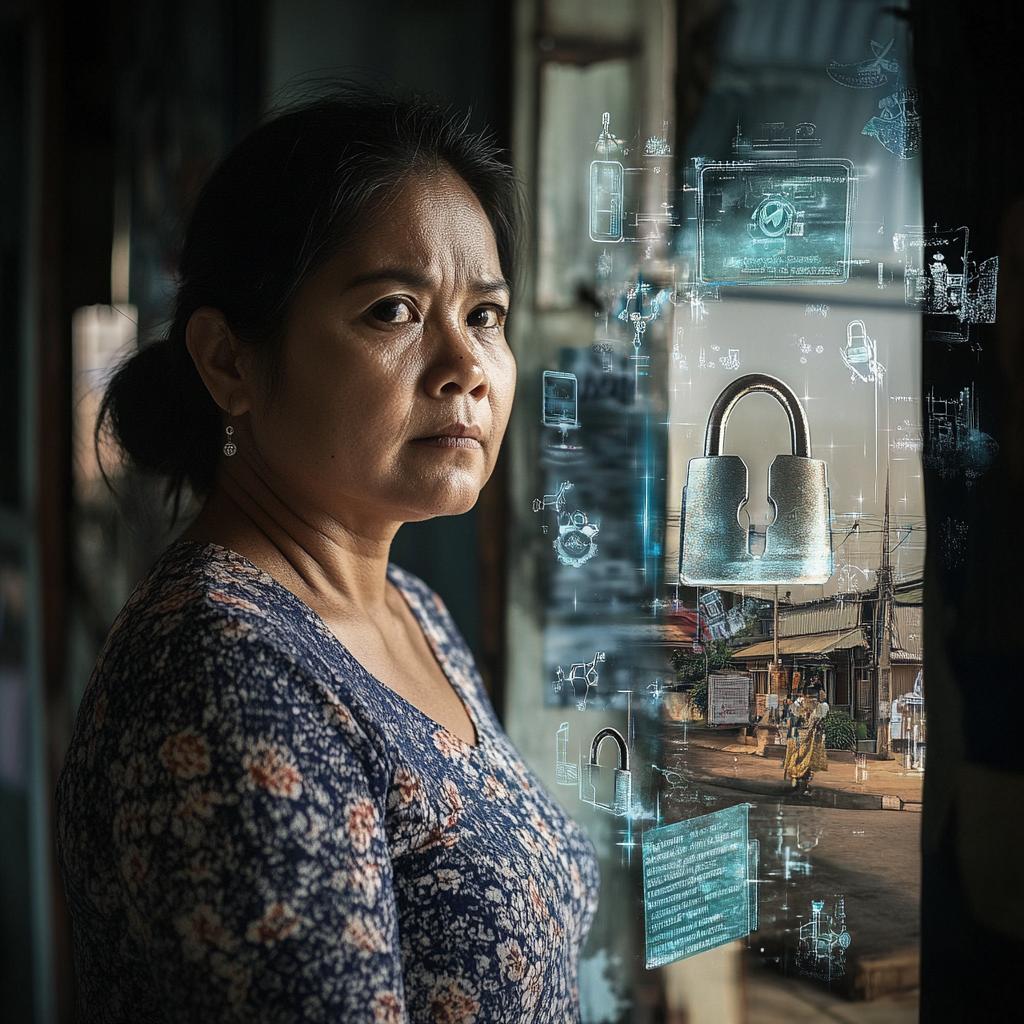
Amid the serene backdrop of Thailand's eastern province of Rayong, a drama unfolds that feels all too familiar in today's world. Meet Kanlayaphat, a spirited 50-year-old who recently found herself at the center of a disheartening tale begging for justice. Her crime? Trusting too easily—a trait the unscrupulous exploit with vigor. Her fortune, all 1.7 million baht of it, intended as her safety net for retirement, vanished in the blink of an eye. Her story, a cautionary tale, unveils the layers of bureaucracy that seem to wrap themselves around even the most straightforward cases when help is most needed.
April—often a time for renewal and hope—turned into a season of despair for Kanlayaphat. It all started with a deceptive message purporting to be from the Provincial Electricity Authority (PEA), which arrived in those early morning hours when vulnerability is at its peak. According to the message, she defaulted on her electricity bill for two whole months. Inkling it was an error—after all, who enjoys leaving bills unpaid?—she reached out to the PEA, confident in her financial diligence. The reassuring voice on the other end confirmed her payments and then worked a sinister twist into the tale. A refund was due, but more than money was at stake; they sought her trust, her identity, and ultimately, her savings.
The heist was sophisticated yet simple: a URL, a fake PEA official on one end, a credulous yet wary retiree on the other. First, it was a plea for proof of payment, later a bizarre request for a face scan, all under the guise of a refund procedure. Kanlayaphat's initial skepticism slowly gave way to assurance as the charlatan spun a web tight enough to feel real. The outcome? Four withdrawals that siphoned away life savings in increments of 279,097 baht, 799,148 baht, 630,516 baht, and 91,000 baht—a grand total she might never see again.
Fractured trust and unmet justice linger as Kanlayaphat pleads with the authorities at Huay Pong Police Station. Tired of the back-and-forth, her hope dwindles with the lack of updates. She is bounced between local police and the Cyber Crime Investigation Bureau (CCIB), each new lead a road filled with more waiting people. Her patience, like her funds, is nearly exhausted.
The system's response? It leaves much to be desired. "It's not for the likes of us ordinary folks," suggests Kanlayaphat, implying a grim reality—unless your name lights up headlines, bureaucracy may bury your case beneath piles of others. As forceful as her cries might be, they compete with the cacophony of more glamorous scenarios vying for attention.
But Kanlayaphat is not just waiting idly. She questions and criticizes, raising concerns about the bank that promised security, only for the illusion of safety to shatter before her eyes. With emerging legal reforms, talk of greater accountability surfaces, placing banks and mobile service providers under scrutiny. Yet, this proposed act is still embryonic, with its maturation horizon yet to inked by authority.
Her story, though tragic, urges awareness—a clarion call in an increasingly digital world where anonymity emboldens deceit. As her case meanders through red tape, it’s a poignant reminder to maintain vigilance as impostors hone their craft, awaiting the next Kanlayaphat. Here in Rayong and beyond, the fight for justice persists, as does the hope that one day it won't take fame for one's pleas to be heard.
In this world of smoke and mirrors, Kanlayaphat's story isn't just about loss; it’s a testament to resilience, drawing attention to systems in need of reform while reminding us all to keep asking questions, demand assistance, and hold fast to accountability, no matter who—or what—stands in the way.



Comment verification
Step 1 of 3
Verify your email once to publish your comment. Your email is never shown publicly.
Enter the 6-digit code sent to .
Choose the display name shown next to your comments.