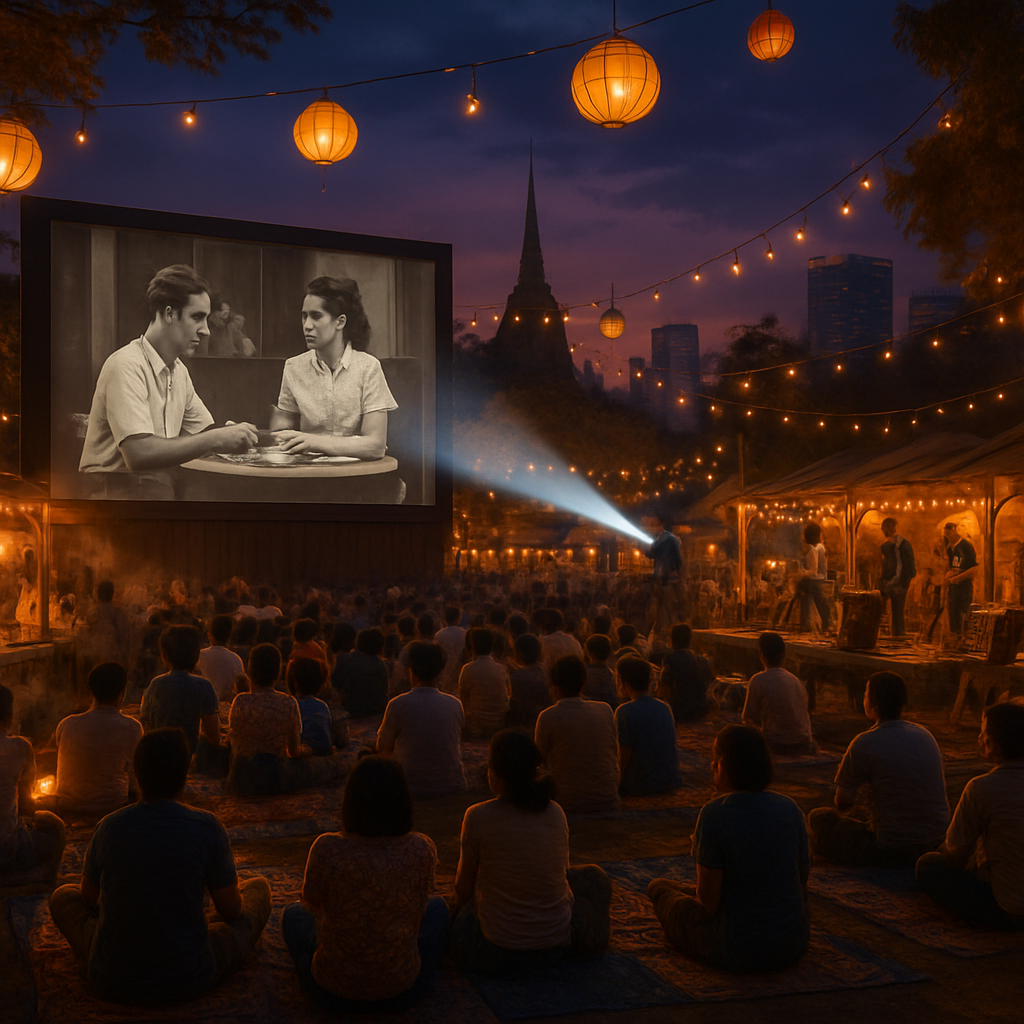
Bangkok’s beloved outdoor cine-concert festival, Krungthep Klang Plang, returns for its fourth edition in 2026 — and it’s keeping the good news simple: films, music, food, crafts, and entry that won’t cost you a baht. Running weekends from January 17 to February 1 (Saturdays and Sundays), the festival transforms three iconic venues into a warm, communal celebration of cinema, live sound and local makers. Doors and stalls open from 5pm, films roll at 7pm, and the nights crescendo with live concerts that are just as free as the screenings.
Organised by the Thai Film Director Association, the Thai Film Archive and happening mag, with support from the Department of Cultural Promotion under the Ministry of Culture, Krungthep Klang Plang blends classic and contemporary Thai cinema with a soundtrack of homegrown talent. If you love open-air movie nights with the smell of street food in the air and the buzz of a live crowd, mark your calendar — this one’s for you.
Why this edition feels special
This year’s programme leans into variety. Expect restored and beloved Thai features, contemporary indie films, surprise short screenings and something for both film buffs and casual viewers. The format is refreshingly communal: low-cost (free) access, outdoor seating options, and a lively atmosphere where film conversation easily slides into post-screening gigs. Add Bangkok food stalls and craft booths by local creators, and you have the perfect recipe for a weekend night out that’s cultural, tasty and entirely accessible.
Concerts — all free, all live
After the credits roll, talented Thai musicians take the stage. The lineup reads like a love letter to contemporary Thai music, with familiar names and exciting acts who know how to keep a night humming:
- Apartment Khunpa
- Taitosmith
- Chatree Nang Loeng Drama
- Once Dogs
- Whal & Dolph
- GPOD
- Jay Jettamon
- Scrubb
Each concert is free to attend, making Krungthep Klang Plang a rare and generous cultural night out in the heart of Bangkok.
Screening schedule — where to go
The festival takes place across three venues, each offering its own vibe and cinematic treat. Here’s the line-up so you can plan which weekends to lock in.
Bangkok Art and Culture Centre (BACC)
- January 17: How to Make Millions Before Grandma Dies (Larn Ma)
- January 18: My Boo (Anong)
Sala Chalerm Thani Theatre
- January 24: Salween, Gunman II
- January 25: Mae Nak Phra Khanong (1959) — live dubbing
Asvin Contemporary Art and Culture Space (Asvin Cinema)
- January 31, 2026: Ruen Pae (1961)
- February 1, 2026: The Stone
Every festival day also features short films and live musical guests, so even if you arrive for “just one movie,” you might end up staying for the whole program — and that’s the point. Expect surprises, rediscoveries and classic screenings presented with a lively communal spirit.
Food, crafts and the festival vibe
Krungthep Klang Plang isn’t just about watching films; it’s about experiencing a night out that tastes like Bangkok. Local food stalls line the venues, offering everything from crispy snacks to comforting late-night bowls. Nearby craft booths showcase the work of local creators — perfect for finding a unique souvenir or supporting indie artisans.
Picture this: a warm January evening, a plate of street food in hand, a restored Thai classic on screen, and a live band tuning up once the credits roll. The atmosphere is casual, friendly, and remarkably inclusive — families, couples, groups of friends, and film students rubbing shoulders under the same sky.
Practical details
- Dates: January 17 – February 1, 2026 (Saturdays & Sundays)
- Time: Activities from 5pm; screenings at 7pm; concerts follow
- Admission: Free for all events
- Venues: Bangkok Art and Culture Centre (BACC), Sala Chalerm Thani Theatre, Asvin Cinema
Whether you’re a cinephile eager to see restored classics or someone who simply wants a lively, free night out with great music and food, Krungthep Klang Plang 2026 is poised to deliver. Bring a small blanket, invite friends, and arrive early to browse the food and crafts — and don’t forget your curiosity. When film meets live music and the city hums around you, the night becomes more than a screening; it becomes a memory.
See you under the open sky — the films are free, the music is free, and the vibes are priceless.















Free films and live music in the heart of Bangkok? Sounds like the city finally did something truly public and joyful. I’m booking my weekend blanket already.
Free for who though? I bet the sponsors get the real benefit and small vendors get squeezed out. Public events often hide the real costs.
Crowds here mean dirty streets and loud nights for local residents. I love culture, but I also want sleep and clean sidewalks.
I get the sponsorship worry, but community events like this can boost small makers if organisers prioritize local stalls. If they stick to their word about local crafts and free access it can actually help, not hurt.
Important to watch the follow-through: announced intentions vs actual vendor selection often diverge. Someone should map the vendors and funding sources to keep it honest.
Another free festival — and another layer of bureaucracy. Who’s paying for crowd control, cleanup, and sound permits? The article doesn’t say.
The article mentions the Department of Cultural Promotion and Thai Film Association. That suggests public funding and institutional support, not just private sponsors.
Institutional support can be vague though, Ploy. I worry about ticketless events leaving taxpayers on the hook with little accountability.
If it brings people to eat from roadside stalls and buy crafts, that’s money circulating locally. The indirect economic effects matter too.
Exactly, supporting the creative economy isn’t just charity, it’s infrastructure. But transparency on budgets would calm skeptics.
Lineup is sick — Apartment Khunpa and Whal & Dolph live after a classic film? That’s a perfect Saturday plan. Free concerts make music actually available to everyone, not just those who can afford venues.
I love the idea too, but sometimes the sound mixes at free outdoor shows are terrible. Hope the organisers hire good sound techs.
True, bad sound can ruin both the film and the concert vibe. I’ll bring earplugs and good vibes anyway.
Bands like Once Dogs get more exposure from gigs like this than from streaming alone. It’s a real stage for local artists, not just a token slot.
As a film student, the restored classics are the real draw for me. Seeing Mae Nak with live dubbing is both performative and archival, which opens discussion about how we present cinematic heritage.
Restoration matters but so does context: presenting a 1959 film without framing its historical politics risks nostalgia without critique. I’d like to see post-screening panels.
Yes, panels would help. Even a short introduction about restoration choices or the film’s reception in its time could deepen the experience for casual viewers.
Panels sound boring to me, but I’d go if they had a Q&A with the musicians who do live dubbing. That sounds fun.
I grew up watching Ruen Pae with my parents; it’s nice they show old films, but are they restoring and respecting the originals or just using them as bait? Classics shouldn’t be cheapened.
Respect is more than restoration — subtitles, cultural explanation, and proper audio reproduction matter too. Many young viewers need that bridge.
Exactly. If the screening treats history as backdrop for a night out, older audiences will feel sidelined. Balance is key.
I’m from abroad and would love context. I might come just to learn about Thai cinema history and to ask older viewers about what it meant back then.
Accessibility concerns: Are venues wheelchair-friendly and are there seating options for elders? Free admission is meaningless if people can’t physically attend. The article is silent on access details.
Good point. Outdoor events often forget mobility ramps and audio-description services. Organisers should publish accessibility info ahead of time.
They should also include sign-language interpreters for panels and ensure restrooms are accessible. Being inclusive costs little compared to the social benefit.
I volunteer at events and I’ll ask the organisers to add clear accessibility info and to liaise with disability groups. Small changes help a lot.
This festival is a fascinating case of cultural policy in action: public institutions curating popular culture for broad audiences. But ‘free’ can be performative if not paired with meaningful participation and transparency.
Good phrase — performative freedom. I’d like to see co-curation with community groups so programming doesn’t just reflect elite tastes.
Co-curation would shift power dynamics and offer pedagogic benefits. Also a rotating committee including film students would be pedagogically valuable.
I study festivals and agree: participatory curation increases legitimacy and draws diverse audiences. This could be a model if done well.
Free food? Or just food stalls you still have to pay at? Either way, I’m coming for the mango sticky rice.
I love protecting cultural memory but worry about commercialization; will global brands push out authentic vendors? Free events often end up as ad platforms. Keep an eye on sponsor banners.
Local makers get exposure at these markets though. If organisers set vendor criteria and cap corporate booths, it can be balanced.
Agreed, vendor criteria would help. I’ll be scanning for oversized corporate stalls and Instagrammable sponsor walls that drown out local voices.
As a stallholder I prefer small crowds that buy rather than huge numbers that only take pictures. Management of space and foot traffic is crucial for us.
Why are some bands favoured over others? The lineup looks curated for a certain crowd and I don’t see experimental or marginalized artists. Inclusion matters even in free lineups.
Lineups are politics. Familiar names draw crowds which makes the event viable, but programmed diversity is a sign of care. We should ask organisers about selection criteria.
Asking is fine, but action is better. Maybe a late-night slot for newcomers or a submission-based open mic could democratize the stage.
Open submissions are great but need curation too. A panel that includes community reps can vet for quality and representation.
Environmental footprint question: free festivals generate a lot of single-use waste. Are there recycling stations and compost options? The article makes it sound idyllic but reality can be messy.
If they don’t ban disposable plates and provide bins, the site will be trashed by morning. Festivals must plan for waste, not hope attendees behave.
Exactly. Even a simple policy asking vendors to use compostable containers and a volunteer cleanup hour would reduce impact significantly.
We organize cleanups and can coordinate with the festival. If organisers commit, volunteers will help sort waste and educate visitors.
This sounds awesome! Free movies, food, and bands — best weekend ever.
Will there be English subtitles for restored classics? As a visitor, I’d love to experience the films but language can be a barrier. The article didn’t mention translations.
Subtitles are sometimes provided for restored films, but it’s inconsistent. It would be great if the programme listed subtitle availability per screening.
If organisers add subtitles it will attract more international visitors and make the festival more inclusive. Hope they consider that.
As a fan of Once Dogs, I want to say free concerts keep the scene alive. But I still hope bands get paid fairly even if entry is free. Artists deserve compensation.
Yes! Free entry shouldn’t equal unpaid performers. Maybe the festival pays a stipend or gives merch revenue rights to bands.
Exactly, exposure is fine but it shouldn’t be the only payment. I’ll be buying merch to support the artists directly.
I’m cynical: free stuff is for tourists and influencers to take photos. Will real locals even benefit? The city needs grassroots cultural policy, not PR stunts.
That’s the tension — public culture can be both genuine and spectacle. The difference is local decision-making in programming.
Then let locals decide the lineups and vendors. I’m tired of top-down culture that treats communities as photo backdrops.
Community governance is complex but doable; participatory budgeting and vendor quotas can help balance interests.
I bring my family to free screenings because kids love open-air movies. It’s cheaper than going to the cinema and more fun outside. Please keep it family-friendly!
Family-friendly times are important; late concerts might be noisy for kids but the early screenings work well for families.
Yes, the schedule seems mindful with screenings at 7pm. We’ll likely come early for food and crafts and leave before the loudest sets.
I sell handmade goods and welcome the exposure, but organisers need to limit vendor fees and provide fair spacing. Otherwise small makers don’t stand a chance.
Fees and spacing are real issues. The article’s promise of local makers sounds nice, but execution determines whether vendors thrive.
If they prioritize local talent and keep fees low, the craft booths can be the festival’s soul rather than just decor.
Is there any way to reserve spots or is it first-come, first-served? I’m worried lines will be long and seats taken early by big groups. That can be frustrating.
Usually these events are unreserved, so early arrival helps. Some festivals offer a small section for elders or people with mobility needs if requested.
Good to know. Maybe organisers could add a simple reservation for a small percentage of seating for elders and families.
From what I’ve seen, the BACC and Sala Chalerm Thani have good infrastructure for sound and seats, while Asvin is more intimate and experimental. Pick your venue based on what experience you want.
Thanks for the tip. I’ll aim for BACC then if I want more comfort and subtitles might be more likely there too.
Yes, BACC is usually the most visitor-friendly. Asvin is great if you want a raw, artistic vibe and to discover smaller films.
I run workshops and would love to propose a mini masterclass on film restoration during the festival. Does anyone know how to contact organisers? The article didn’t give a contact.
Try contacting the Thai Film Archive or happening mag; they’re listed as co-organisers. Social media DMs sometimes work surprisingly well.
Thanks, I’ll reach out. A public workshop could help demystify restoration and attract people who only came for the music.
If the festival genuinely supports local makers it could become a recurring economic lifeline, not just a one-off publicity boost. Long-term planning matters.
Sustainable cultural events need long-term vendor contracts and marketing support for makers between festivals. One weekend doesn’t build a market alone.
Exactly. Partnerships with local markets and permanent venues can convert festival visibility into steady customers.
Seeing Mae Nak live-dubbed in an open-air setting sounds eerie and awesome. I hope they keep the original intertitles and don’t over-modernize the experience.
Preserving original elements while adding live performance requires careful curatorial notes. It’s a balancing act between preservation and innovation.
Then let curators explain their choices. A short preface or leaflet would make the evening more meaningful.
Free culture nights are one of the best things about Bangkok. They remind me of why the city vibrates creatively despite everything else. Hope this edition lives up to the promise.