Paetongtarn Shinawatra's 3.78 Trillion Baht Budget: A New Chapter for Thailand's Economy
As the anticipation builds around the corridors of power in Thailand, Prime Minister Paetongtarn Shinawatra stands poised to unveil her government’s grand vision for the fiscal year 2026. This isn't any ordinary…
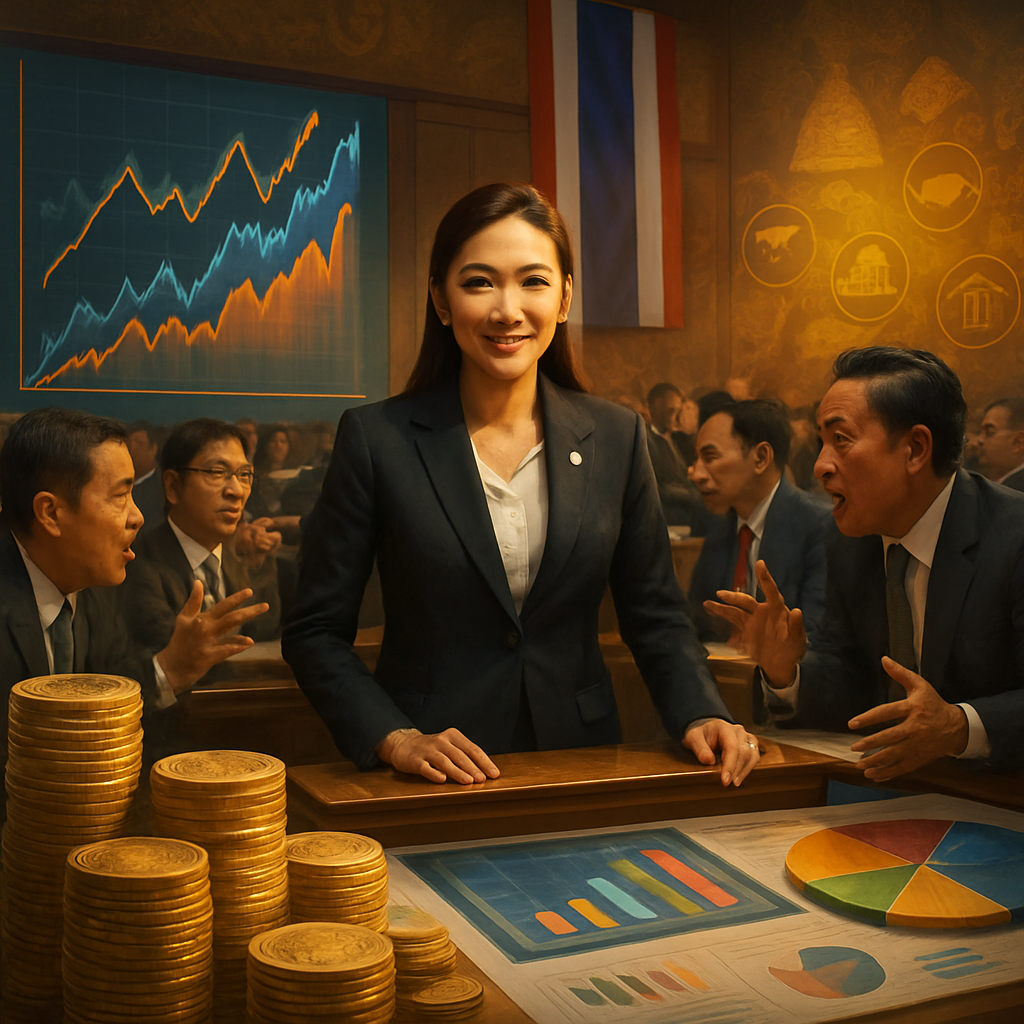
As the anticipation builds around the corridors of power in Thailand, Prime Minister Paetongtarn Shinawatra stands poised to unveil her government’s grand vision for the fiscal year 2026. This isn't any ordinary window-dressed budget; it’s a sprawling financial quilt worth a jaw-dropping 3.78 trillion baht. This impressive figure marks a nearly 30 billion baht leap from the current fiscal year, setting the stage for fervent debate during the first reading from tomorrow through Saturday.
Critics have sharpened their pens, particularly the vocal People's Party (PP), pointing out what they see as fractured allocations amongst ministries, mere tools to woo voters with starry promises. But the prime minister, with a sly grin perhaps, dismisses these allegations. She assures us that coalition partners are on the same page, with regular pow-wows to keep everything from derailing.
Adding to the drama, Interior Minister Anutin Charnvirakul, the Bhumjaithai party's spirited leader, waves off whispers that his party might topple the budget bill. They hold the purse strings of four ministries, managing a cool trillion baht of proposed expenditures. Anutin calmly explains it would be ludicrous to bite a bill endorsed by the cabinet, a bill they had their heads and hands all over, too.
Peek behind the curtain at the budget breakdown, and you'll find the central fund reigning supreme with a hefty slice of 632.9 billion baht. Hot on its heels is the Finance Ministry with 397.8 billion baht, then the Education Ministry touching lives with 355.1 billion baht. The Interior Ministry comes in at 301.2 billion baht, with the Defense Ministry rounding things off at 204.4 billion baht.
The National Economic and Social Development Council (NESDC) paints a hopeful picture of 2026, forecasting a 2.3-3.3% economic expansion, fueled by the trifecta of domestic consumption spiking, investments blossoming, and the tourism sector rising like a phoenix. Envisioning an inflation of 0.5-1.5% and a current account surplus of 2.3% of GDP, the strategy seems well knitted.
Amidst it all, Senator Chayanant Tiyatrakarnchai, helming the Senate finance subcommittee, tugs on the sleeves of caution, suggesting fiscal readjustments. She's been privy to gloomy news about potential revenue gaps, brandishing figures sourced from top brass in the Revenue, Excise, and Customs departments.
Meanwhile, Senator Sarayut Yimyuan, donning the hat of financial guardian with earnest solemnity, calls for clear visibility through transparency lenses, accountability, and reformative strides in public investment outlays.
Their voices, echoed throughout the marble halls, weave a narrative where scrutiny marries optimism. With the government demonstrating agility by re-evaluating the digital wallet scheme, there’s an air of resolution that this administration is more than willing to adapt when the tides deter usual navigation. As we edge closer to the reading, the debates promise not just fireworks, but a detailed portrait of ambition painted across Thailand’s vibrant tapestry.



Comment verification
Step 1 of 3
Verify your email once to publish your comment. Your email is never shown publicly.
Enter the 6-digit code sent to .
Choose the display name shown next to your comments.