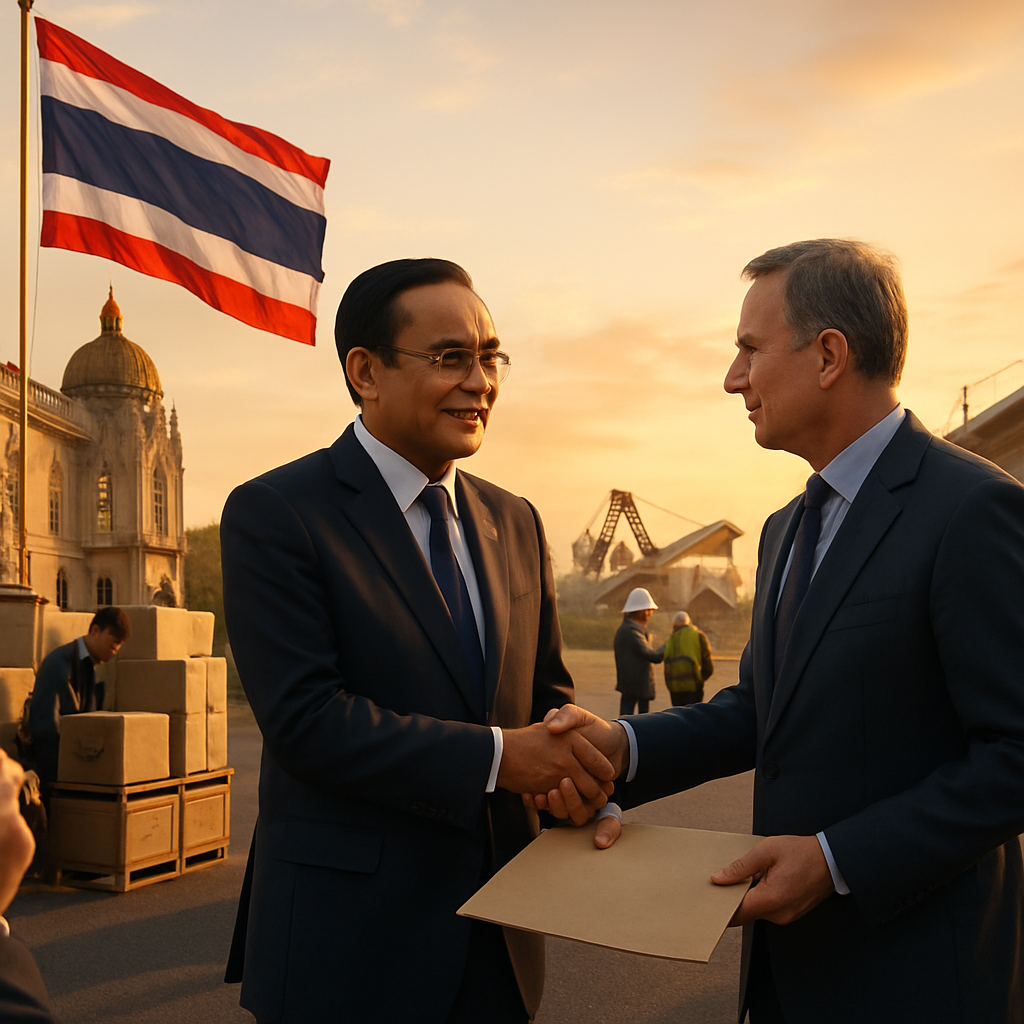
On January 15, an unmistakable gesture of solidarity landed at Thailand’s doorstep: China presented a humanitarian package worth 20 million yuan (roughly 90 million baht) to support recovery efforts after a crane collapse at a Thai–China high-speed rail construction site. The handover took place at Government House at 11:00 a.m., when Chinese Ambassador Zhang Jianwei personally delivered the aid to Prime Minister Anutin Charnvirakul — a scene that read like diplomacy in action, practical and symbolic all at once.
The assistance is split neatly between cash and supplies: 10 million yuan in direct financial support and another 10 million yuan in relief goods. Converted to baht, the combined total comes to approximately 90,229,640 — a figure that Prime Minister Anutin described as more than money, calling it “a proof of deep, long-standing friendship” between the two nations. In short, this was solidarity with a handshake and a shipping manifest.
Ambassador Zhang also used the meeting to offer Beijing’s sympathies over the tragic crane accident at the high-speed rail project. “China takes safety very seriously,” he said, emphasizing that Chinese companies involved in the rail work have been instructed to cooperate fully with Thai authorities in the investigation. That assurance — a pledge to collaborate on accountability and safety standards — underscores how intertwined the two countries are when infrastructure, investment and human lives cross borders.
Prime Minister Anutin returned the cordiality with visible appreciation, framing the gift as a reaffirmation of the partnership between Bangkok and Beijing. He noted that the relationship has matured over decades, spanning commerce, infrastructure, culture and people-to-people ties. When adversity strikes, he said, those long-term bonds become the lifelines that matter most.
Beyond immediate relief, the conversation between Anutin and Ambassador Zhang touched on economic recovery and future cooperation. Anutin raised a previous bilateral talking point: China’s potential purchase of 500,000 tonnes of Thai rice, an agreement discussed earlier with President Xi Jinping. The prime minister sees such an arrangement as a timely boost for Thai agriculture and rural incomes. Ambassador Zhang responded positively, affirming Beijing’s willingness to advance trade cooperation and help meet the rice import target — a diplomatic nudge that could have meaningful implications for Thailand’s rice sector.
Tourism also came up. With Thai beaches, temples and markets once again vying for international attention, Anutin urged renewed efforts to attract Chinese tourists as a way to catalyze economic recovery. The Chinese ambassador pledged to facilitate travel and step up tourism links, signaling a mutual interest in restoring visitor flows that were stalled during recent global disruptions.
All this took place against the backdrop of a larger diplomatic moment: Thailand’s King Maha Vajiralongkorn and Queen Suthida had arrived in Beijing for an official state visit marking the 50th anniversary of bilateral relations. The royal visit adds ceremonial heft to the practical measures taken on January 15, reinforcing a narrative of long-term partnership that oscillates between state protocol and on-the-ground cooperation.
There are two threads running through this story. The first is immediate: aid to respond to an accident, cooperation on an investigation, and relief for those affected. The second is strategic: trade agreements, tourism recovery, and the steady cultivation of relationships that turn into rapid-response networks when trouble hits. In this case, the two threads frayed together into a tidy bow of diplomacy, relief and future promises.
Diplomacy often shows itself in grand state dinners and official statements — and it does — but moments like this are where it becomes tactile. A cheque, a pallet of supplies, a pledge to cooperate on safety: those are the things people remember in the days after an incident. They’re also the things that build trust over time.
For Thailand, the 20 million yuan gift is immediate assistance and an implicit vote of confidence from a major partner. For China, the move reinforces its role as both an economic ally and a neighbor willing to step in when difficulties arise. The follow-up actions — the investigation, any contractual rollout of rice purchases, and the logistical work to encourage Chinese tourists back to Thailand — will determine whether this episode is remembered simply as a humanitarian gesture or as a turning point that deepens bilateral ties.
Either way, January 15’s meeting at Government House offered a snapshot of how modern diplomacy works: practical, punctuated by symbolism, and never far from questions of trade and travel. For now, the cranes at the rail site are under scrutiny, relief supplies are en route, and a diplomatic bridge of 20 million yuan has been laid between two long-standing partners.


















China’s 20 million yuan aid is practical but it smells a bit like political theater to me. The timing with the royal visit makes you wonder if this was choreographed to shore up influence. Still, relief for victims is welcome and should be the priority.
I agree that victims need help first, but Thailand also shouldn’t become overly dependent on Beijing. Aid with strings can reshape our priorities.
Dependence is a real risk, but infrastructure and trade ties bring jobs and investment that many Thais benefit from. We should demand transparency on safety and contracts while accepting help for the injured and families.
Exactly — transparency and accountability. If Chinese firms are involved in the investigation, Thai authorities must lead and publish the findings.
As someone following both countries closely, I think cooperation can be genuine; China wants to avoid reputational damage and will likely cooperate more than people expect.
The incident highlights systemic governance challenges in cross-border mega-projects. Safety protocols, labor standards, and regulatory oversight must be harmonized between partners. Without institutional reform, aid is a bandage, not a cure.
From an economic standpoint, the rice purchase talk is interesting: buying 500,000 tonnes could prop up rural incomes but risks being politicized. Trade should follow market signals, not diplomatic theatrics.
True, but targeted purchases tied to clear procurement rules and audits could be structured to avoid corruption. It’s feasible if both sides commit to transparency.
Why trust China to follow those rules though? History shows opaque deals more often than audited aid.
Distrust is rational, Sam, which is why Thailand’s civil society and parliament should demand public reporting on any bilateral agreements.
If China really buys our rice as they said, my family might finally catch a break. But I’m skeptical because promises have a way of fading once photos are taken.
Farmers need concrete contracts, not headlines. If the rice deal is real, deliver it through cooperatives so big traders don’t pocket the benefits.
Exactly, Aya. Cooperatives or direct auctioning with oversight would stop middlemen from stealing the good stuff.
This is classic soft power: cash, cameras, and a handshake. Thailand should take the aid but set firm conditions on project safety and future investments. Otherwise we sell influence for a check.
Legally, Thailand can require investigations and independent audits as a condition for further cooperation. The government should publish all terms and any reparations paid to victims.
Good point. If contracts include penalties for safety breaches, companies will think twice before cutting corners.
Penalties only work if enforced. Do you trust Thai courts to take on a Chinese state-backed contractor? I don’t.
Enforcing penalties will be political, yes, but international arbitration clauses and media scrutiny can help pressure compliance.
Tourism revival is a welcome angle, but safety concerns at construction sites should be advertised transparently. Chinese tourists won’t return if they hear about collapsed cranes every year.
We rely on Chinese visitors a lot; quick recovery of trust matters. Tourist-friendly measures and visible safety audits at attractions and transport projects are necessary.
Agreed. Combining promotional campaigns with demonstrable safety upgrades will be more effective than just asking tourists to come back.
Twenty million yuan sounds like a lot until you compare it to the scale of projects and potential damages. This is symbolic more than sufficient relief.
Symbolism matters but we must remember the human toll. Families of victims need long-term compensation and legal support, not just pallets of supplies.
I hope compensation is part of the investigation outcomes. Public pressure can keep this on the agenda beyond the photo op.
The royal visit to Beijing and this aid handover create a narrative of closeness that might limit Thailand’s strategic flexibility. Is there any room left to diversify partnerships?
Historically, smaller states balance between big powers. Thailand has done so for centuries. The question is whether today’s economic ties allow true maneuverability.
True, but economic entanglement is deeper now; diversification needs active policy, not hope.
If Thailand leans too heavily on China for infrastructure and tourism, it risks political leverage in other arenas. Allies should be cultivated elsewhere too.
Exactly my worry. Strategic culture needs updating to match the scale of modern investments.
Pragmatism seems to rule: accept aid, pursue rice sales, and push for tourists. But the proof will be in follow-through and regulation. Empty promises are easy; accountable actions are hard.
Prime Minister Anutin did well to accept support swiftly; leadership matters in crises and this shows diplomacy in action. The investigation must be transparent though.
I respect quick action, but public trust will hinge on transparency, not just rhetoric from Government House.
I’m glad victims get help, but I can’t shake the feeling that geopolitics are being served alongside humanitarian aid. It makes me uneasy.
Why don’t they just make cranes safer so people don’t get hurt?