Sino-Thai High-Speed Rail Project: Prasert Jantararuangtong Reveals Progress and Future Plans
Work is humming along on the elevated portion of the high-speed rail tracks, connecting Saraburi and Kaeng Khoi, since January last year. This 12.9-kilometre segment is an integral part of the broader Bangkok-Nakhon…
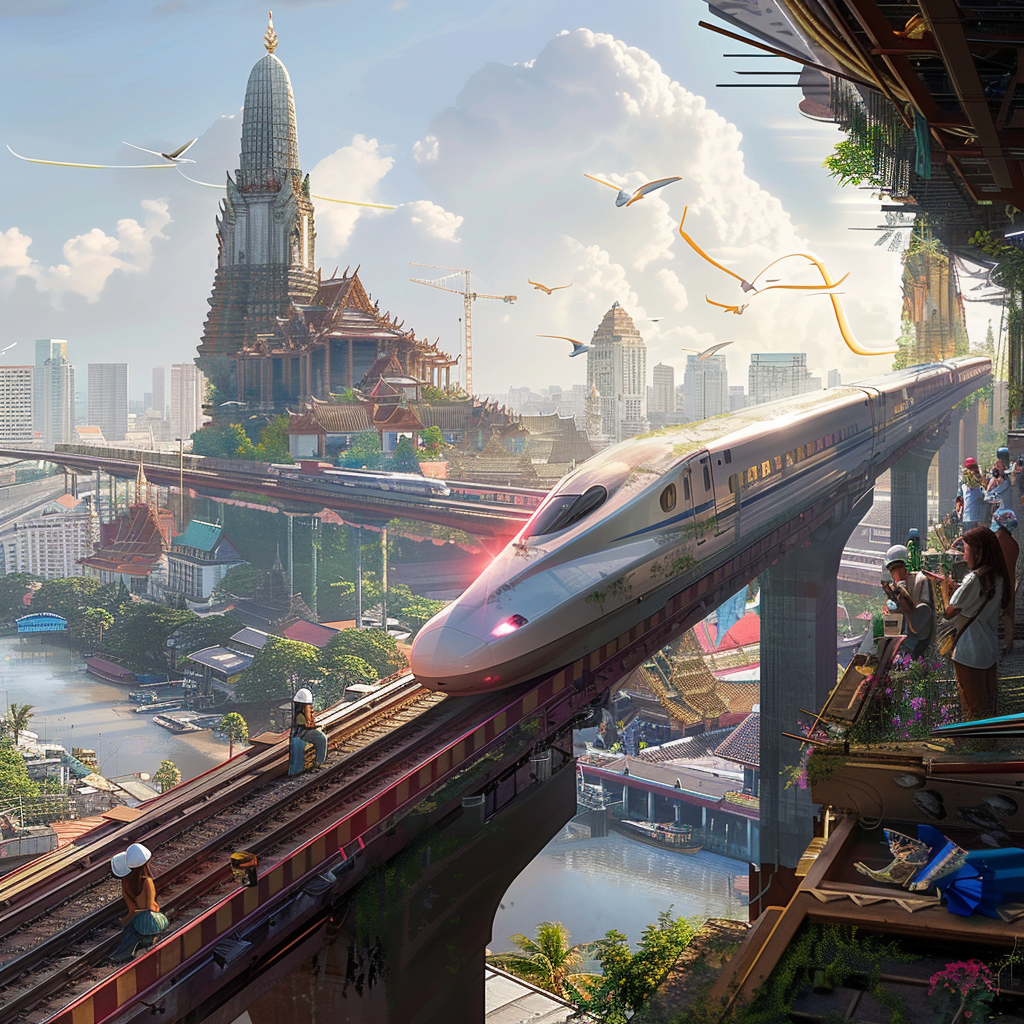
Work is humming along on the elevated portion of the high-speed rail tracks, connecting Saraburi and Kaeng Khoi, since January last year. This 12.9-kilometre segment is an integral part of the broader Bangkok-Nakhon Ratchasima high-speed train route. Just imagine cruising along these tracks at high speeds! (Photo: High-speed train project Saraburi-Kaeng Khoi)
The wheels of progress keep turning for the Sino-Thai high-speed rail (HSR) link, as this ambitious project will take center stage during the mobile cabinet meeting set for Nakhon Ratchasima next week. The urgency to advance this project is palpable, thanks to Digital Economy and Society (DES) Minister Prasert Jantararuangtong’s announcement on Tuesday. The sprawling 250.77-kilometre high-speed rail link between Bangkok and Nakhon Ratchasima is slated for completion sometime in 2028—a date that now feels tantalizingly close.
Currently, the first phase of the project is soaking up about 179.41 billion baht and is well underway. But the bullet train isn’t the only thing on the government’s agenda. The forthcoming meeting will also tackle improvements in double-track rail upgrades between the two cities and plans to revamp Nakhon Ratchasima airport, transforming the province into a Northeast transportation hub, Mr. Prasert disclosed. It’s a multifaceted effort aimed at elevating Nakhon Ratchasima's status as a hotspot for international exhibitions, meetings, and summits—a stage that's set to welcome events as prestigious as the 2029 International Horticultural Expo.
Mr. Prasert had even more up his sleeve. He revealed the ministry's ambitious plan to roll out "digital volunteers" on the first day of the mobile cabinet meeting. Armed with a mission to boost digital awareness and literacy among Thai citizens, these volunteers will be pioneers of the government's digital frontier.
Meanwhile, Nakhon Ratchasima Rajabhat University's (NRRU) local soft power development committee conducted a brainstorming meeting to unearth the province's soft power potential. Samart Jubjon, a maestro sculptor with the NRRU, mentioned that experts from all 32 districts assembled to contribute their insights. Tuesday’s meeting was dedicated to distilling elements of the province’s unique identity and culture that could be spotlighted in future promotional activities.
The excitement builds as the committee gears up to submit a detailed list of their findings to the government during the mobile cabinet's convening next week. This synergistic push to blend infrastructure and cultural elements could very well redefine Nakhon Ratchasima’s future, placing it on the global map of must-visit locales.



Comment verification
Step 1 of 3
Verify your email once to publish your comment. Your email is never shown publicly.
Enter the 6-digit code sent to .
Choose the display name shown next to your comments.