Somsak Thepsutin Faces Universal Healthcare Crisis: Addressing Bangkok's Referral Delays in 2025
On a fine day in Yasothon's Kham Khuen Kaeo district, Thailand's buzzworthy Minister of Public Health, Somsak Thepsutin, addressed a significant health concern, one that uniquely straddles the bureaucratic and the…
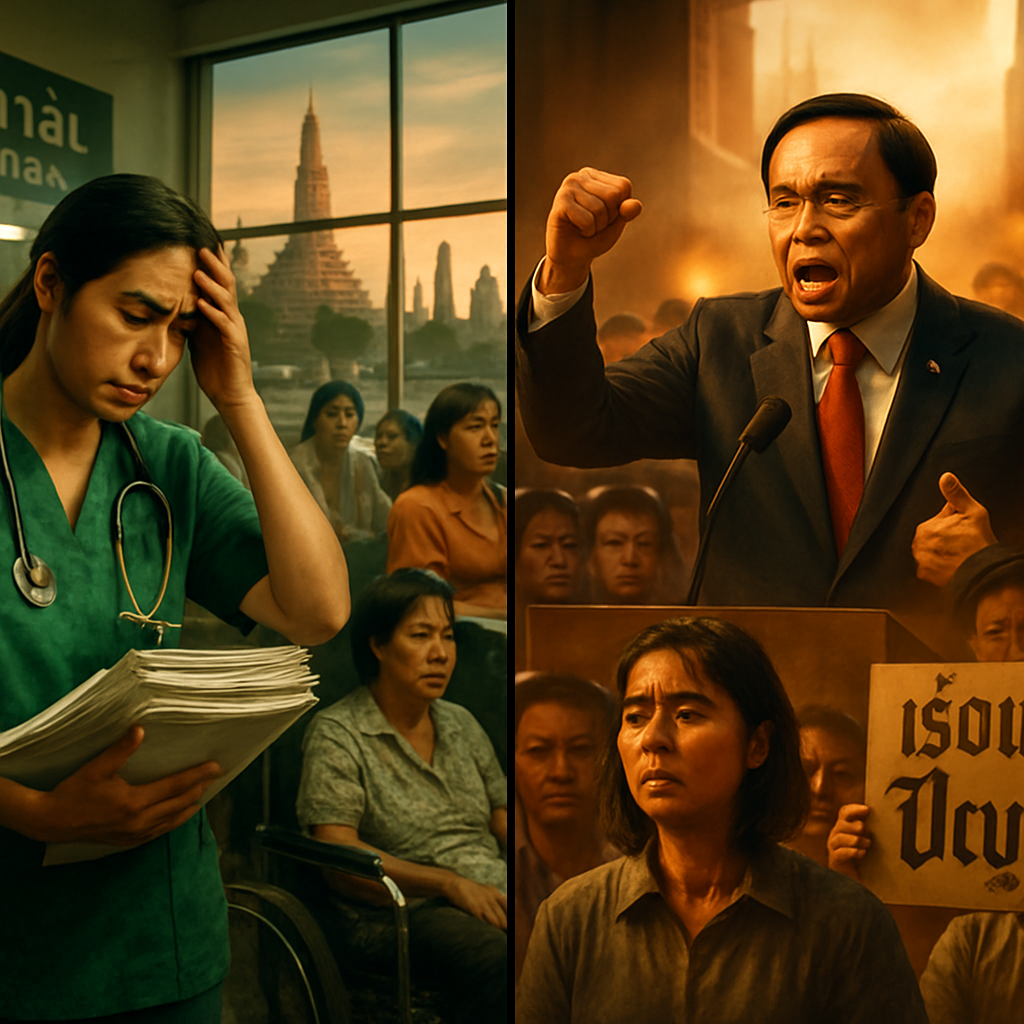
On a fine day in Yasothon's Kham Khuen Kaeo district, Thailand's buzzworthy Minister of Public Health, Somsak Thepsutin, addressed a significant health concern, one that uniquely straddles the bureaucratic and the everyday. Speaking from Kham Khuen Kaeo Hospital, Minister Somsak found himself at the crossroads of public outcry as a civic network brought forth a pressing issue involving universal healthcare subscribers.
This group, led by the impassioned Thanapon Dokkaew, the spearheading spirit behind the Kidney Friends Association of Thailand (KFAT), fired a petition at the Public Health Ministry's doorstep. Why? A game of patience that no patient had signed up for: the elusive referral documents. According to the network, this was no trivial document delay but a bona fide crisis obstructing healthcare for numerous Bangkok residents.
Imagine this: you're in need of specialized care—your local clinic can't hold a candle to the advanced treatment necessary. The catch? A piece of paper—yes, a referral—needed 30 days in advance. Ridiculous? You bet. This red tape tango not only endangers timely treatments but drags wallets through the mud, with out-of-pocket costs sneaking up on unsuspecting patients like an unwelcome surprise party.
"This isn't merely a document delay; it's a serious healthcare barricade," Thanapon declared, his words echoing the frustration of countless others. He painted a stark picture of clinics haggling over prescription days like hot vendors at a brisk market, leaving chronic disease sufferers teetering on the brink. "A seven-day limit on prescriptions without a referral? Who agreed to this mazurka of madness?" he questioned.
The aggrieved network hasn't come empty-handed either. They’ve laid out a list—a robust six demands aimed at revolutionizing the referral rigmarole. First on the docket? Legal retribution for those officials straying from their referral duties—the real-life drama of malfeasance charges included for particularly heinous offenses.
But that's not where the script ends. They demand the NHSO wakes from its slumber, clambering into action with a 30-day timeline to tighten control on the sluggish paperwork pipeline. Further down the wish list is the rally for public engagement in overseeing healthcare processes, a clarion call for an enlightened, informed public—a healthcare metamorphosis if you will.
Speed and simplicity took center stage in their final demand: a slick “one ID card” framework, an idea set to untangle the spaghetti junction of patient transfer across Bangkok's medical landscape.
"Action is more than necessary; it's overdue," Thanapon emphasized, hoping his words spurred a sense of urgency in the NHSO halls. "Immediate penalties should stare down any clinic or hospital stonewalling patient treatment."
Minister Somsak, the man now in the hot seat, assured that the NHSO board, stirred into a proactive agenda, would create a special subcommittee to fast-track a solution to this bureaucratic quagmire, particularly in Bangkok, where such delays seem to hatch like clockwork.
And in a bid to up the ante, he's declared a no-nonsense approach—public health service contracts would face the chopping block if providers fail to meet essential standards, going so far as to suggest service unit disqualification based on their inability to toe the line. All this, intertwined with the gravitas of Thailand's National Health Security Act's Section 44, promises a shake-up in the country's public health service landscape.



Comment verification
Step 1 of 3
Verify your email once to publish your comment. Your email is never shown publicly.
Enter the 6-digit code sent to .
Choose the display name shown next to your comments.