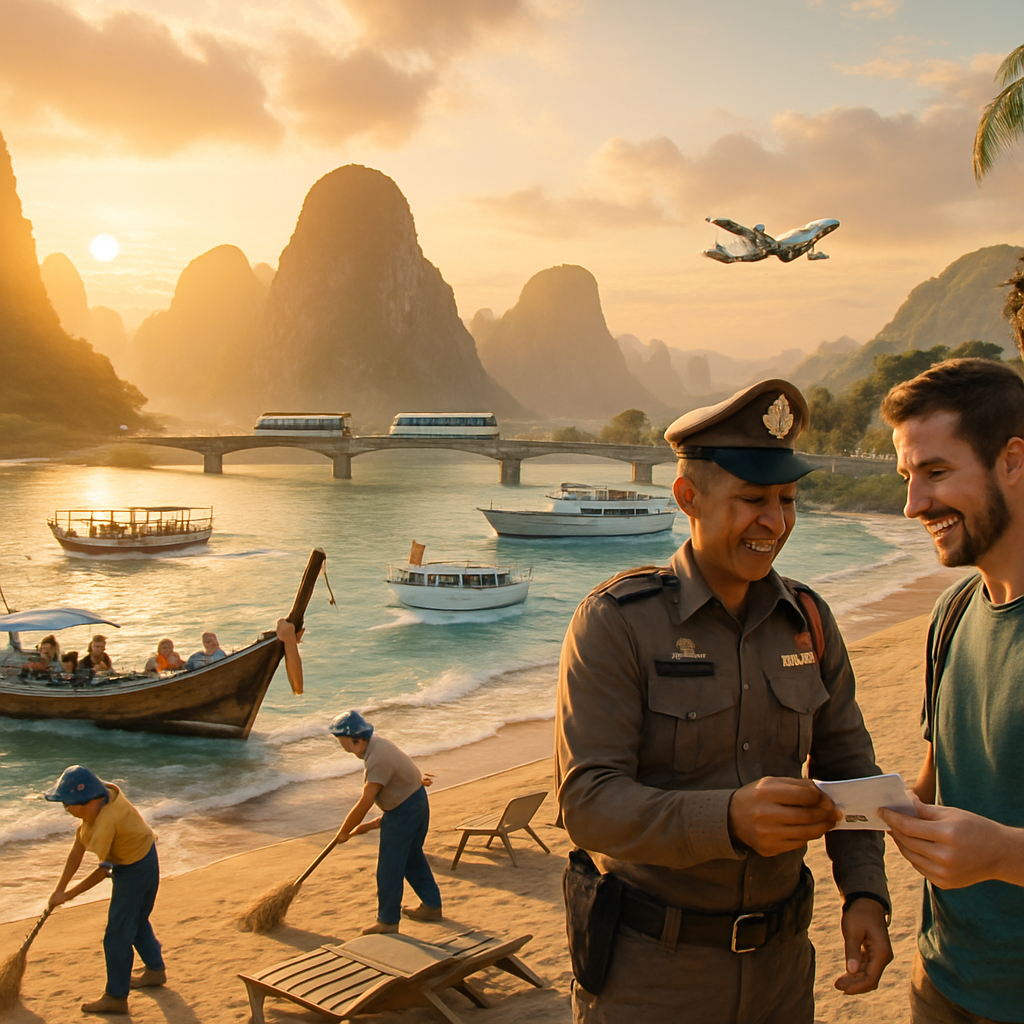
If you’ve been watching the weather apps with one eye and your suitcase with the other, here’s the good news: Southern Thailand is bouncing back. The Tourism Authority of Thailand (TAT) reports that, as of December 8 at 10:00 a.m. local time, travel conditions across the flooded provinces have largely returned to normal. Roads, airports and most tourist services are up and running, and the region is steadily getting back to business — from Phuket’s bright beaches to the island-paced charm of Ko Samui.
Where things are already back to normal
Many of the big-name destinations in Southern Thailand are fully accessible and welcoming visitors again. That means:
- Phuket, Phang-nga, Krabi, Ranong, Surat Thani, Chumphon, Trang, Satun and Phatthalung have reopened airports, roads, attractions and accommodation.
- Island favorites — Ko Samui, Ko Pha-ngan and Ko Tao — are functioning normally; marine transport continues, though ferry timetables may shift depending on sea conditions.
- Interprovincial buses and the State Railway’s major Southern Line routes have resumed, with officials previously projecting full restoration by mid-December.
Translation: whether you’re headed for sandy beaches, limestone karsts or jungle trails, most of Southern Thailand’s essential travel infrastructure is back in play. Still, it’s a good idea to reconfirm flights and boat times before you head to the pier — sometimes schedules are adjusted at short notice when the weather plays spoilsport.
Where recovery is still underway
Not every patch of the south is completely finished with mop-and-broom season. Songkhla — particularly Hat Yai — has seen major improvements and most hotels are welcoming guests again, but some cleanup and repairs continue. Authorities report steady progress in Narathiwat, Yala and Pattani; these provinces are improving, though a few attractions and facilities remain temporarily closed for repairs. If your plans take you to the far south, check local updates before you travel.
Support for travelers affected by the floods
The TAT is actively coordinating with local authorities, consulates, airlines and tourism operators to provide verified, up-to-date information and practical support. If you were delayed getting home during the flooding, assistance is still available — whether that’s help rebooking transport or locating temporary accommodation. For immediate help and travel advice, you can contact Tourist Police at 1155 or the TAT Contact Centre at 1672.
Visa overstay fine exemption — important for foreign visitors
To ease the burden on foreign nationals affected by flood-related travel disruptions, the Immigration Bureau has announced a temporary exemption from overstay fines in eight southern provinces. The exemption applies to visa stays that expired between November 20 and December 31, 2025, and covers:
- Songkhla
- Nakhon Si Thammarat
- Phatthalung
- Trang
- Satun
- Pattani
- Yala
- Narathiwat
If your visa fell within that window and you were stuck because of the floods, you won’t be penalized — but it’s still wise to contact local immigration offices or your embassy/consulate for documentation and next steps.
Practical travel tips
- Reconfirm flight and ferry times 24–48 hours before travel — weather and sea conditions can prompt last-minute changes.
- Check local attraction websites or social channels; some sites in recovering provinces may remain closed for repairs.
- If you need help, call Tourist Police on 1155 or the TAT Contact Centre on 1672. Consulates and airlines can also provide support for disrupted itineraries.
- Keep digital copies of your travel documents and receipts for any emergency claims or immigration inquiries.
Officials emphasize that the situation has stabilized and that future updates will be issued only if new developments occur. In plain language: Southern Thailand is back in its flip-flop groove, and the beaches, islands and cultural hotspots are ready to welcome travelers once more. Just pack a flexible spirit (and maybe a light rain jacket), reconfirm your connections, and go enjoy the sun, sea and hospitality that make the south of Thailand so irresistible.
For ongoing news and verified advisories, follow the Tourism Authority of Thailand and keep those contact numbers handy: Tourist Police 1155 and TAT Contact Centre 1672.
















Great to hear Southern Thailand is bouncing back — I was worried about my December trip but this sounds promising.
Promising until a ferry cancels and you sleep on the pier, right? Officials always say ‘back to normal’ too soon.
As someone who studies disaster logistics, ‘back to normal’ is often a communication strategy to restart tourism; localized disruptions can persist for weeks.
Thanks, Dr. Michael — that’s what I needed to know. I’ll reconfirm everything and build a buffer day into my itinerary.
The visa overstay exemption is fair, but who’s policing fraudulent claims? This could be abused by people using floods as an excuse.
You sound like a cop, Sam. If someone was stuck by floods they shouldn’t be fined, simple as that.
Level-headed: I got totally stranded last year and missed my flight, paperwork was a nightmare but the consulate helped me. Let people breathe.
I get compassion, Tommy, but exemptions need transparency. Publish basic criteria and avoid blanket loopholes.
The report glosses over security concerns in Narathiwat, Yala and Pattani, which still see sporadic incidents.
As a local, I resent the idea that we can’t be safe for visitors. Progress is real here and many communities are rebuilding fast.
Safety warnings are important, Imran, but sensationalism hurts recovery. Balance facts with context.
Fair points, Maya and Arty. My intention was to urge caution, not scare people away; check local advisories before traveling.
Guide here: most tourist routes are calm, but I always recommend daytime travel and verified transport for trips to border provinces.
This reads like PR copy. Recovery claims are useful for tourism dollars, but where are the metrics on infrastructure repairs and water safety?
You’re right, Elena — as a planner I want clear data on road repairs and boat inspections before I book group tours.
Stop being so cynical. Beaches look amazing in the photos and flights are cheap. I’ll take my money there.
Cheap flights don’t fix damaged sewage systems or coral reef scars. Responsible tourism needs evidence and long-term restoration plans.
Why do ferry timetables change last minute? I missed a connection and lost a day’s deposit, not cool.
Weather and crew safety cause changes, Joe. It sucks, but they are trying to avoid accidents.
Nina, I get safety but better communication would help. A text or email 6 hours earlier would be fine.
Captain here: some cancellations happen due to sea state, but operators should improve notifications. We’re not immune to bad comms.
Quick recovery is good, but rush-repairs often ignore environmental harm. Has anyone seen assessments of mangrove and reef damage?
I snorkel weekly and saw silt on reefs near some piers. Locals are collecting debris, but experts should survey properly.
Exactly. Tourism returns faster than ecosystems. Authorities should fund restoration alongside reopening.
Economic survival matters too though; hundreds of families depend on tourists for months after a flood.
The list of provinces exempted from fines is oddly specific. Why not nationwide if people were affected?
Because floods were localized. Extending nationwide would be costly and open it to more abuse without evidence of disruption.
Maybe, but a clear appeal process would satisfy both compassion and accountability.
Good to know Tourist Police 1155 and TAT 1672 are available, but do they speak English 24/7? That matters when stranded.
Tourist Police try to have English support but it can vary by shift; consulates are usually the best bet for language-heavy cases.
Thanks, OfficerP. I’ll save both numbers and my embassy’s contact just in case.
Thailand has always bounced back from big storms. Locals are resilient and hospitality is real — go and support them.
Easy for you to say if you’re not footing the cleanup bill. Tourists shouldn’t act like patrons and ignore local strain.
Supporting responsibly is the key, Penny — spend locally, follow guidance, and don’t demand freebies or discounts.
Airports reopened but staff shortages mean long lines. Anyone else experienced 3-hour arrivals recently?
Yes, I had a 2.5-hour immigration wait in Phuket last month; factor that into any tight connections.
Thanks — I’ll allow lots of buffer time. Not worth missing the first day of a trip for a line.
I still think authorities spin numbers to bring tourists back. The human cost local workers paid wasn’t even mentioned in the article.
That’s fair. Reports should include worker conditions and recovery wages, not just attractions reopening.
As a small hotel owner in Krabi, bookings are slowly returning but domestic tourists are carrying most of the recovery load, not internationals.
Ben, are you seeing price drops or discounts to attract locals? That might explain the slower international return.
Yes, we’ve offered packages and flexible cancellation; trust returns unevenly across markets.
I like that ferry timetables might shift — nature is unpredictable, better than rigid schedules that ignore safety.
Kenta, it’s nice to be philosophical but missed bookings cost money. Communication is the middle ground.
The line ‘pack a light rain jacket’ made me laugh, but in seriousness pack medical supplies — local clinics might be overloaded after floods.
Good tip, Nadia. Small first-aid kits and medications can be crucial when health services prioritize emergencies.
If immigration is waiving fines, will that delay enforcement for other visa infractions? Slippery slope argument incoming.
Different context. Emergency exemptions are for documented disruptions, not general rule changes. People should still follow visa rules.
I work in travel insurance — keep receipts and official notices if you get delayed. Claims need proof more than a sad story.
Amen. I learned that the hard way last year and kept everything after that.
The article is optimistic and that’s okay. Hope this helps communities recover without overtourism returning too fast.
That’s a nuanced take, Zara. Recovery should be paced and community-led to avoid repeating past mistakes.
Ferry operators need clearer sea-state thresholds published for passengers. Ambiguity breeds frustration and distrust.
Agreed, transparency builds trust. Publish the limits and give cash-refund or rebook guarantees.
I feel bad for the workers, but I also want my holiday. Is that selfish? Feels weird to enjoy sun while others rebuild.
Not selfish if you travel responsibly — hire locals, tip, join community tours, and respect recovery areas.
Embassies helping stranded nationals is huge. If you’re going, register with your embassy; they often have evacuation or repatriation help.
Good reminder. I always register for longer trips and it’s comforting to know someone knows where I am.
Curious: will conservation NGOs get funding after this? Recovery needs go beyond tourism revival.
They should. Restoration grants and community programs are critical and often underfunded post-crisis.
As someone from a tour company, we pushed flexible terms and free reschedules; customers appreciated not being penalized when they were stuck.
That’s the kind of business I want to support. Flexibility matters more than a few dollars off.
Do we know if marine transport insurance claims are being fast-tracked? Small ferry owners might go bankrupt otherwise.
Insurance details vary, Victor. Local governments sometimes offer subsidies, but owners should press for quick payouts.
If anyone’s travelling soon, double-check local attraction social channels — some places reopen before official sites update.
True! I follow 3 local pages and got an early heads-up about a temple reopening last week.
This whole thread makes me want to volunteer in cleanup, not just visit. Is that a thing tourists can do responsibly?
Yes, but coordinate with local NGOs. Uncoordinated volunteers can cause more harm than good.
Thanks — I’ll reach out to vetted groups instead of just showing up with gloves.