Pattaya neighbour dispute leads officers to alleged 400 million baht romance-crypto house
Immigration teams searched four Pattaya sites on 17 November 2026 after a soi argument put Taiwanese national Chi Chien Chen, 33, on the local blotter. Four foreign suspects were held over an alleged hybrid scam.
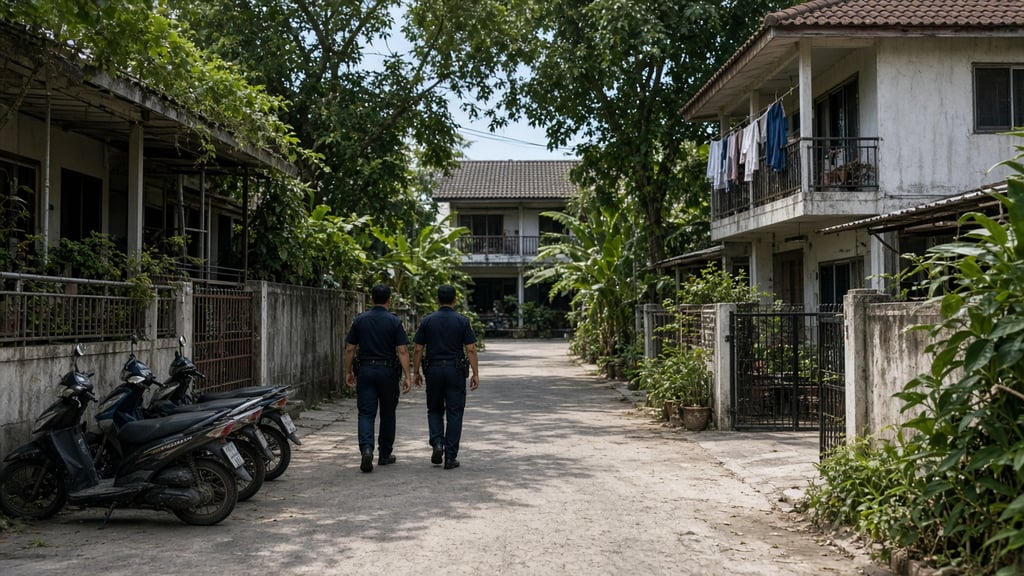
A soi argument between a Taiwanese resident and Thai neighbours in Pattaya helped put Chi Chien Chen, 33, on a local complaint file. On 17 November 2026, Immigration Bureau and Region 2 officers used that neighbourhood signal, plus a week of linked casework, to search four sites in Pattaya and Bang Lamung. They arrested Chen and three Chinese nationals and seized phones, computers, and two stamps officers say were forged copies of Uttaradit Immigration extension marks.
Police named Chen, known locally as Jian, as the suspected organiser of a hybrid romance-and-investment operation run from a house in Nong Prue. Investigators put alleged losses above 400 million baht.
Four search points, four suspects
Immigration Bureau commissioner Pol Lt Gen Noppasil Phulsawat and Region 2 commissioner Pol Lt Gen Wasan Techakreusame led the searches on warrants from Chonburi Provincial Court. At the Nong Prue house, converted into what officers called an investment-scam office, they detained Chen along with Junchao Liu, 27, and Haifeng Liu, 35. A Na Kluea and Wong Amat condominium search produced Yabin Tu, 26. Chen's own residence yielded the two alleged fake extension stamps.
Local reporting says the file widened after a Thai neighbour complained about a confrontation in a residential alley. Immigration later described resident tips as one of the ways officers find houses where several foreign men stay indoors while someone else fetches food. That pattern, plus the 9 November raid on a separate hybrid-scam group in Bang Lamung and the 14 November rescue of a 19-year-old Chinese student held against a 10 million baht ransom, gave the 17 November searches their shape.
One suspect tried to leave through a second-floor window during the raid and was boxed in on the awning. Officers processed the four men for fraud, immigration, and related offences. Chen, they said, was wanted on eight warrants: seven Thai fraud files, including an alleged passport-processing scam, and one warrant from Taiwan. He had overstayed by 1,456 days and was already listed as an undesirable person. Officers also said he had previously cited work for a conservation foundation to seek a Non-O visa, then stayed on after that purpose lapsed. Haifeng Liu had overstayed by 2,441 days after a 2020 tourist entry. Yabin Tu had taken ten extensions on language-student status and was wanted in China on a call-centre case. Junchao Liu had been in Thailand for less than a month.
From dating chat to a locked USDT app
Investigators said the group used the SOUL dating application to read profiles, open a chat, and spend about 20 to 30 days building a relationship. Voice calls came next, then a push toward a fake cryptocurrency investment app, especially transfers in USDT. Once money entered the platform, victims could not pull it back. Seized devices showed SOUL plus a back-end system for person-to-person USDT trades, which officers are treating as a money-movement tool as well as a lure.
That sequence matches the wider romance-baiting method documented as pig-butchering fraud: a long social courtship, a genuine-looking trading screen, early fake profits, then a lock on withdrawals. UN human-rights reporting has tied the regional industry to compounds in Myanmar, Cambodia, and Laos, with some cells in rental houses inside Thai cities rather than border camps.
The 14 November student case shows how fast a call-centre script can move a victim across borders. Officers said the 19-year-old, who had been studying in Australia, was told he faced a money-laundering warrant, then pushed to isolate himself, transfer about 150,000 baht, travel to Thailand, and send a short video that his family later received with a 10 million baht demand. Immigration teams found him in a Pattaya hotel in about 30 minutes.
What This Means for Expats and Travelers in Thailand
The neighbour row is a reminder that Pattaya sois notice who lives next door. A noisy dispute, a house full of men who rarely go out, or a stack of phones on a table can put a property on a search list. If you rent in Nong Prue, Na Kluea, or any busy Chonburi soi, keep your lease, TM30, and visa in order. A 500 baht-a-day overstay fine, capped at 20,000 baht, is the least of it. Under Ministry of Interior Order 1/2558, an overstay of more than one year, if you are arrested rather than if you surrender, carries a 10-year re-entry ban. Chen's 1,456 days and Haifeng Liu's 2,441 days sit in that band even before fraud charges.
Do not treat a dating-app stranger who pivots to USDT as a new friend with a trading tip. Thai residents, tourists, and visiting students have all been targets. Report suspected compounds to 191 or Immigration. Language-student extensions and Non-O paperwork are being read against actual study and work. Forged extension stamps, of the kind officers say they found in Chen's house, are a criminal file, not a paperwork shortcut. Honest visitors still get the welcome the bureau repeats after every raid. A house used as a call floor does not.

Comment verification
Step 1 of 3
Verify your email once to publish your comment. Your email is never shown publicly.
Enter the 6-digit code sent to .
Choose the display name shown next to your comments.