Tanis Werasakwong's 'The Siamese Ghostwriter': A Graphic Novel Powering Through Thailand's Revolutionary Past
Imagine being so captivated by an extraordinary tale that you find yourself transported back to a vibrant era of revolution and change, a time when the lines between the old order and the new were drawn with passion and…
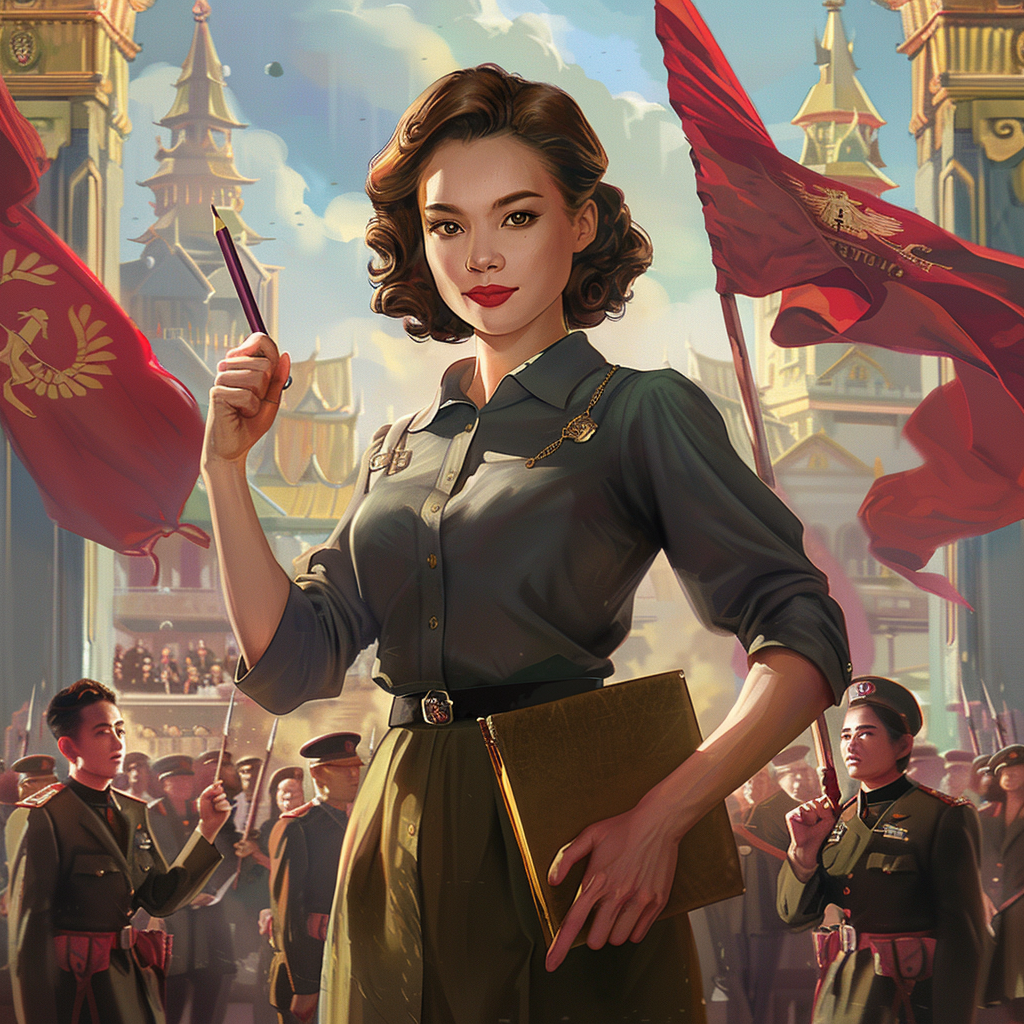
Imagine being so captivated by an extraordinary tale that you find yourself transported back to a vibrant era of revolution and change, a time when the lines between the old order and the new were drawn with passion and grit. This isn't just any story—it's the enthralling narrative spun by Thai comic artist extraordinaire Tanis Werasakwong, known to his legion of fans as "Sa-ard". After three grueling years of meticulous crafting, Tanis has unveiled his latest masterpiece, The Siamese Ghostwriter, a graphic novel that thrusts a daring female journalist into a maelstrom of political intrigue and personal valour.
Tanis's journey into the heart of storytelling began with a heartfelt realization during an introspective chat with the Nation in the picturesque town of Chonburi. "As I embarked on this artistic odyssey, it became clear that my creations were not solitary ventures but shared experiences, woven into the fabric of our collective history," he reflected. The Siamese Ghostwriter isn't just a mere comic; it's a conduit for dialogue and a testament to the unbreakable spirit of resistance, inspired by the fervent waves of the Ratsadon Movement.
February marked the grand unveiling of Tanis's fourteenth graphic narrative, a spellbinding tale borne out of his profound background in journalism. A voracious reader from youth, Tanis’s pencil danced on the pages of magazine cartoons during his high school years. His academic pursuits in print journalism at university only fueled his passion, leading him to the world of comic books, even amidst the tumult of a military coup that sought to silence the media’s vibrant voices in 2014.
The making of this comic was a shared dream, a collaboration with friends who, like Tanis, yearned to be voices for democracy. "This journey was a marathon, not a sprint. We aimed for 2020, but destiny had other plans. Yet, here we are, our voices echoing beyond the silenced protests," Tanis recounted, brushing off critics who dared label his work as mere propaganda.
Inspired by the trailblazing narrative of Art Spiegelman’s Maus, The Siamese Ghostwriter weaves the captivating tale of Nipa, a newspaper proofreader caught in the whirlwind of the 1930s Siam, amidst economic turmoil and whispers of communism. Tasked with an undercover mission for the Khana Ratsadon, Nipa finds herself navigating the treacherous waters of power and politics, her resolve and integrity put to the ultimate test.
"Nipa stands at the crossroads of observation and action, her unique position offering a lens through which to view the unfolding drama between the revolutionaries and the government," Tanis explained, delving into the historical depth that enriches Nipa’s narrative. With a title echoing the haunting echoes of Seni Saowaphong's Pheesart and the shadow of Prayut Chan-o-cha, Tanis's work is more than a story; it's a promise of an indelible legacy.
As the story unfolds beyond the pages of Tanis's creation, we find echoes of the Siamese Revolution in other artistic expressions, such as Wivat Jirotgul's 2475 Dawn of Revolution. This animation, premiering after its own trio of years in the making, offers a glimpse into the revolution from a monarch's viewpoint, daring to tread where few have ventured. Wivat and his team, driven by a hunger for historical accuracy, dove into primary sources, crafting a narrative that seeks to bridge the chasms of understanding and bring to light the nuances of a pivotal moment in Thai history.
Yet, as Tanis and Wivat embolden the past with their creative fervor, the realm of history remains a battleground of memory and interpretation. Asst Prof Sarunyou Thepsongkraow of Kasetsart University and Asst Prof Phermsak Chariamphan of Ramkhamhaeng University weigh in, offering insights into the evolving perspectives of the Siamese Revolution and the ideological tug-of-war that continues to shape Thailand's stories.
Tanis's The Siamese Ghostwriter, along with Wivat's 2475 Dawn of Revolution, serve not just as pieces of art but as vessels of dialogue, challenging us to explore the multifaceted narratives that history presents. They remind us that every stroke of the pen, every frame of animation, is a step towards understanding, a dance with the ghosts of the past that shape our present and future. In the heart of Thailand, the echoes of revolution whisper, urging us to listen, learn, and perhaps, to write our own stories.



Comment verification
Step 1 of 3
Verify your email once to publish your comment. Your email is never shown publicly.
Enter the 6-digit code sent to .
Choose the display name shown next to your comments.