Thailand’s long-haul comeback: 10 million reasons to celebrate (and two lucky winners)
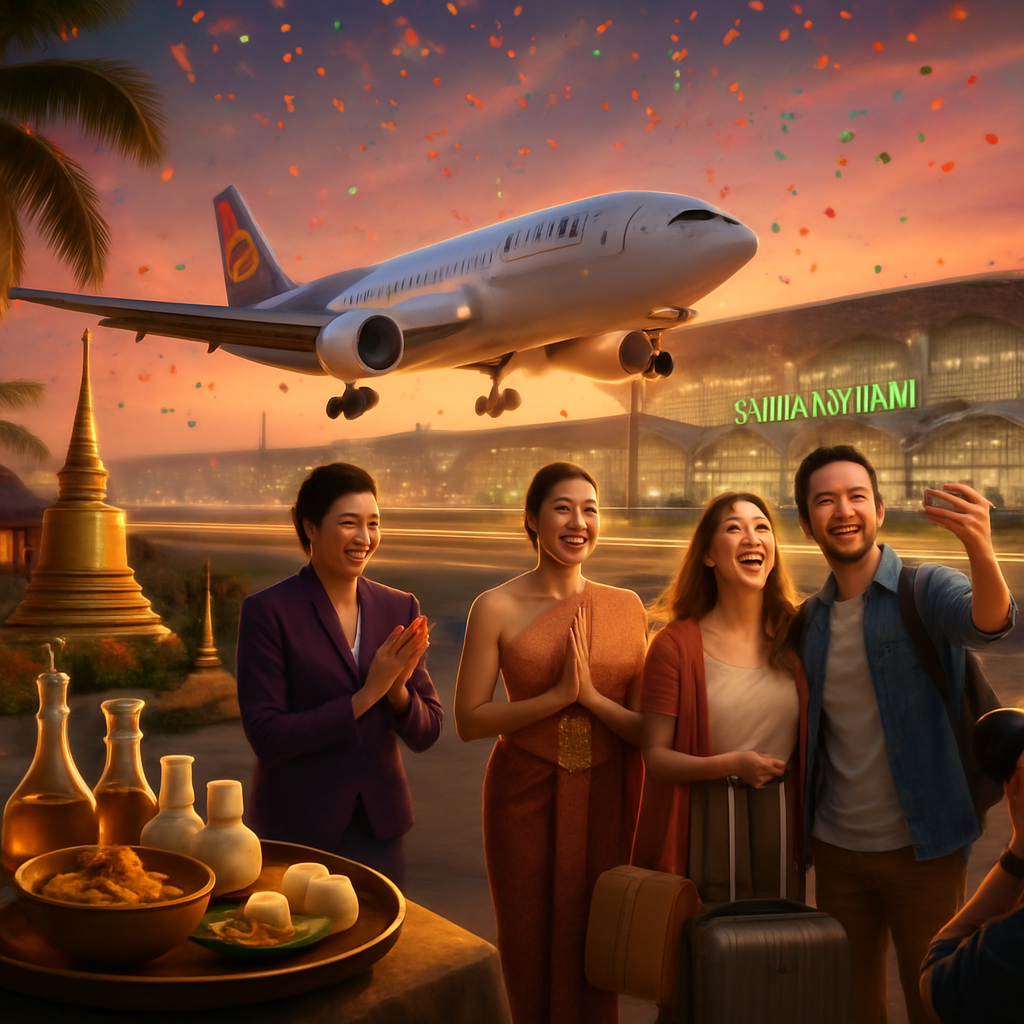
Thailand has quietly — and then spectacularly — crossed a tourism milestone this year: long-haul arrivals have topped 10 million for the first time. The moment was marked in proper airport-glam fashion on December 17, when a Thai Airways flight touched down in Bangkok from London and was greeted by Tourism Authority of Thailand (TAT) Governor Thapanee Kiatphaibool alongside representatives from partner agencies at Suvarnabhumi Airport. Cue the confetti, smiling officials and the selfie-ready tourists who helped make the number real.
Why does this matter? Long-haul travellers — defined here as visitors from Europe, the Americas, the Middle East and Africa — now make up roughly one-third of all international tourists to Thailand. They are high-value guests: they tend to stay longer and spend more per trip, which perfectly aligns with TAT’s strategy of courting “high-quality tourism.” Thailand is on track to welcome as many as 32.8 million visitors in total this year, and the long-haul surge is a key reason why.
UK leads Europe — and then some
In another neat bit of symbolism, the UK became the first European market to send over one million tourists to Thailand this year. That milestone didn’t just happen overnight; it followed sustained promotion and partnerships between TAT, UK tour operators, airlines and media. Khaosod reported that TAT credits its “airlines focus” strategy — increasing direct routes, boosting frequencies and making travel easier — for the steep rise in long-haul numbers. The result: long-haul flight volume to Thailand rose 12.8% this year, dwarfing the global growth average of 1.6%.
More direct routes, more reasons to fly
Air connectivity has been the engine of this comeback. New and returning direct services have made Thailand easier to reach from major cities across the globe: United Airlines’ Los Angeles–Bangkok route returned, Air France resumed Paris–Phuket, Norse Atlantic added five routes from London Gatwick, Manchester, Stockholm and Oslo, and Israel’s Arkia restarted Tel Aviv–Bangkok flights. Those connections not only shorten travel times—they signal confidence in Thailand as a prime destination for long-haul leisure and business travellers.
A celebration with prizes (and plush stays)
To mark the milestone, TAT and Thai Airways treated the occasion like a party with perks. Two lucky travellers on that symbolic London–Bangkok flight were gifted round-trip Thai Airways tickets on the London–Bangkok–London route, plus luxury stays at Anantara Chiang Mai and Avani+ Khao Lak. The prize bundle included spa treatments and dining experiences courtesy of PANPURI Wellness and Sala Lakorn — a tasteful way to welcome visitors and demonstrate what “quality tourism” feels like in real life.
Keeping the momentum into 2026
TAT isn’t resting on its laurels. Early in 2026 the authority plans to roll out fresh campaigns in the UK with more than ten travel brands already lined up, including Trailfinders, Kuoni and Healing Holidays. These partnerships are designed to keep demand high, nurture route sustainability and convince even more long-haul travellers that Thailand is worth the trip.
Planning your trip this festive season? Expect busy airports and price bumps — but there are ways to save
The festive season means two things: lots of flight activity and inevitable price spikes. But smart planning can still yield reasonably priced tickets. Here are a few pragmatic tips that won’t bore your wanderlust to death:
- Book mid-week flights where possible — Tuesdays and Wednesdays often have lower fares than weekend departures.
- Consider nearby airports and multi-leg itineraries. Slightly longer connections or a neighboring departure city can cut costs significantly.
- Sign up for airline newsletters and fare alerts from tools like Google Flights or Skyscanner; flash sales pop up and disappear fast.
- Be flexible with dates. Even a one- or two-day shift can save hundreds on long-haul tickets.
- Check bundled packages with reputable tour operators — sometimes flights + hotels are cheaper together than separately.
Thailand’s long-haul milestone is more than a statistic — it’s an economic and cultural pulse check. More long-haul visitors mean deeper pockets staying longer in beach towns, city hotels and cultural hotspots. For Thailand, this translates to higher tourism receipts, more stable airline routes and a deliberate pivot toward quality over sheer volume.
So whether you’re a tourist planning your next escape, an industry watcher tracking aviation trends, or simply someone who enjoys a good travel success story, Thailand’s 10-million long-haul milestone is worth raising a glass to — perhaps with a fresh coconut on a southern beach, a bowl of khao soi in Chiang Mai, or a sunset view from Phuket. The arrivals board at Suvarnabhumi may show flights coming and going, but the message is clear: the world is flying back to Thailand, and the kingdom is ready to welcome them in style.

















Ten million long-haul arrivals sounds great for the economy, but I worry this will just drive up prices for locals and change neighborhoods into tourist traps.
Totally — I live in a tourist town and every year rents and shop prices climb while local shops are pushed out for Instagrammable cafes.
Exactly, Maria; the government talks about ‘quality tourism’ but that can mean exclusion if policies don’t protect residents and small businesses.
As someone in hospitality, I disagree a bit; higher-spending visitors can fund better infrastructure and jobs, but it has to be managed right.
From an economic standpoint, attracting long-haul tourists who stay longer can significantly raise per-capita tourism receipts and improve balance of payments, but sustainability metrics must be integrated.
Sustainability is fine to say, but who enforces it? Regulations are often weak or poorly applied in practice.
True, enforcement is the Achilles’ heel; public-private partnerships with clear KPIs and community oversight could help.
Air connectivity is the real hero here — more direct flights mean cheaper and easier travel, which is why UK and US numbers bounced back first.
But more flights also mean more carbon emissions. Should Thailand be incentivizing long-haul tourism when climate costs are rising?
Fair point, Emma, and airlines are gradually improving efficiency, but the net climate impact needs to be part of route planning and promotion.
I appreciate that nuance, but promises of efficiency often lag real-world emissions growth.
As a frequent flyer, I can say the new routes make a huge difference; but I still prefer connecting via hubs to save money sometimes.
I love the idea of higher-value tourists, but what about farmers and local producers — will they get paid more or become attractions for tourists to gawk at?
Local producers should be partners, not props. Tour operators need to build fair-trade and cultural-respect clauses into packages.
Yes, and small enterprises need marketing support and easier access to booking platforms to capture that tourist spend.
The PR about two winners getting free trips feels staged; it’s cute but a drop in the bucket compared to mass marketing budgets.
It is staged, but those human-interest moments go viral and can actually sway perceptions in key markets like the UK.
Sure, Jasmine, but viral moments don’t fix structural problems like seasonal unemployment or overtourism in fragile ecosystems.
Long haul tourists typically spend more year-round, which can help stabilize off-season incomes if marketed well rather than just peak packing.
As someone who booked a November ticket, I felt the price spikes firsthand and had to shift dates by two days to save a few hundred bucks.
The UK hitting one million visitors is impressive, but it also highlights travel inequalities — not everyone can afford long-haul leisure travel.
Inequality is global; however, revenue from wealthy tourists can fund public services if fiscal policy channels it properly.
Only if policymakers commit to redistributive measures; otherwise gains concentrate in hospitality chains and luxury enclaves.
I’m just excited there are more flights from my city; direct connections make visiting family so much easier and cheaper overall.
That human connection is underrated — tourism isn’t only economics, it’s people seeing loved ones and experiencing culture.
Exactly, Ben; for diasporas, routes are lifelines, not just revenue streams.
I don’t like how ‘quality tourism’ sounds like a euphemism for ‘no backpackers allowed’. Travel should be inclusive and varied.
Airlines focus is a clever strategy but relies on carriers staying profitable; fuel prices and geopolitical risks could quickly change the picture.
True; airlines are fickle and routes come and go. Sustainable route planning needs government incentives to keep lesser-served links alive.
I agree; subsidies for essential connectivity and stronger partnership contracts with carriers could help stabilize services.
Thai tourism authorities deserve credit for the comeback, but we must ask who sets the agenda — local communities or international tour operators?
Often it’s the big operators and investors; local voices get token consultation but little real power in decision-making processes.
Larry, that’s the risk — without community-led planning, cultural heritage and small economies suffer in the long run.
Community-led doesn’t mean anti-growth; it means growth that respects ecology and livelihoods, not just luxury developments.
As a sixth-grader who read this, I think more people visiting Thailand means more friends and cool food photos, but maybe animals should be protected.