Thailand Weighs 4.17 Billion Baht HIMARS Buy After Anutin-Trump Manila Talks
A White House fact sheet dated 18 November 2026 says Thailand intends to spend up to US$123 million, about 4.17 billion baht, on HIMARS rocket systems. The figure is a ceiling, not a signed sale.
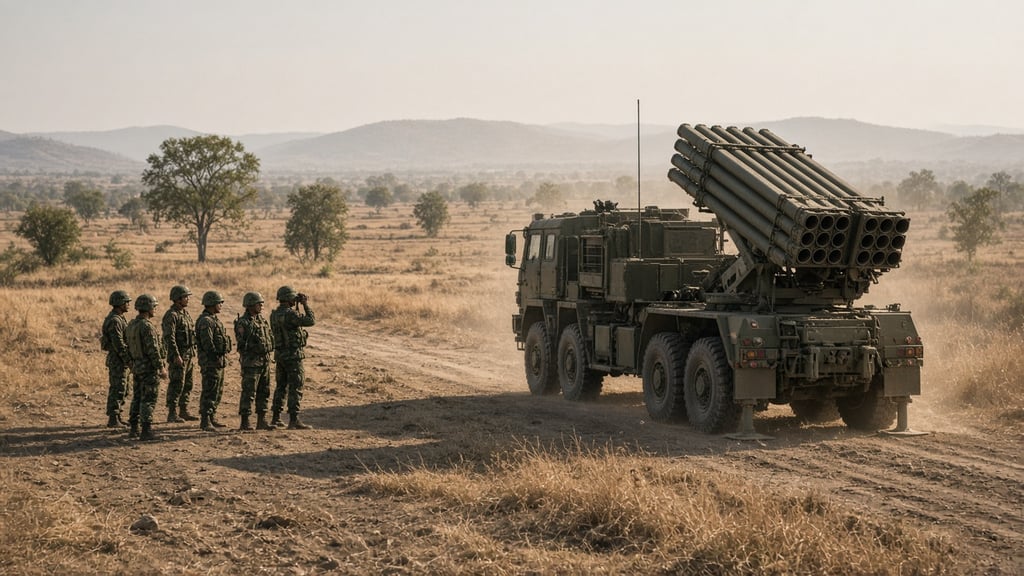
Washington put a Thai rocket-artillery purchase on the same Manila scorecard as a trade pact, then immediately labelled the weapons line as separate. A White House fact sheet dated 18 November 2026 says Thailand intends to commit up to US$123 million, about 4.17 billion baht at recent market rates, toward High Mobility Artillery Rocket Systems, or HIMARS. The note does not name a launcher count, a munitions mix, or a delivery year. It also does not describe a signed Foreign Military Sale.
The wording is the story. The fact sheet sits the HIMARS line under a heading that pairs a US-Thailand trade package with military sales, then marks the rocket systems as a separate item. Thailand intends to commit money. On the published US text, that is not a completed sale. Thai officials have been equally careful: the proposal is in an early procurement track and still has to clear Thai budget and cabinet steps, plus US transfer rules that can include a congressional review.
A trade announcement, then a weapons line
On 17 November 2026 in Manila, Prime Minister Anutin Charnvirakul and US President Donald Trump signed a joint statement confirming substantial conclusion of an Agreement on Reciprocal Trade. The Royal Thai Government readout said both sides must still draft legal text, complete domestic procedures, and, in Thailand, take the finished pact through public comment and parliament. Deputy Prime Minister and Commerce Minister Suphajee Suthumpun said the day after the signing that Thai import tariffs on US goods have not yet changed.
The White House fact sheet, issued the following day, said the trade deal, once signed, would eliminate tariffs on 99 percent of goods and ease non-tariff barriers on American vehicles, medical devices, pharmaceuticals, ethanol, and poultry. It also said the pact would tighten intellectual-property enforcement and Thai labour and environmental rules. Those commercial clauses are the political frame in which the HIMARS figure appeared. They are not, on the documents published this week, a single bundled contract.
Thailand is a US treaty ally. The fact sheet uses that status to argue that a HIMARS sale would give Bangkok long-range precision fires and support about 400 American jobs in the US defence industrial base. If concluded, Washington says, it would be the first HIMARS deal of its kind in mainland Southeast Asia. A Ministry of Foreign Affairs readout of 17 November sideline talks already listed military and security cooperation next to the Reciprocal Trade signing.
What HIMARS actually is
Standard GMLRS rockets have a published range of more than 70 kilometres. ATACMS missiles, one per pod, can reach up to 300 kilometres. Those munitions are the politically sensitive part of any sale. The White House note does not say whether Thailand is asking for rockets only, missiles, trainers, or a mix. US Foreign Military Sales of this class typically need State Department approval and, above set thresholds, a congressional notification window before a Letter of Offer and Acceptance can be signed.
Thailand has tested that process before. In 2023 Washington declined a Thai request for F-35 fighter aircraft, citing training, technical, and sustainment constraints. Defence Ministry spokesman Rear Admiral Surasant Kongsiri used that episode this week to underline that a HIMARS proposal can stall even after a White House press note. He said procurement follows military requirements and long-term force plans, not tariff bargaining.
What This Means for Expats and Travelers in Thailand
This is not a tourist-facing rule change. No airport, visa, or hotel procedure shifts because a fact sheet listed HIMARS. Near-term effects sit in politics: budget fights, Cambodia-border commentary, and claims that a weapons buy was a sweetener for the Reciprocal Trade pact. Thai officials deny that linkage. The Manila documents treat trade and the rocket systems as parallel files.
Residents near training areas in Lopburi and other army ranges should expect the same live-fire calendars they already see, not a sudden HIMARS battery on a public road. Foreigners with dual-use optics, drones, or radio kit near the Cambodian border already face tighter checks. US citizens in defence, aviation, or dual-use logistics may see more paperwork if a sale later moves, because FMS cases bring US export-control conditions with them.
The honest timeline is slow. Thailand still has to budget, specify, and approve. The United States still has to clear a transfer. Until both happen, 4.17 billion baht is a headline ceiling, not a convoy on a Thai highway.

Comment verification
Step 1 of 3
Verify your email once to publish your comment. Your email is never shown publicly.
Enter the 6-digit code sent to .
Choose the display name shown next to your comments.