Thailand's Meteorological Department Warns of Summer Storms and Rising Pollution Levels
As the mercury rises and the vibrant hues of summer bloom across the sprawling landscapes of the Northeast, Central, East, and South, an ominous guest is set to make its presence felt. Whispered warnings from the…
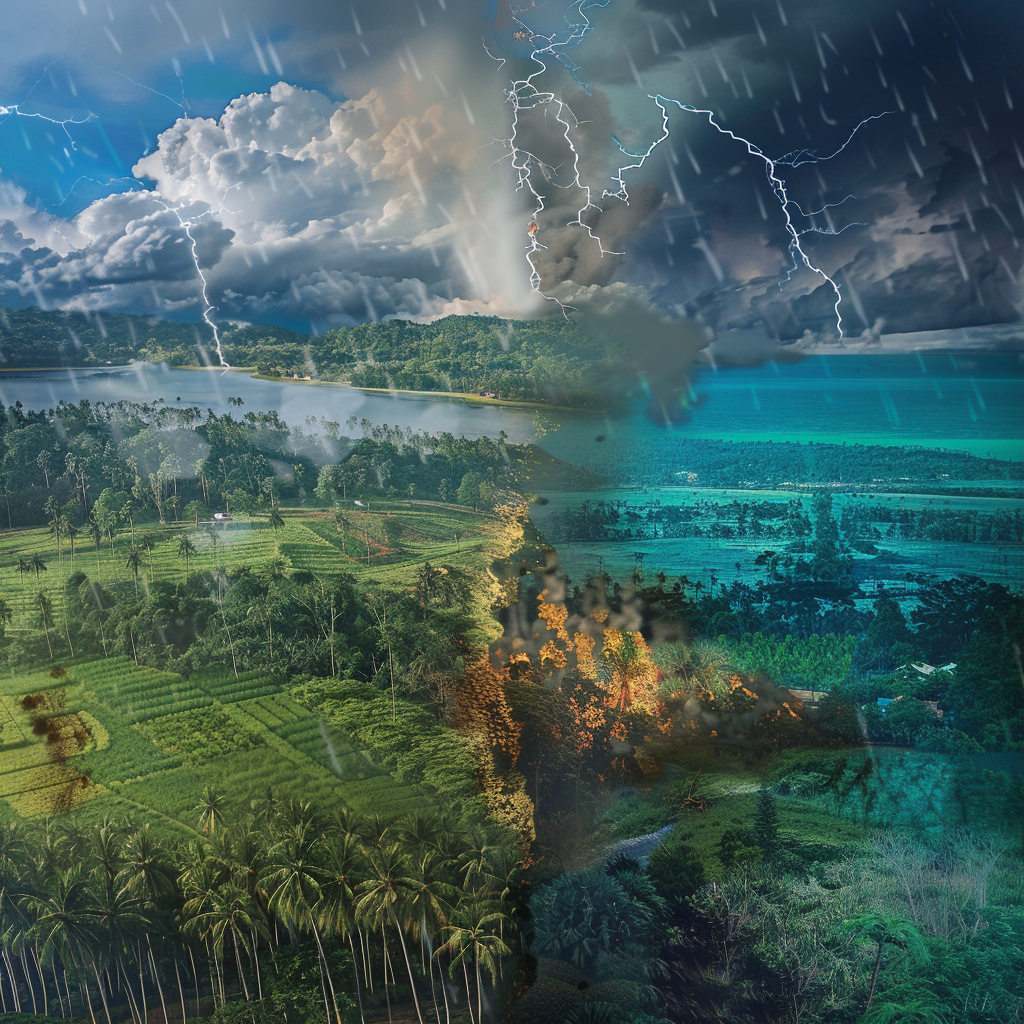
As the mercury rises and the vibrant hues of summer bloom across the sprawling landscapes of the Northeast, Central, East, and South, an ominous guest is set to make its presence felt. Whispered warnings from the hallowed halls of the Meteorological Department have set the scene for an epic saga of summer storms. Brace yourself as a mischievous low-pressure system pirouettes over the upper reaches of our realms, promising a dramatic ballet of downpours until the curtain falls on March 7.
This atmospheric antagonist, in cahoots with a strong, south-southeasterly wind, is poised to weave a cloudy tapestry across our skies. Temperatures, in a defiant stance, will loiter around the sultry enclaves of 38-40 degrees Celsius, casting a languid spell over the land.
The drama escalates as our story unfolds to the South. The Meteorological Department, akin to a sage of old, foretells of showers that march in procession across the sea, commanding waves to rise up to a metre high in both the Gulf of Thailand and the Andaman Sea. A spectacle of nature's raw power, set against the tranquil backdrop of turquoise waters.
Intrigue deepens as from the distant lands of China, a cold front embarks on a journey towards our region. March 8-9 marks the clash of titans - the cold front collides with the prevailing warm, low-pressure front, sparking storms of legend across the country.
Residents of the North and Northeast, prepare for a tempestuous serenade; a symphony of heavy rain and lightning strikes that dances through the period. Meanwhile, the South will witness waves choreographed to heights of 1-2 metres, in a display of the ocean's unbridled might.
In a twist of fate, satellite imagery and wizardry from the Geo-Informatics and Space Technology Agency (Gistda) unveil a tale of air most foul. As dawn broke at 8am on a fateful Monday, five provinces found themselves under a shroud of ultra-fine PM2.5 pollutants - a nefarious mist far exceeding the safe confines of exposure set by the realms' stewards. Nakhon Phanom leads this dubious honor roll, with a veil of 82.8 µg/m³, closely followed by its brethren Mukdahan, Kalasin, Phayao, and Roi Et.
The saga extends its reach to thirty-one provinces, ensnared by unhealthy levels of fine dust pollution. Yet, amidst the gloom, Bangkok emerges as a beacon of hope, basking in days of relatively good air quality, a testament to the capricious nature of our atmosphere, as observed by Gistda.
A fiery subplot thickens as satellite images unveil a tapestry of 1,015 fire hotspots across the country, with the forest reserves alight with 355 of them. The narrative stretches beyond our borders to Myanmar, Cambodia, Laos, and Vietnam, each playing their part in this smoky chronicle.
The tale takes a poignant turn towards Preah Vihear (Phra Viharn) National Park, cradled by the arms of Sri Sa Ket’s Kantharalak district and the whispers of Cambodia. A fire from beyond our borders casts a smoky pall, leading to a temporary retreat behind closed gates until March 8. The park's guardians, alongside valiant officers and soldiers, rally to tame the infernal beast, their arsenal of firebreaks, firetrucks, and crews standing ready.
In this saga of summer storms and smoky veils, we find a story of nature’s might, of warnings heeded, and of battles fought against the creeping tendrils of pollution. It’s a tale that reminds us of the fragile balance we tread, and of the relentless spirit of those who stand guard over our environmental bastion.



Comment verification
Step 1 of 3
Verify your email once to publish your comment. Your email is never shown publicly.
Enter the 6-digit code sent to .
Choose the display name shown next to your comments.