Thailand's Shift: Retirees Find New Horizons Amid Changing Visa Policies in 2025
For years on end, Thailand has been the ultimate dream getaway for retirees worldwide, offering a mix of gorgeous surf, scrumptious foods, and a society that beams with friendliness, earning itself the moniker, 'The…

For years on end, Thailand has been the ultimate dream getaway for retirees worldwide, offering a mix of gorgeous surf, scrumptious foods, and a society that beams with friendliness, earning itself the moniker, 'The Land of Smiles.' It’s the place where retirees have long settled to spend their golden years basking in the warm embrace of its sunny hospitality. But, a subtle undercurrent is shaking things up beneath the country’s famous palm trees. As Thailand shifts toward wooing wealthy global citizens, those middle-class retirees are finding the doors swiftly closing on them.
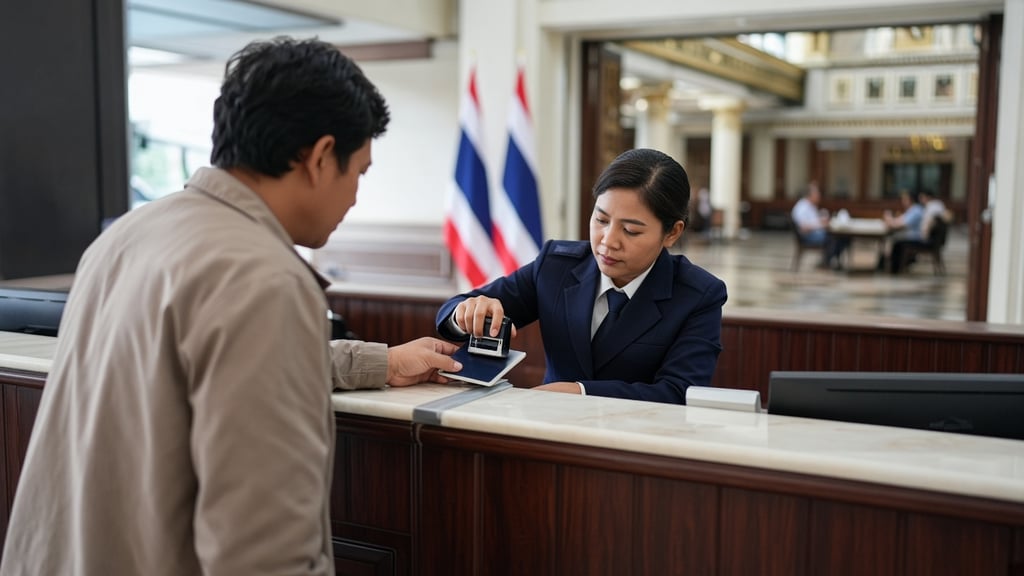
Previously, Thailand’s retirement visas were some of the most welcoming in Asia. Categories like the Non-Immigrant O-A and O-X visas had positions up for grabs for any foreigner 50 or older who wanted to call Thailand home. The requirements weren't too demanding either by global standards—either have 800,000 baht chilling in a Thai bank account or prove you've got a steady monthly income of 65,000 baht, and of course, stay on the right side of the law and health insurance. Simple, right?
But change is in the air. The fervent effort to gate circle a glitzier circle meant for the high-rollers has slowly but surely tightened those requirements. Enter the 2023 introduction of the Long Term Resident (LTR) visa, a scheme squarely aimed at the deep-pocketed elite. Now, you’d need to flaunt an annual income of a whopping US$80,000 for the past two years and flash US$1 million in assets; only then do you unlock the door to paradise. In the wake of the COVID-19 era, the nitty-gritty of health insurance only tightened further while whispers suggest the financial bars might soon skyrocket.
This strategic pivot begs the question, though – is Thailand’s brighter gaze on affluent retirees a wise move? On the surface, turning the country into a drawing card for the wealthy seems enticing. Rich residents bring a heavier wallet, shell out more for healthcare, splurge more on upscale housing, and, in theory, less trouble follows them around. This, in the eyes of Thailand’s policymakers, is a win straight out of the business school playbook.
But this ignores a broader view. Snubbing the middle class is short-sighted. For years and years, Thailand built a reputation as an accessible oasis where retirees could find an unmatched balance of affordability, lifestyle, and cultural treasure, far beyond just the glitz and glamour rivaling luxury. Every privileged foreign retiree out there is shadowed by dozens more. Think early retirees, ex-teachers, small business mavericks, or civil servants who are ready to weave their pensions into the fabric of Thai communities, actively energizing local life across the nation.
Now, let’s remember, when one door closes, another somewhere else in Southeast Asia swings wide open. Suppose you’re a retiree eyeing the region; non-Thai options beckon more than ever. Take, for example, the Philippines. Retiree-friendly and accessible for those with modest means, it stands out with its Special Resident Retiree’s Visa (SRRV). For retirees pondering a shift, qualifying involves showing a monthly pension of a mere US$800 and placing a US$10,000 deposit in a local bank. No rigorous income ceilings and insurance costs here, only streamlined processes and a wave of friendly vibes.
Next stop, Cambodia. Long standing as the spirited frontier of Southeast Asia, it’s dialed into the growing demand among expats. The Cambodian ER Visa is open to retirees aged 55 and up without any high deposit demands, no prohibitive income thresholds, and skipping the need for costly local health insurance.
And then there’s Vietnam, no longer just the dark horse but now a genuine contender. Piloting newfound long-term investor and specialist visas, it’s signaling openness while readily adapting to retirees. As whispers of a retirement visa specifically tailored to the 55 and up begin to resonate, Vietnam is tantalizing with its stunning vistas, vibrant cities, and colorful cuisine balancing affordability and quality.
Yet, one must wonder and watch, is Thailand’s gamble on a million-dollar draw paying off? Early signals might be warning. While interest from high-net individuals remains, longtime Western residents, the very backbone of expatriate harmony, are scrutinizing their options elsewhere. Internet forums echo with tales of gentle or bittersweet departure—of retirees setting sail towards warmer welcomes in the Philippines, Cambodia, or Vietnam.
Yes, the economic ripple might be subtle at first, but it can gather momentum. The middle-class retirees do more than just settle. They invest in property, savor local dining, engage generously with community projects, and form grass-root attachments. In ardently grasping at the wealthy, Thailand flirts with losing a population that tends to foster long-term community and cross-cultural exchanges essential to its domestic heartbeat.
Ultimately, Southeast Asia is not only in a state of change but is becoming much closer knit. It’s opening its arms to retirees like never before. Clarity reveals that the old model—a few choice retiree destinations dominating the realm—is dissipating into history.
For Thailand, the window remains ajar. If the Land of Smiles is to keep its real charm and all its joyful allure, it might need to nudge its visa policies back toward its earlier melodious harmony. Embracing a moderate touch once again could be the key—to ensure that Thailand continues as the glowing spotlit stage for not just the affluently wealthy but the world’s retirees at large, drawn to its open, welcoming spirit, much like moths to a radiant, sparkling flame.

Comment verification
Step 1 of 3
Verify your email once to publish your comment. Your email is never shown publicly.
Enter the 6-digit code sent to .
Choose the display name shown next to your comments.