Tragic Train Accident in Phichit: Fatal Collision at Unmarked Railway Crossing
It's a scene that nobody wants to encounter—a grim reminder of the potential dangers that lurk at poorly marked railway crossings. The quiet town of Muang district, Phichit, was rocked on Monday evening when a…
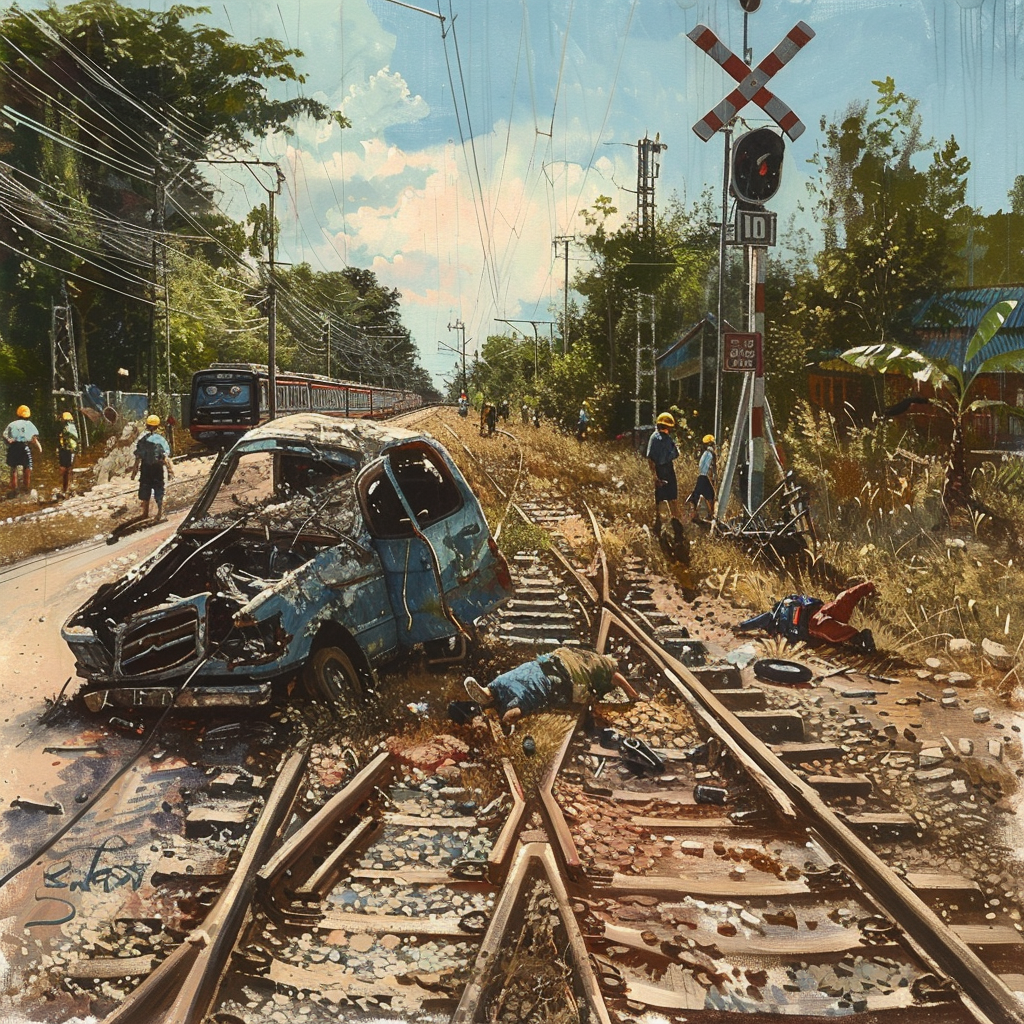
It's a scene that nobody wants to encounter—a grim reminder of the potential dangers that lurk at poorly marked railway crossings. The quiet town of Muang district, Phichit, was rocked on Monday evening when a disastrous collision took place, altering lives in the blink of an eye.
A peaceful evening shattered around 6:15 PM as a north-bound passenger train ripped through a four-door pickup truck at a railway crossing devoid of safety barriers in Moo 1 village, tambon Pak Thang. The massive impact resulted in the tragic loss of five lives and left two others battling serious injuries.
The ill-fated incident involved train 201, which was making its routine journey from the bustling city of Bangkok to the serene town of Phitsanulok. As it hummed down the tracks near the village, nobody could foresee the tragic event that was about to unfold. The crossing, hauntingly devoid of any safety barriers or signals, became the epicenter of a catastrophic event.
On that fateful day, a pickup truck bearing Phichit plates, filled with passengers presumably on their way to a solemn occasion—a funeral at Wat Ratchangkhwan—drove into the path of the oncoming train. The truck driver, Panchaya Khongrat, 38, was steering the vehicle with care, transporting family members and relatives, including women and children, who were perhaps sharing stories or comforting each other in anticipation of the somber event.
But in moments, the ambience inside the truck turned from one of solemn reflection to unimaginable chaos. The train's driver had scant seconds to react, and tragically, the immense weight and speed of the locomotive couldn't be halted in time. The collision was inevitable and catastrophic. The force of the impact flung the pickup around 30 meters across the tracks, rendering it a mangled wreck, and all its passengers were thrown out violently.
Heartbreakingly, three women lost their lives instantly at the scene, their plans and futures cut short in an instant. The fragile line between life and death was further crossed as two more passengers succumbed to their injuries later at Phichit Hospital, despite the valiant efforts of medical teams. The remaining two passengers fought for their lives, their conditions critical, underlining the severity of the accident.
Imagine the aftermath, families torn apart and whispers of grief echoing through the community. The police force, headed by diligent investigators, began a detailed inquiry into the events leading up to this horrific incident. Their aim was not only to piece together the timeline but also to delve into the myriad factors that might have contributed to this tragedy.
As one contemplates the fateful journey of Panchaya Khongrat and his relatives, a larger conversation beckons—a conversation about railway safety standards. This accident, though local, raises grave concerns about the efficiency and safety of crossings across the network, especially those lacking basic barriers or warning systems. It begs the questions: How many lives need to be lost before definitive action is taken? How many families need to face heartbreak before safety protocols are enforced?
In the wake of this devastating event, officials and communities must unite to demand improvements that could prevent future tragedies. The aim should be to ensure that no family ever has to undergo such trauma and that railway crossings are sanctuaries of safety, not sites of sorrow. The investigation continues, and with it, a hope that lessons will be learned and acted upon, turning this heart-wrenching incident into a catalyst for change.



Comment verification
Step 1 of 3
Verify your email once to publish your comment. Your email is never shown publicly.
Enter the 6-digit code sent to .
Choose the display name shown next to your comments.