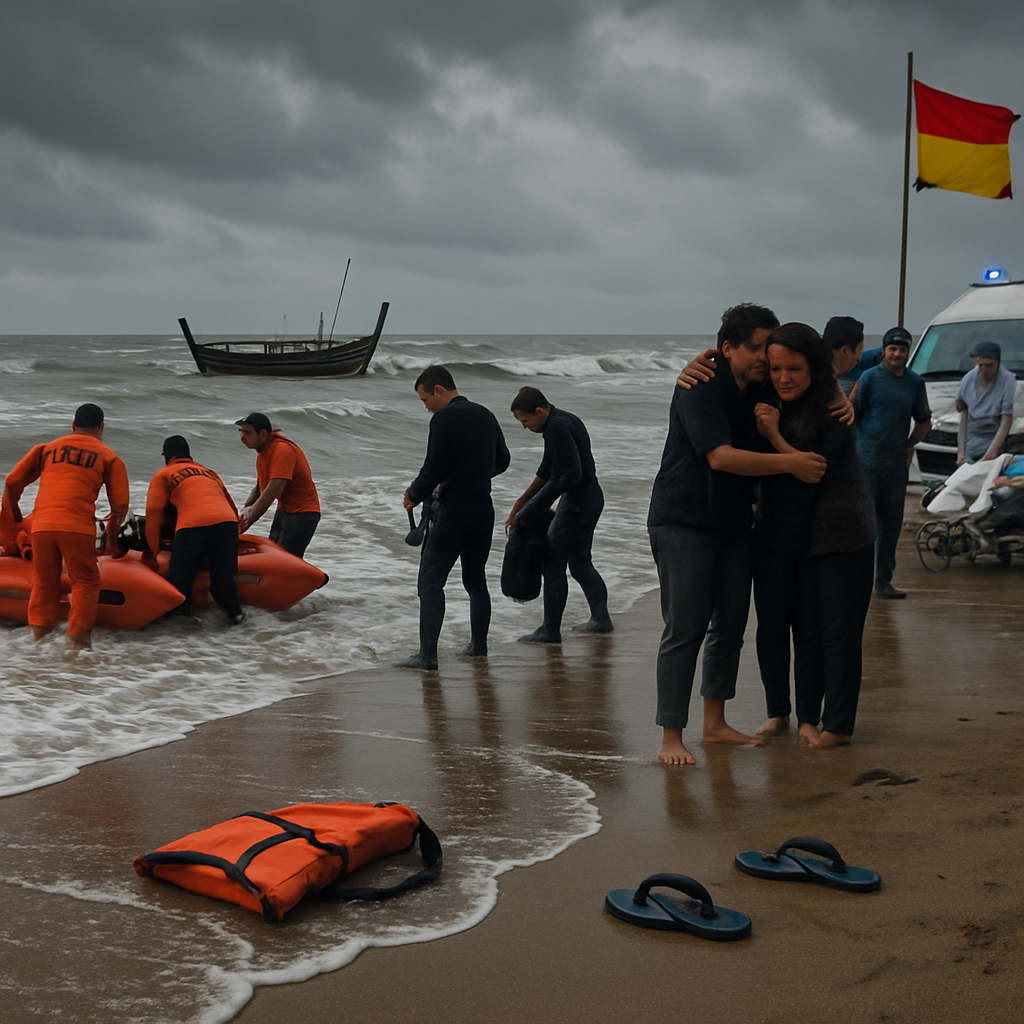
On the morning of 24 January 2026, a routine swim at Laem Pho Beach in Pattani province turned tragic when rough seas pulled two young men out beyond the surf. What began as a group outing for five teenagers ended with a frantic rescue operation, two lives lost, and a community left in shock.
Emergency services received the first call at 9:44 a.m., reporting multiple people struggling in the water near Talok Kapo Beach, part of the Laem Pho coastal area in Yaharing district. Local rescue teams, police and medical staff raced to the shoreline to find that five friends—aged between 18 and 19—had entered the sea despite strong, hazardous wave conditions along the coast.
Responders and nearby residents managed to pull three of the swimmers safely from the water. One of the remaining young men was recovered unconscious and quickly given cardiopulmonary resuscitation on the sand before being rushed to Yaharing Hospital. Hospital staff later confirmed that he had died from drowning. The fifth swimmer was initially unlocated; search teams continued combing the shoreline and the adjacent waters until a second body was found and recovered at the scene.
Rescue personnel from the Ta’awun emergency unit worked alongside medical staff from Yaharing Hospital to secure the area, carry out preliminary examinations, and move the bodies to hospital facilities for further forensic procedures. Police documented the scene and interviewed witnesses who had been at the beach that morning. Authorities reported no signs of foul play; investigators attribute the deaths to the hazardous sea conditions that day.
Khaosod, which first reported the incident, cited statements from rescue officials involved in the operation. The identities of the deceased have not been released; officials said more details will be provided following the completion of post-mortem examinations and formal reporting procedures.
The tragic event has drawn fresh attention to beach safety along southern Thailand’s coastlines. Laem Pho and Talok Kapo are popular with locals and visitors for their natural beauty, but conditions can change quickly—strong rip currents and sudden surges have long been a danger to swimmers. In this case, a group of teenagers entered the water during rough wave activity, and two of them were swept beyond the reach of quick rescue.
Local authorities and rescue teams have reiterated guidance for beachgoers: check weather and sea condition advisories before entering the water, avoid swimming in rough seas or where lifeguards are not present, and keep groups together with a responsible adult watching from shore. Even experienced swimmers can be overwhelmed by rip currents, so knowing how to identify and escape a rip—swimming parallel to the shore rather than directly back against the current—can make a life-saving difference.
For the friends and families affected, the community response has been immediate and somber. Local residents and volunteers assisted in the initial rescue efforts; rescue workers and medical staff stayed through the day to support recovery and investigation. Officials said they will continue to offer whatever support is needed while completing their inquiries and toxicology or forensic testing as part of the post-mortem process.
While investigators work to finalize official reports, the incident serves as a stark reminder that beautiful beaches can quickly become dangerous. Authorities across coastal regions often warn visitors to respect posted warnings and avoid swimming when flags or advisories indicate hazardous conditions. In the wake of this loss, local leaders may increase public safety messaging at Laem Pho and nearby beaches to reduce the risk of similar tragedies.
Our thoughts go out to the families and friends of the two young men whose lives were cut short. The rescue teams, hospital staff, and community members who responded deserve recognition for their swift and tireless efforts under difficult circumstances. Further information will be released by authorities once post-mortem examinations and formal reporting are complete.
For anyone planning a beach outing: stay informed, swim in guarded areas when possible, and never underestimate the sea. Small decisions on the sand can have lifelong consequences.


















This is heartbreaking — two kids lost on what should have been a fun morning. Authorities warned about rough seas, so someone has to answer for why they were allowed to swim. The community deserves clearer safety measures and visible lifeguards.
I grew up near Laem Pho and the rip currents there are sneaky, but parents should watch their teens more closely. It only takes a moment for things to go wrong.
I agree, but we also can’t expect every group to have a parent present; public safeguards matter too. Putting up more signs and patrols would help.
Education campaigns alone don’t fix structural issues such as understaffed rescue services or unclear jurisdiction between municipal and provincial authorities. A coordinated policy response is needed, backed by funding.
This is so sad. Why would they go in when waves were bad?
Because teens think they’re invincible. I do dumb stuff like that sometimes.
Yeah I get that, but there should be someone telling them not to. A few seconds of common sense could’ve saved lives.
From a public health perspective, drowning prevention needs multi-layered interventions: signage, lifeguards, community training, and emergency response drills. Relying on individual vigilance is insufficient.
We already have signs but many visitors don’t read Thai or ignore flags; tourism pushes people into unsafe situations. Multilingual warnings and visible flags are essential.
Exactly — signage must be culturally and linguistically appropriate, and risk communication should be part of tourism promotion materials.
As a volunteer who helped that morning, I can say people ignore flags when they want a good photo. It’s frustrating and tragic.
This will scare tourists and hurt the local economy. I hope officials balance safety with keeping the beaches open.
Tourists’ safety should be the priority. Closing a beach temporarily on dangerous days is better than burying two families.
I meant long-term closures, not temporary warnings. But yes, short closures make sense if conditions are dangerous.
You can’t trust local rescue teams to be everywhere; they are underfunded and stretched thin. Maybe impose fines for swimming in flagged areas to deter risky behavior.
Fines punish victims, not the underlying issues. Better enforcement of lifeguard staffing and emergency equipment is the solution.
I still think some accountability is needed when people blatantly ignore warnings. It could change behavior fast.
My heart goes out to their families; nothing else matters right now. The volunteers and medics did what they could, and they deserve praise.
They were friends of mine; it’s unreal. I wish I had gone with them or said no that morning.
I’m so sorry for your loss. Communities need grief counseling and long-term support after this.
Ban teenagers from unsupervised beaches? Sounds harsh but maybe necessary until people learn. Teens are impulsive and groups encourage risk-taking.
You can’t criminalize youth presence on public beaches. Instead, educate, provide lifeguards, and engage teens in safety programs.
Education is great but it takes time; temporary supervised hours for young groups might be a middle ground.
Rip currents teach harsh lessons. Local schools should include basic water-safety training so kids know how to escape a rip.
My teacher showed us a video about rip currents and it freaked me out. Swim parallel, got it.
Yes, simple practical drills once a year could save lives, not just scary videos.
Lifeguards cost money, but insurance and tourist confidence will pay for it. A permanent lifeguard station at Laem Pho should be a priority.
We are reviewing budgets and will propose increased funding for coastal safety in the next council meeting. This tragedy has accelerated that timeline.
Thank you for acting, Mayor. Please ensure transparent oversight so funds translate into real on-beach patrols.
Two lives lost because of arrogance and bad timing.
I was on the scene; people tried everything. It was chaotic, and the current took them fast — even experienced swimmers couldn’t keep up.
Volunteers stayed hours after to help families and police. The community pulled together even while grieving.
We need better equipment and more training for volunteers; goodwill only goes so far against the sea.
Blaming the sea isn’t enough — cultural attitudes toward risk play a role. We glamorize brave behavior and underplay consequences.
As a teacher I see that risk messaging must be age-appropriate. Scaring kids rarely works; practical skills and peer-led programs do better.
Agreed, incorporate peer education so teens hear safety from peers, not just authority figures.
Install clear multilingual signs and digital alerts tied to weather forecasts. Tourists need real-time warnings on their phones and at beaches.
Digital alerts help but you still need someone on the sand to enforce and rescue. Technology is a tool, not the full solution.
True, but an integrated system combining both would reach more people and be more effective.
Police will assist in documenting the incident and coordinate with rescue agencies. No evidence of foul play has been found so far.
Post-mortems and interviews are ongoing; determining timelines and response adequacy is key for recommendations.
We will publish our findings and any recommended policy changes once the investigation concludes.
The sea is beautiful and brutal; respect it or pay the price. This isn’t a new story, just a new headline.
Public grief will be intense in a small community like Yaharing. Officials must balance investigation with compassionate outreach to families.
Professionals and volunteers should offer trauma counseling; ripple effects on classmates and friends can last for years.
Please share resources if you know of support groups; people will need concrete help beyond condolences.