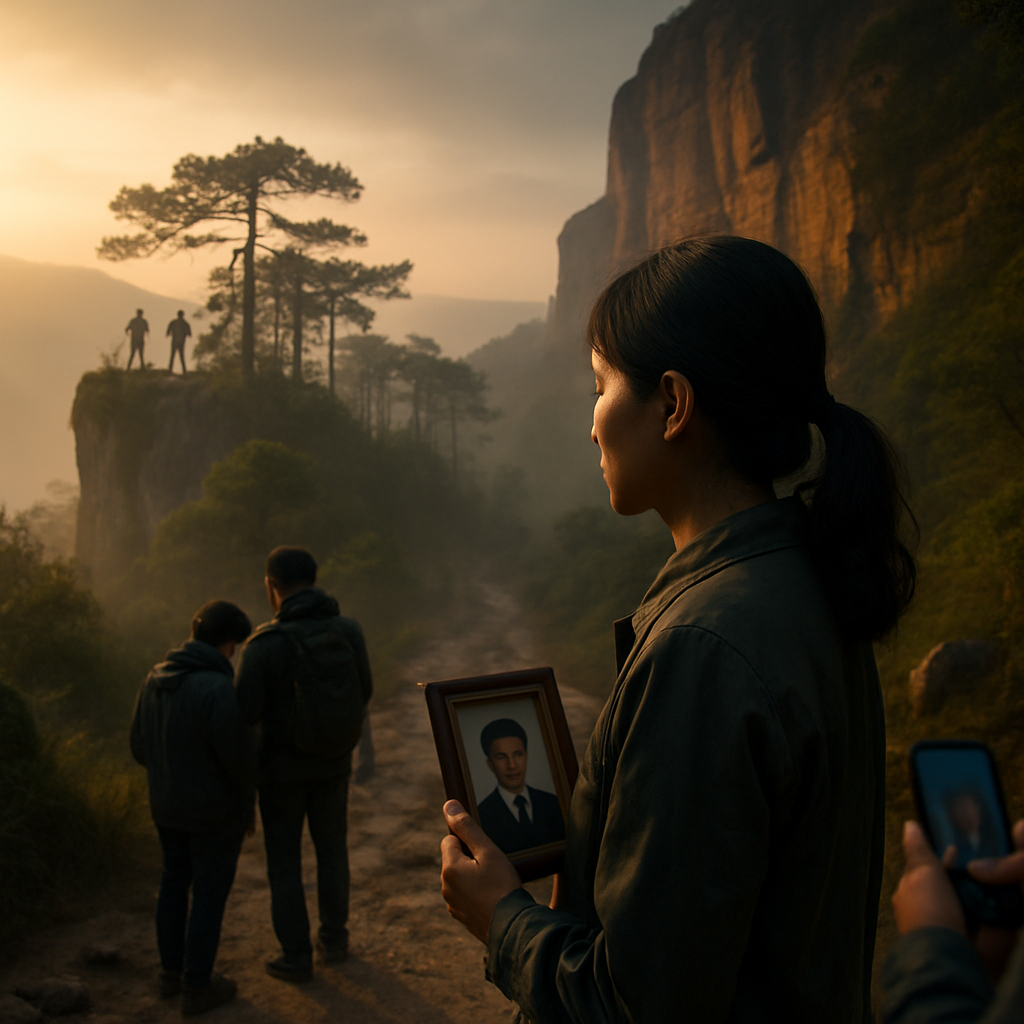
A wife’s quiet plea for answers after a trail runner’s death at Phu Kradueng
The mountains hold stories—some triumphant, some tragic, and some that leave loved ones searching for simple answers. On December 7, during a trail running event inside Phu Kradueng National Park in Loei province, a male runner collapsed at a well-known spot called Sam Bon and later died. The case resurfaced on December 22 when his wife took to Facebook to ask anyone who witnessed the incident to come forward. Her message was raw, respectful and resolute: she wants to understand what happened to her husband in his final moments.
Her post appeared in the local group Phu Kradueng… Rak Laeo Rak Loei and quickly drew attention. Rather than laying blame or demanding recriminations, she made two modest requests: for witnesses to share what they saw, and for people to refrain from criticizing her late husband or her family while they grieve. “Please refrain from posting comments that criticise, lecture, or blame the deceased or our family,” she wrote. “We truly did our best” to care for his health.
Why the Sam Bon spot matters
Sam Bon is familiar territory for Phu Kradueng regulars—part of the mountain’s rugged trails where runners and hikers challenge themselves against steep climbs, changing weather and variable trail conditions. Trail running is both exhilarating and unpredictable; the combination of altitude, exertion and sometimes rapidly shifting mountain weather can create hazards even for experienced athletes. That’s why first-hand accounts from those who were there matter so much to the family and to anyone trying to understand the circumstances of the collapse.
“What happened up there? How was he feeling? Did anyone talk to him? What did he say?” the wife asked. “Every day, I’m still heartbroken. I cry several times a day. He was everything in my life. But I never even got the chance to know how he was feeling in his final moments.”
Her plea also mentioned a short TikTok clip that surfaced and then disappeared, leaving behind unanswered questions. Social media can be a double-edged sword: it spreads information faster than ever, but clips get deleted, memories blur, and speculation fills the void. That’s why the wife’s request is so grounded—she’s not asking for internet theories, she’s asking for eyewitness accounts from people who stood on the trail that day.
A sensitive call for witnesses, not headlines
The tone of the Facebook message is important. Instead of an angry demand, it was a gentle yet determined call for truth and closure. She made it clear she doesn’t want criticism or moralizing comments while she’s grieving. In a world where online commentary can quickly veer into judgment, that appeal for civility is a poignant reminder to treat bereaved families with dignity.
For locals, park officials, or fellow runners who were on the Sam Bon route on December 7, this is a straightforward request: if you spoke to the runner, saw him collapse, or recall any medical attention being given, consider reaching out. A single recollection—what he said, how he looked, the weather, or the timing—could help a grieving family piece together the final hours. The wife invited people to comment publicly or send a private message, giving a path for both open testimony and discreet sharing.
Another mountain accident: lightning strike on Doi Pui Luang
In related northern-Thai mountain news, a separate accident highlighted the unpredictable dangers of hiking country. A 30-year-old woman was seriously injured after being struck by lightning while hiking on Doi Pui Luang in Mae Hong Son province. That incident underscores a basic truth for anyone who loves trails and peaks: nature can surprise us, and preparation plus caution are essential.
Taken together, these two incidents—one a sudden collapse during a trail race at Phu Kradueng, the other a lightning strike on Doi Pui Luang—remind us that mountain adventures require respect for the elements, good communication among participants, and, when tragedy happens, compassion for those left behind.
How you can help
- If you were at Phu Kradueng on December 7 and have information, consider contacting the family via the Facebook group or sending a private message—your memory could be crucial.
- If you saw the TikTok clip before it was deleted and remember details, those fragments might help reconstruct the sequence of events.
- Be kind online: avoid speculation and criticism. Practical information and empathy are what the family needs most right now.
The mountains we climb give us stories to tell—some of triumph, some of loss. Right now, a wife is asking for a simple mercy: the truth about what happened to the man she loved. If you can help, speak up. If not, keep a respectful silence. Either way, let compassion guide the conversation around Phu Kradueng and those who visit its trails.

















I’m so sorry for the family. If anyone saw him at Sam Bon please speak up, silence won’t help. Races should have stricter safety checks.
I was there that day and saw someone stop at the switchback; it looked like he was dizzy. I thought medics came fast but I’m not certain. I’ll check my camera.
Anna, thank you, please message me. Any detail helps, even what shoes he wore or his breathing. This family deserves answers.
This reads like a call for compassion, but also accountability. Was the race medical team adequate? Authorities should release official timelines.
Race organizers said medics were on route but that isn’t enough. I’ve run Phu Kradueng and cell signal is terrible, so response times can be long. Maybe the event shouldn’t be allowed at that spot.
Physiologically, sudden collapse could be arrhythmia, heat stroke, or pulmonary embolism; only a post-mortem or witness account will clarify. Speculative blame is premature. Still, event protocols matter in remote terrain.
grower134, banning isn’t the only answer, better planning is. Mandatory check-in points and heat assessments could save lives. The family needs transparent reporting, not excuses.
I’m a 6th grader and I don’t like that someone died doing something fun. Why didn’t someone help more? This makes me scared to hike alone.
Sam, it’s okay to be scared, but most trails are safe with partners and prep. We need to balance fear with information, not panic. Runners usually look out for each other.
Thanks Emily, I just think hikers should be more careful. Maybe there should be signs about risks at Sam Bon. Families shouldn’t have to beg online for answers.
Reading the wife’s plea made me angry and sad. If witnesses hesitate because of legal fear, officials should guarantee their testimonies won’t be weaponized. Transparency and protection for witnesses are essential.
As a nurse who volunteers at races, I know people hesitate to go on record. But raw eyewitness notes, even sent confidentially, can be lifesaving for investigations. Organizers must offer a nonjudgmental channel.
Thanks, NurseThao. Can volunteer medics be mandated at every checkpoint? That seems reasonable and would reassure families. The park and organizers need to talk.
My cousin runs ultras and this hits close to home. But we should be careful about blaming the venue; mountains are inherently risky. Still, the family’s right to know should be respected.
As an emergency physician, I agree the environment contributes but sudden collapse during exertion often has hidden cardiac causes. A coroner’s report might be crucial. Eyewitness timelines could help determine if resuscitation was performed properly.
mountain_doc, that’s what I fear — that we won’t get a clear cause. I hope the family will be offered support to pursue answers. Public pressure must remain respectful.
I keep hearing about deleted TikTok clips. Social media is toxic here; people want attention, not truth. If the clip exists, let it go to the family, not the rumor mill.
As a trail runner, clips can be misleading — angles and cuts change the story. But video might show timing of collapse which matters. Whoever has it should contact the family privately.
T-Runner, agreed, private transfer is best. I just hate how fast judgment spreads online before facts are checked. The family’s dignity should come first.
This is tragic and also a lesson about consent and risk. People choose to run but expect emergency care — organizers owe a duty of care. Regulations for races on public land must improve.
Duty of care is a gray area; participants sign waivers. But waivers don’t absolve organizers from basic safety planning. The park administration should publish safety requirements now.
Priya, waivers are not moral shields. If checkpoints were sparse or medics slow, that’s on planners. Families asking for testimony is reasonable and humane.
I saw posts blaming the runner for ‘pushing too hard’ and that makes me sick. Victim-blaming in grief is cruel. People need to stop pretending they know what happened.
I’m concerned about confirmation bias in eyewitness memory, especially after social posts circulate. Cognitive psychology shows memory can be altered by suggestion. Still, multiple independent accounts can triangulate reliable facts.
So are eyewitnesses useless or useful? That sounds contradictory. People want answers; if memories aren’t perfect we still can extract patterns.
Skeptic, eyewitnesses are imperfect but invaluable when corroborated. For legal or medical clarity, combine testimony with medical records and any footage. It’s about cumulative evidence, not single statements.
Why didn’t race marshals close trails during bad weather? The mountain changes fast. Organizers must monitor weather and enforce holds when lightning is possible.
Ruben, the article mentioned lightning elsewhere too, so weather is a real threat. But closing a race has costs and logistics. Still, safety should trump finish times.
Karen, logistics can’t be excuses. If conditions change, stop the event. I would support stricter protocols even if races become rarer.
I’ve hiked Phu Kradueng for 20 years; Sam Bon is exposed and gets sudden gusts. Newer runners underestimate microclimates. Education matters as much as gear.
OldHiker, respect your experience, but competition culture pushes people past cautious limits. Organizers should make cutoff times longer and require pacing buddies. Peer pressure kills.
YoungRunner, agreed about culture. But runners must also learn mountain reading skills. Maybe pre-race briefings should be mandatory and detailed.
Why is the family asking publicly instead of through police? Maybe they tried and got nowhere. Social media becomes a tool when institutions lag.
Yuki, they mentioned the timeline resurfaced after the wife’s post, so perhaps official channels were slow. Crowdsourcing memories can pressure authorities but also distort facts. It’s a double-edged sword.
Theo, I don’t blame her for going public; grief makes people act. But we must watch for online harassment while pursuing truth. The community should protect the family.
I won’t speculate, I’ll just say condolences to the family. If I saw anything I would speak up, but I’d also respect their privacy. Enough online witch-hunts.