Thailand's wellness economy hits US$46.5 billion as Global Wellness Summit wraps in Phuket
New Global Wellness Institute research released at the 20th Global Wellness Summit in Phuket values Thailand's 2025 wellness economy at US$46.5 billion, as TAT shapes a 2027 well-being tourism push around medical care, science-based wellness, and local healing traditions.
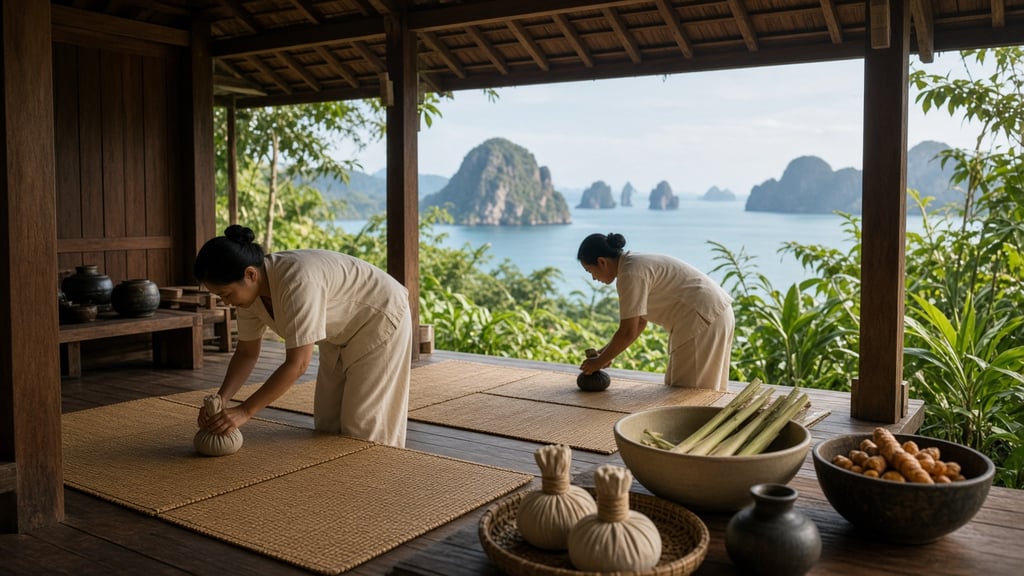
PHUKET - The 20th Global Wellness Summit closed on 13 November after four days that put Thailand's health and healing industries in front of more than 400 delegates from 50 countries. Organisers staged the anniversary meeting from 10 to 13 November under the theme The Science, Art and Soul of Wellness. The Department of Thai Traditional and Alternative Medicine led the host committee, with the Tourism Authority of Thailand, the Thailand Convention and Exhibition Bureau, and Phuket Province as co-hosts.
TAT is treating the research released in Phuket as a planning document, not a souvenir. The Global Wellness Institute valued Thailand's wellness economy at US$46.5 billion in 2025, an 8.8 percent rise on 2024. That ranking places the kingdom 26th among national wellness markets worldwide and ninth in Asia-Pacific. The country figures sit inside GWI's Geography of Wellness series, produced with BDMS Wellness Clinic.
Tourism still leads, real estate is the surge
Wellness tourism remained the largest slice of the Thai market at US$14.5 billion in 2025, ranking 15th globally, with 17.5 million inbound and domestic wellness trips. Spa spending rose 19.6 percent to US$2.3 billion. Healthy eating, nutrition, and weight-loss services reached US$10.7 billion, while personal care and beauty stood at US$7.6 billion.
The fastest mover sat outside the classic retreat circuit. Wellness real estate jumped 66.7 percent year on year to US$1.2 billion, the strongest growth rate in Asia-Pacific and 11th worldwide on GWI's 2024-2025 table. Thermal and mineral springs expanded 12.9 percent, ranking fourth in the region for growth. Developers from Bangkok to the Andaman coast are pitching residences with clinic access and preventive-care memberships rather than only a pool and a spa menu.
A US$7.5 trillion global backdrop
GWI released its Global Wellness Economy Monitor 2026 during the Phuket meeting, putting the worldwide wellness economy at US$7.5 trillion in 2025, up 8.9 percent from 2024. The institute projects US$8.2 trillion by the end of 2026 and US$10.9 trillion by 2030. Global gains were led by wellness real estate, spas, and wellness tourism, a pattern that tracks Thailand's mix of medical travel, spa culture, and a newer built-environment boom.
Policy follows the summit
The Phuket gathering doubled as a briefing room for Thailand's 10-year Medical and Wellness Hub strategy, outlined by the Ministry of Public Health. The plan targets 68 billion baht in investment and an economic contribution of about 0.5 percent of GDP. TAT Governor Thapanee Kiatphaibool has framed the findings as a way to match medical expertise, science-based wellness, and traditional healing with higher-spending travellers under the campaign line Healing is the New Luxury.
Bangkok has been selected to host the Third WHO Global Summit on Traditional Medicine from 10 to 12 November 2027. For 2027, TAT is assembling a Well-being Tourism programme grouped into Heal Better (treatment and recovery), Live Longer (prevention and longevity), and Feel Better (physical and mental wellbeing). One existing pilot is Thailand Surf Therapy in Phang-nga, which pairs structured activity and mindfulness with community tourism.
A softer arrivals year, a higher-spend bet
The wellness numbers arrive after a mixed 2025 for mass tourism. The Ministry of Tourism and Sports, reported through the Government Public Relations Department, counted 32.97 million international arrivals last year, down 7.23 percent, and 1.54 trillion baht in foreign-visitor receipts. Total tourism revenue was 2.70 trillion baht. The Bank of Thailand projected a recovery toward 35 million foreign arrivals and 1.5 trillion baht in receipts in 2026. TAT has spent this year talking about value over volume: fewer bus-tour nights, more clinic, spa, and long-stay spend.
That is the context for TAT's post-summit work: turning a five-region wellness showcase into bookable products and selling Thailand as a global health and healing destination rather than only a beach stop. The next Global Wellness Summit moves to London from 31 October to 3 November 2027. Thailand's test is whether the Phuket week produces market-ready itineraries, or only another round of slogans.
What This Means for Expats and Travelers in Thailand
Residents and visitors will feel this first as a product shift, not a press release. Expect more hospital-adjacent packages in Bangkok and Phuket, more residences marketed with wellness memberships, and more spa programmes packaged for longer stays. Prices at the top of the spa and longevity market are already moving with the real-estate surge. Shoppers should separate licensed medical wellness from hotel add-ons, check hospital accreditation for any procedure, and treat wellness-trip marketing as a sales category rather than a clinical claim.
For long-stay visa holders, the Heal Better and Live Longer menus overlap with existing medical-travel habits: dental work, elective surgery, executive check-ups, and now prevention and longevity clinics. Insurance often still draws a hard line between medical treatment and spa or wellness. Ask the clinic for a written protocol, a physician of record, and a bill your insurer can classify. If TAT's value-over-volume line holds, mid-range beach holidays may get less promotional oxygen than high-spend healing trips.



Comment verification
Step 1 of 3
Verify your email once to publish your comment. Your email is never shown publicly.
Enter the 6-digit code sent to .
Choose the display name shown next to your comments.