Anutin Orders Strict Burning Enforcement in Chiang Mai Before PM2.5 Season
Prime Minister Anutin Charnvirakul told Chiang Mai, Chiang Rai and other northern governors to enforce existing burning laws in full, keep fire crews ready, and treat haze as a domestic problem, not only a cross-border one, ahead of the PM2.5 season.
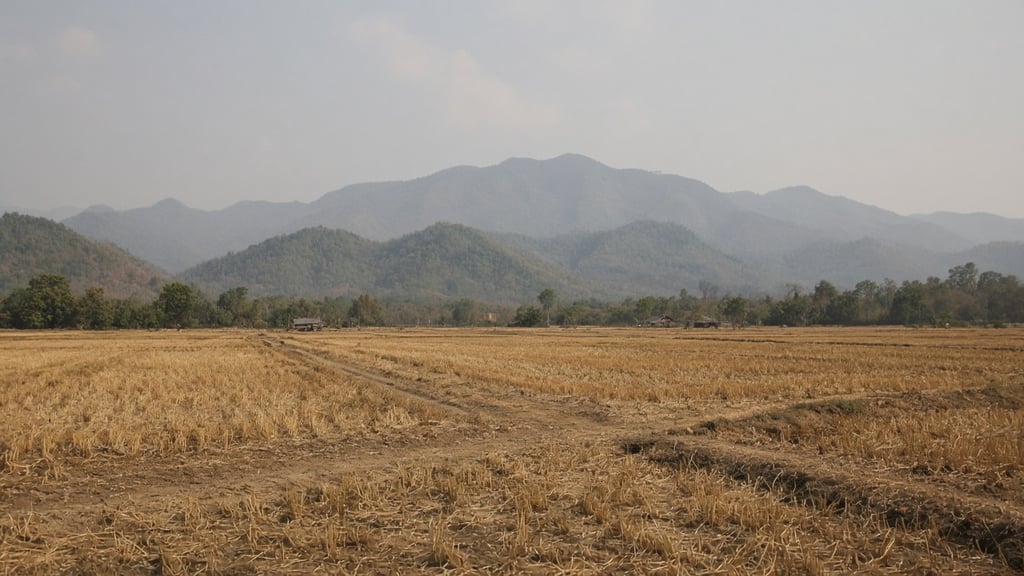
Prime Minister Anutin Charnvirakul used a Saturday disaster-command meeting at Government House to tell northern governors, Chiang Mai and Chiang Rai first among them, to apply existing burning laws in full and keep fire crews standing by before the annual PM2.5 season. The instruction is not a new statute. It is an order to enforce the rules already on the books against burning weeds and other vegetation, illegal fires in forest land, and the burning of agricultural crop residues, and to do it before the dry-season haze returns.
The meeting of the National Disaster Prevention and Mitigation Command opened at 11:00 on 21 November 2026 at the Phakdi Bodin Building. Anutin chaired it as prime minister, interior minister, and national disaster commander. Governors were told to step up inspections and public communication, keep firefighting crews and equipment ready for immediate deployment, and treat local administrative organisations as first responders, with water trucks from tambon, provincial, and municipal offices ready to spray as soon as smoke is seen.
The Department of Disaster Prevention and Mitigation was assigned to back preparedness in high-risk districts. Anutin told officials not to hesitate over so-called influential figures. Damage from haze, he said, cannot be priced, and the plume can travel as far as Bangkok. He also rejected the habit of blaming neighbouring countries alone. Thailand needs a double track: strict domestic enforcement plus cross-border work.
Last season's record is why the order arrived in November
Chiang Mai already ran a five-month open-burning ban from 1 January to 31 May 2026 after Governor Ratthaphon Naradisorn signed a fuel-management and burning-control zone order. Outside designated plots, open burning of waste, branches, and leaves in community areas was prohibited. Controlled burns still required registration in the Fire-D system and district command-centre permission, with firebreaks. Chiang Mai, Chiang Rai, Lamphun, and Mae Hong Son sit in a National Environment Board pollution-control zone that targets the February-to-May peak.
Enforcement last season was not a paper exercise. Provincial figures covering 1 January to 29 April 2026 listed 240 cases and 257 suspects for community burning, forest-law offences, roadside fires, and national-park, forest-reserve, and public-health breaches. Most ended in fines. Satellite counts still ran hot: 10,849 hotspots in Chiang Mai from 1 January to 27 April, already above the 2026 target. Upper-north tallies from Anutin's 20 April Chiang Mai inspection showed 78,856 cumulative hotspots from 1 January to 17 April, up 34.16 percent year on year, with about 5.9 million rai burned, even as average PM2.5 and AQI readings were described as 28.41 percent lower than the previous season.
That mix is why Bangkok is pushing enforcement now rather than in March. Wikipedia's account of air pollution in Thailand records agricultural and forest burning as a northern dry-season pattern, with February and March typically the worst months, and notes that Thailand ratified the ASEAN Agreement on Transboundary Haze Pollution in 2003. Northern Thailand also records the country's highest lung-cancer rates.
What the order covers, and what it does not
The 21 November instruction does not rewrite penalties. It tells governors to use the laws they already have, to inspect more, to communicate earlier, and to keep crews and water trucks ready. Farmers who still burn rice stubble, maize fields, or roadside grass after harvest will meet the same statutes that produced 240 cases last spring. Hill and forest fires remain a mix of illegal clearing, hunting, mushroom gathering, and transboundary smoke. Local administrations are expected to treat a hotspot as an emergency, not a seasonal inconvenience.
What This Means for Expats and Travelers in Thailand
If you live in Chiang Mai, Chiang Rai, Pai, or Mae Hong Son, treat January through May as a health-planning window. Last year's five-month ban is the template: open burning outside permitted plots is already illegal, and this order tells districts to stop looking the other way. Keep N95 or KN95 masks at home, watch provincial AQI apps, and do not assume an open-door cafe is clean air. People with asthma, heart disease, or young children need an indoor plan for orange and red days. If you burn garden waste on a rented plot, you can be fined.
If you are visiting, haze season is still peak tourist season in the north. Book refundable rooms for February and March. Check air quality the week you fly. Outdoor treks, motorbike days, and dawn temple circuits are the first things to drop when PM2.5 spikes. Indoor malls, museums, and filtered cafes become the itinerary. Bangkok readers should note Anutin's warning: northern plumes can drift south. Domestic burning plus transboundary smoke will decide whether next spring is a mask winter.

Comment verification
Step 1 of 3
Verify your email once to publish your comment. Your email is never shown publicly.
Enter the 6-digit code sent to .
Choose the display name shown next to your comments.