Phuket's branded residences sell a stay, not a land title
DTV holders can stay 180 days, then another 180. LTR holders can stay a decade. Neither visa hands a foreigner a land title. That gap is what branded serviced residences in Rawai are built to occupy.
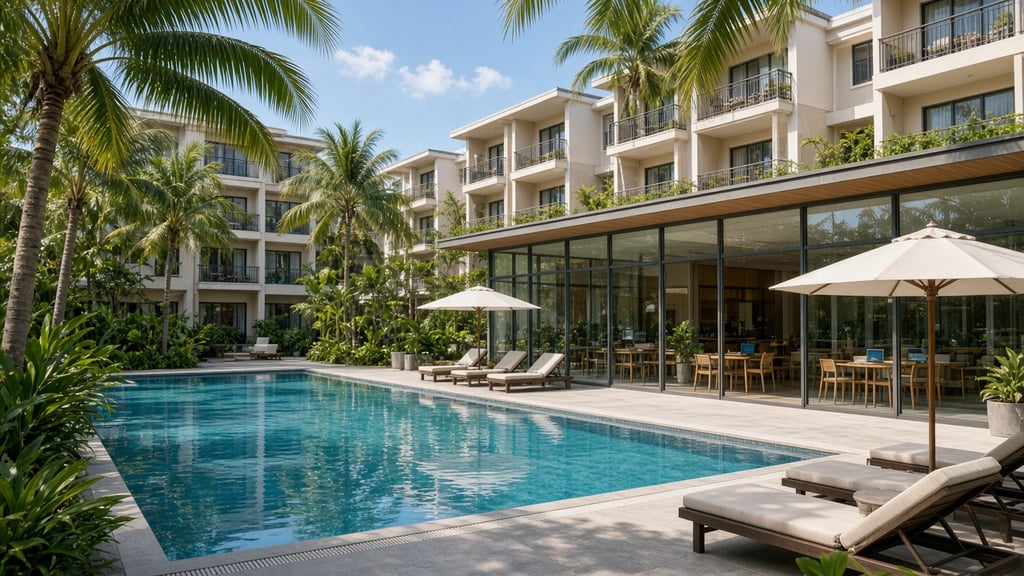
Phuket's housing market is splitting along a visa clock. The island still sells hotel nights to the west-coast beach trade. It still sells condominium units, up to the 49 percent foreign quota, to buyers who want a title. Between those two products sits a third: branded serviced residences, furnished apartments run like hotels, offered to people whose legal stay is measured in 180-day blocks, not in decades of land ownership.
That third product is concentrating in the south of the island, around Rawai and the Andaman slopes away from Patong. Developers are packaging gyms, coworking rooms, and outdoor pools as a long-stay kit. The pitch is occupancy: a desk, a kitchen, a pool, and a front desk still there in month four.
The stay is longer. The title is not.
Thailand's Destination Thailand Visa, on the official e-Visa portal, is a five-year multiple-entry stamp for remote workers, freelancers, and soft-power visitors. Holders may stay 180 days per entry. The Royal Thai Consulate-General in Ho Chi Minh City, restating the Immigration Bureau rule, says they may apply once for a further 180 days. After 360 days they must leave and re-enter on the same visa. Bank evidence is a three-month statement at 500,000 baht, or a sponsor letter. The visa is a workcation tool. It is not a path to Chanote.
The Long-Term Resident visa is a different clock. The Board of Investment programme offers a ten-year stay, five years then five more if the tests still hold, to wealthy global citizens, wealthy pensioners, work-from-Thailand professionals, and highly skilled staff. Bangkok has set a target of a million high-potential foreign residents. Property in the applicant's own name can count toward the USD 500,000 Thai investment bar, and toward the USD 250,000 top-up for pensioners whose unearned income sits between USD 40,000 and USD 80,000. That is an investment test, not a grant of land.
Foreigners still cannot own land as of right. The official Thailand.go.th guide, citing the Real Estate Information Center, keeps land purchases behind a 40 million baht investment, a one-rai cap, and Interior Ministry permission. Condominium units are the exception: combined foreign ownership may not exceed 49 percent of the floor area of all units in that building, and the purchase funds must come in from abroad. A registered lease runs 30 years, with renewal only if the lessor agrees. The new fact is a cohort of DTV and LTR holders who need a legal roof for six to twelve months, not a south-island apartment in place of a title deed.
Why the south of the island looks like a long-stay map
Wikipedia's Phuket province entry estimates that more than 100,000 foreigners have settled on the island. Tourism now pays the bills. The west-coast hotel strip at Patong, Karon, and Kata was built for short stays. Rawai, on the south coast, has long been a residential and Chao Le village rather than a night-market strip. That geography now matches a different visitor: remote workers on DTV, retirees testing LTR, families who want a kitchen and a coworking table more than a beach-club wristband.
The Tourism Authority of Thailand counted 35,047,501 international arrivals from 1 January to 27 December 2024, and more than 1.8 trillion baht in tourism revenue. A 60-day visa exemption for 93 nationalities pulled in the short-stay mass. Ministry of Tourism and Sports provincial tables for 2024 and 2025 still show Phuket taking well over 14 million visitor-trips a year. Hotels capture the extra nights only if the guest wants a hotel. Many DTV holders do not.
A branded serviced residence is, in legal terms, closer to a hotel-managed apartment than to a freehold condominium. The operator sells a stay, a furniture pack, and a service charge. Some schemes also sell a lease or a hotel-license unit to an investor who then puts the room back into a rental pool. That is a yield product. It is not the 49 percent foreign condo quota, and it does not convert a DTV into a land right. Buyers who confuse the two are buying a brochure.
What This Means for Expats and Travelers in Thailand
Match the product to the stamp. A DTV holder who will leave at day 360 should rent furnished, month by month, with an exit clause. An LTR applicant who can count a Thai property toward the investment test should still buy only a condominium inside the 49 percent quota, or a registered 30-year lease, confirmed at the land office. Remote workers who need a desk will find more of that inventory in Rawai than on Bangla Road. None of this is a shortcut around Immigration, the Land Department, or the foreign-quota affidavit from the condominium juristic person.
The boom is real as a demand story. It is not a rewrite of the Condominium Act. Phuket can house a longer-staying foreigner. It cannot, on current law, sell that foreigner the island.

Comment verification
Step 1 of 3
Verify your email once to publish your comment. Your email is never shown publicly.
Enter the 6-digit code sent to .
Choose the display name shown next to your comments.