Canberra's migration shift leaves Thailand-based mum-to-be in limbo
A Thai woman due to give birth in February remains in Thailand after Australia reordered family-visa processing in July, putting offshore partner applications behind onshore files. Pregnancy does not jump the queue.
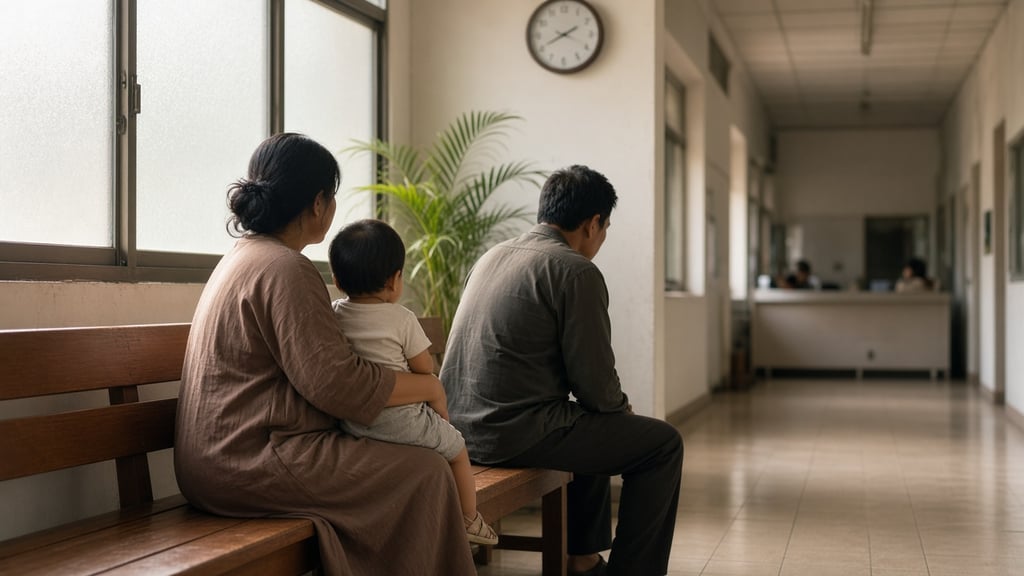
A Thai woman expecting her first child in February is still waiting in Thailand for an Australian partner visa meant to take her to Tasmania. The couple lodged offshore last December after they married, when public times still pointed to about two years. In late July, Canberra reordered family-visa processing. Applications lodged from outside Australia now sit behind those already onshore. Pregnancy does not move a file to the front of that queue.
The Australian spouse is a nurse in Tasmania. He has followed the pregnancy from a distance and plans to fly to Thailand in January to stay through the birth. For Thai-Australian couples who married here and applied from here, the July shift has turned a long wait into a longer split with no firm end date.
How Direction 117 reordered the family queue
Ministerial Direction 117 took effect on 25 July 2026 and replaced Direction 102. Highest priority now goes to family applications lodged while the primary applicant was in Australia, for a visa that can be granted onshore. Lower priority goes to files where the applicant was outside Australia at lodgement, or must be outside Australia at grant.
That lower group includes subclass 309, subclass 100, and subclass 300. Onshore Partner visas, subclass 820 and 801, sit in the higher group. The change applies to files already in the system. Officials told Senate estimates on 27 October that resources now focus on the onshore cohort, and that offshore files will slow while that work is done.
Advice tabled in parliament this month recorded that Home Affairs had flagged a possible tension with the UN Convention on the Rights of the Child. Officials said legal advice was obtained before the direction was made.
The numbers behind the wait
Home Affairs' October 2026 table put the combined median for partner provisional and temporary visas (subclasses 300, 309 and 820) at 21 months. Officials put the partner median at 23 months, up from 16 months last year. As at 31 August, about 120,000 partner applications sat in the system: roughly 81,000 onshore and 39,000 offshore. This program year the department had granted 5,321 onshore partner visas and 511 offshore.
November figures showed half of recently decided subclass 309 files finalised within 21 months and 90 percent within 35 months. Those numbers describe completed cases, not a promise for a file lodged last December. Canberra has framed the shift as support for people already living and working in Australia, while offshore family files continue, more slowly.
A February due date, a visitor visa, and a Thai hospital
Home Affairs may accelerate a partner file only for special circumstances of a compassionate nature, with compelling reasons to leave the usual order. The priority-processing factsheet is blunt: intending to start a family, pregnancy, and the pain of separation are not treated as compelling on their own. Most priority requests cannot be approved.
Officials have pointed separated couples toward visitor visas. Thailand is not on the ETA or eVisitor lists, so a Thai applicant needs a Visitor (subclass 600) visa and must show they are a genuine temporary entrant who will leave. A pending 309, a pregnancy, and an Australian spouse in Tasmania can look like reasons not to return. Visitor visas are not a partner pathway and can be refused. A 309 grant still has to happen while the applicant is outside Australia.
Many Thai-Australian couples are now planning the birth in Thailand. If the Australian parent is a citizen, a child born here can usually be registered as an Australian citizen by descent, so the baby does not need the partner visa. The mother still does. Partner-visa health exams often cannot finish until after a birth because chest x-rays are deferred in pregnancy. The gap is that the family cannot yet live in one country.
What This Means for Expats and Travelers in Thailand
Thai partners who lodged subclass 309 from Thailand should assume a multi-year wait and should not abandon a valid file because of Direction 117. Keep ImmiAccount current. A pregnancy and a birth are changes of circumstance that should be notified. Adding the child after birth is separate from registering Australian citizenship by descent.
Do not use a visitor visa as a back-door partner visa. If you apply for subclass 600, document a clear return to Thailand. Being pregnant, or having a husband in Australia, can hurt a visitor case. Two-way travel is often the more realistic stopgap: the Australian partner comes to Thailand for the birth, then returns to work, while the 309 continues offshore.
Couples still choosing where to lodge should understand the split. An applicant who is lawfully in Australia can apply for subclass 820 and now sits in the higher-priority group. An applicant who remains offshore for a 309 sits in the lower group. Switching streams is not casual, and bad advice is circulating in Facebook groups from Pattaya to Perth. Get registered migration advice before changing location or visa type.

Comment verification
Step 1 of 3
Verify your email once to publish your comment. Your email is never shown publicly.
Enter the 6-digit code sent to .
Choose the display name shown next to your comments.