Pattaya Councillor Files Japan Tour Fraud Complaint After 1.3 Million Baht Trip Collapses
Twenty-nine Pattaya travellers, led by city councillor Wasan Sukkhee, told Mueang Pattaya Police a Japan group tour never departed after they paid 1,313,700 baht to a coordinator known only as B.
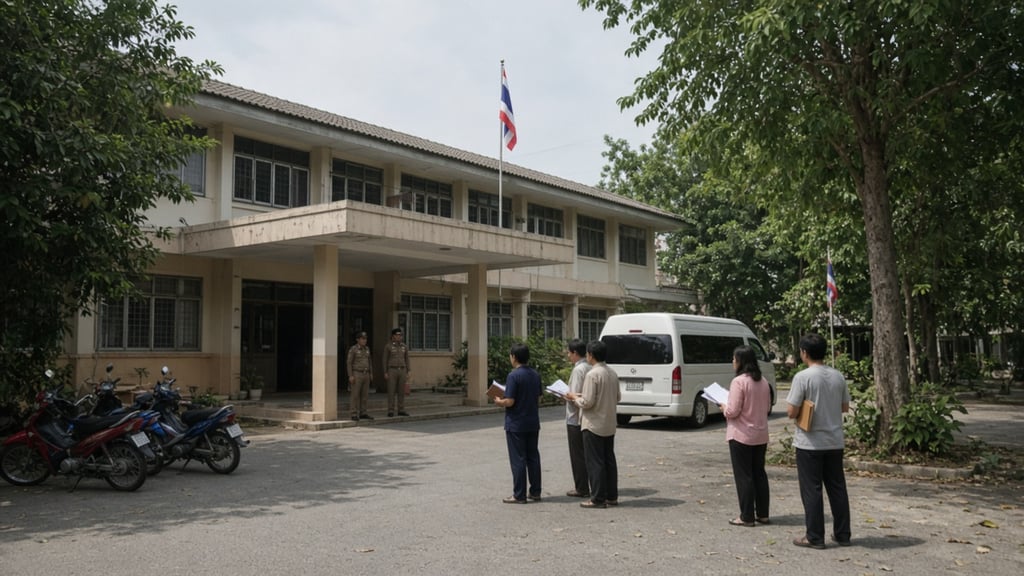
Twenty-nine people filed a public-fraud complaint at Mueang Pattaya Police Station on 16 November 2026 after a planned group trip to Japan collapsed on the departure date. Pattaya City councillor Wasan Sukkhee went with them as both a complainant and the group's public face. The alleged loss is 1,313,700 baht, paid for a Japan tour package that produced neither seats nor a refund.
Investigators recorded statements, took signatures, and opened a file against a man identified only by the alias B. No arrest was announced at the station. Officers said they would collect transfer records, booking papers, and chat logs, then summon the accused for questioning under ordinary criminal procedure.
A circle of friends, not a shopfront
The travellers were not walk-in clients at a licensed counter. They were acquaintances who wanted a Japan holiday and used someone inside the group as the go-between. That coordinator collected money in stages until each of the 29 had paid 45,300 baht. Personal trust did the work that a licence number, a company receipt, and an airline booking locator would normally do.
On the day they were supposed to fly, the coordinator told them the airline had cancelled every seat. A genuine booked block of 29 passengers is rarely wiped out in one unexplained stroke. It is also a claim that is hard to test unless each passenger holds a named e-ticket. The group later said they suspected B had used the name of a real tour company. They had not called that company before sending money.
Thai consumer agencies have described this pattern for years. Unlicensed sellers pitch packages through LINE, Facebook, and personal introductions, then stall when the itinerary fails. The Department of Tourism tells buyers to search the operator on dot.go.th, call the 24-hour tourism hotline at +66 2401 1111, refuse below-cost deals, and demand a company receipt after every payment. The Thailand Consumers Council repeats a three-step licence check and notes that selling tours without a licence is a criminal offence under the Tourism Business and Tourist Guide Act B.E. 2551.
What Thai tour law already requires
The 2008 Act, as later amended, is specific. Licensed operators must put their name, office, and licence number on advertising. They must state the price, itinerary, transport, lodging, meals, guide arrangements, any minimum group size, and accident insurance. If the itinerary changes after payment and the traveller no longer wants to go, the operator must refund in full without deductions. If the trip is cancelled because of the operator, the refund is also total. The Ministry of Tourism and Sports publishes the current text of the Act.
Those duties bind a licensed firm. A private individual collecting transfers into a personal account sits outside that refund machinery until police or a court decide the facts. That is why the Pattaya group went to the police station rather than only to a tourism registrar. Public fraud is a criminal allegation. A tourism-licence complaint is a parallel path, and the two files can run together.
The Tourism Authority complaint desk points travellers to Department of Tourism lines 0-2141-3171 and 0-2141-3284, plus the 24-hour call centre. The Office of the Consumer Protection Board takes service complaints on 1166 and through OCPB Connect. Official Thailand.go.th guidance also warns against ghost operators and itineraries booked too far ahead. None of those channels freeze a bank account by themselves. Speed still belongs to a police complaint filed with transfer slips in hand.
What This Means for Expats and Travelers in Thailand
Foreign residents and visitors book the same LINE-group Japan packages as Thai friends, often because the price looks kind and the organiser is someone they know. A personal introduction is not a licence. Before any transfer, search the company on the Department of Tourism licence checker. Match the licence number on the flyer to the record. Pay a company account that matches the licensed name, not a personal PromptPay. Ask for the airline PNR and hotel vouchers in your own name before the final instalment.
If the seller cannot produce those items, stop. A cancelled-seat story on departure day is a police matter, not a customer-service chat. Keep the LINE thread, the slips, and the advertised itinerary. File at the local station and copy the Department of Tourism and OCPB. Expats who paid in cash or through a Thai friend's account should still appear as complainants if they can show they funded the trip.
Group pressure is part of the trap. Twenty-nine people paid because the rest were paying. One licence check would have been cheaper than 45,300 baht each. Japan remains a popular winter destination from U-Tapao and Suvarnabhumi. Licensed operators exist. Unlicensed coordinators exist too. The difference is a two-minute search and a receipt with a company stamp. Consumer-protection systems exist because buyers and sellers do not hold the same information, a point consumer-protection law has treated as basic for decades.
Comment verification
Step 1 of 3
Verify your email once to publish your comment. Your email is never shown publicly.
Enter the 6-digit code sent to .
Choose the display name shown next to your comments.