Thailand Approves 30-Day Visa Exemption Deal with Sri Lanka
Cabinet on 17 November 2026 approved a reciprocal visa exemption for ordinary passports with Sri Lanka. Stays of up to 30 days per visit, capped at 90 days in any 180-day window, apply only after both governments finish domestic procedures.
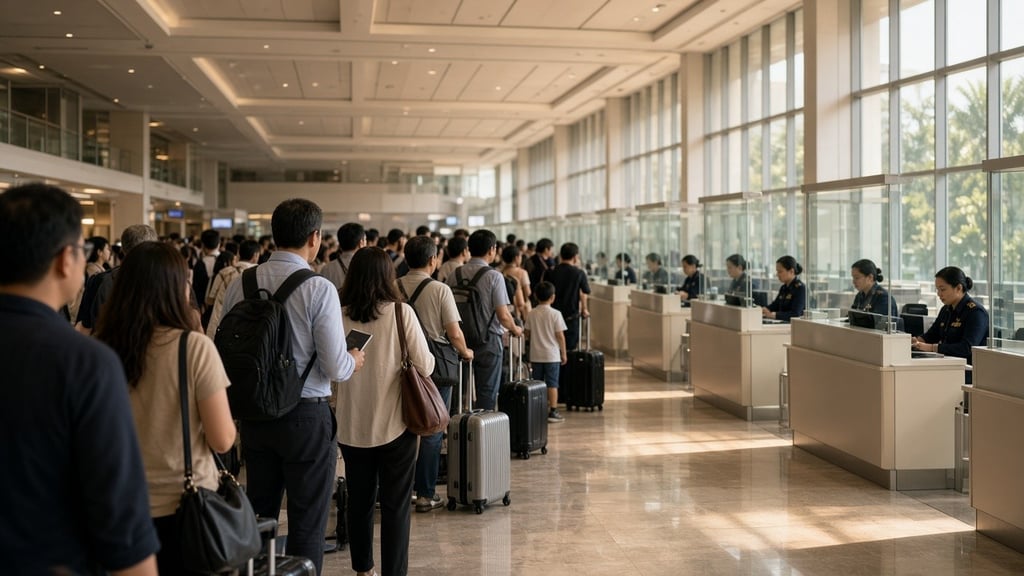
Thailand's Cabinet on Tuesday approved a reciprocal visa exemption with Sri Lanka for holders of ordinary passports. Deputy government spokesperson Ploythalay Laksamisaengchan said ministers meeting at Government House on 17 November 2026 endorsed a draft agreement that, once in force, will let Thai and Sri Lankan travellers enter, leave, or transit each other's territory without a visa for stays of up to 30 days per visit.
The exemption is not live at the airport today. Cabinet authorised the foreign minister, or a designated representative, to sign the text and instructed the Ministry of Foreign Affairs to complete the remaining domestic steps. The agreement takes effect on the 60th day after both governments have notified each other, in writing through diplomatic channels, that those procedures are finished. Until then, Sri Lankan ordinary-passport holders still need the visa Thailand currently requires.
Ordinary passports, 30 days, and a 90-day cap
The draft covers ordinary passports only. Diplomatic and official passports sit on a separate track. Each stay under the exemption is capped at 30 days. Total time in the other country under the same facility cannot exceed 90 days in any 180-day period. Anyone who wants a longer holiday, a student place, paid work, or any activity that Thai or Sri Lankan authorities must approve in advance still has to obtain the matching visa before travel.
The exemption is not a work permit. It does not replace Thailand's labour channel with Colombo, and it does not let a visitor clock in at a restaurant, a farm, or a language school on a tourist stamp. Work, study, stays beyond 30 days, and anything that needs prior authorisation require the proper visa first.
Either government may suspend the arrangement in whole or in part for public order, public health, or national security, with at least 30 days of written notice through diplomatic channels. Either side may terminate the agreement with written notice, in which case the text would drop 90 days after the other party receives that notice.
Sri Lanka's Cabinet had already cleared the same deal on 5 October 2026, according to a Colombo Cabinet Office briefing. That vote framed the exemption as general tourism, not employment, education, media work, or other activity that needs prior approval. Thailand's Tuesday minute matches those limits.
A bilateral treaty, not a restored airport stamp
The Sri Lanka file is a bilateral treaty, not a slot on Thailand's unilateral tourism exemption list. The Ministry of Foreign Affairs' December 2025 list of ordinary-passport bilateral waivers does not include Sri Lanka. Unilateral exemptions and visa on arrival were redrawn earlier in 2026, with new Interior Ministry notices taking effect from 15 September 2026. Tuesday's vote did not restore an old airport stamp overnight.
A separate labour package sits on another track. On 8 September 2026, Cabinet approved a memorandum on labour cooperation and an employment agreement aimed at recruiting about 10,000 Sri Lankan workers through contracts, work permits, health checks, and designated employers. Those workers will not enter on this 30-day tourism exemption. Mixing the two files is how people end up refused at the counter.
TDAC still applies
Visa-free entry, when it starts, still requires the Thailand Digital Arrival Card. The Immigration Bureau's TDAC system replaced the paper arrival card on 1 May 2025. Every non-Thai national who will pass through immigration, including infants, must submit the form at the official TDAC site within the three days before arrival. It is not a visa. The card is valid for one arrival date only.
Ploythalay said the agreement is meant to ease travel, deepen people-to-people contact between two Buddhist-majority countries, and support cultural and religious tourism. No start date has been published. The 60-day rule runs from the last written notification, not from the Cabinet vote, so travellers booking December temple tours should keep the visa appointment they already have.
What This Means for Expats and Travelers in Thailand
If you hold a Sri Lankan ordinary passport, do not skip the visa for a trip this month or next. Wait for MFA and Immigration to confirm that both sides have notified each other and that the 60-day clock has finished. When the exemption is live, plan on 30 days per visit and keep a running total under 90 days in any 180-day window. File a TDAC before every arrival. This Cabinet vote does not legalise a job on a tourist stamp.
If you hold a Thai ordinary passport, the same 30-day, 90-in-180 terms will apply in Sri Lanka once the agreement is in force. Until then, follow Sri Lanka's current visa rules. Expats who host Sri Lankan family, or who plan a Buddhist circuit through Colombo and Kandy, should treat Tuesday's vote as a diplomatic green light, not an airport instruction. Watch the Royal Thai Embassy in Colombo and the Immigration Bureau for the entry-into-force notice.

Comment verification
Step 1 of 3
Verify your email once to publish your comment. Your email is never shown publicly.
Enter the 6-digit code sent to .
Choose the display name shown next to your comments.