Thailand Beats Italy and France to Top Wanderlust's Food Destination Awards
Thailand climbed from eighth place to Gold at the 25th Wanderlust Reader Travel Awards in London. The government tied the gastronomy ranking to longer UK stays, regional kitchens, and higher-spend tourism.
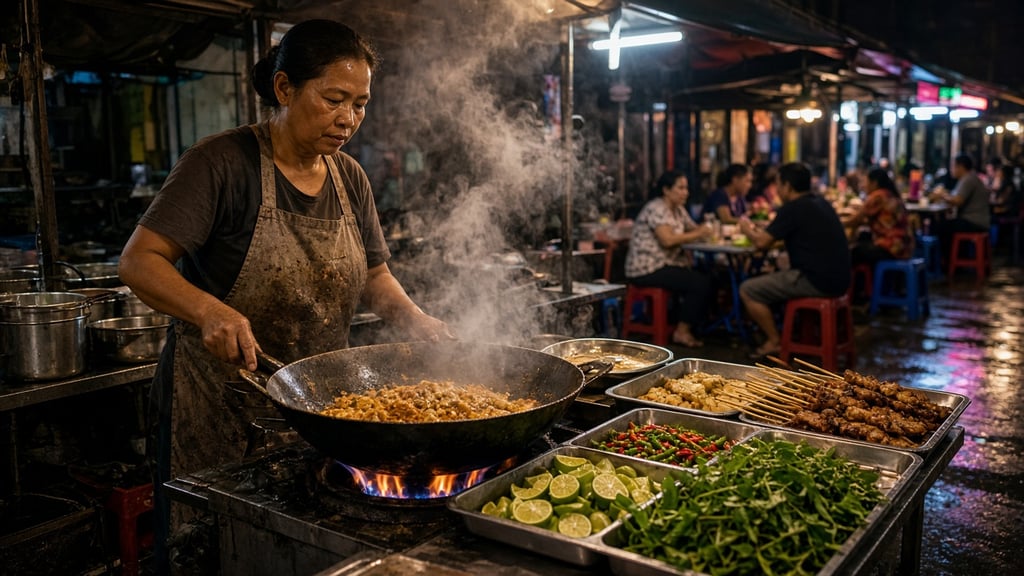
Thailand has been named the most desirable country in the world for gastronomy by readers of the British travel magazine Wanderlust, jumping from eighth place in 2025 to Gold at the 25th anniversary awards. The Tourism Authority of Thailand collected the trophy on 6 November 2026 at Maritime Greenwich in London. Bangkok publicised the result on Wednesday, 25 November, and folded it into a push for visitors who spend more on meals and regional kitchens rather than simply adding more arrivals.
TAT Governor Thapanee Kiatphaibool accepted the Gold Award for Most Desirable Country for Gastronomy. Officials presented Thai cooking as a continuum from neighbourhood stalls to Michelin-listed dining rooms, and as a reason for long-haul travellers, especially from the United Kingdom, to plan trips around food rather than a handful of beach resorts.
Italy took Silver and France Bronze. The rest of the ten-country shortlist, as set out by Deputy Government Spokesperson Lalida Persvivatana, ran Japan, Greece, Spain, South Korea, Malaysia, Turkey, and Vietnam. Last year's gastronomy table, published by Wanderlust after its 24th awards, placed Spain first and Italy second, with Thailand eighth, behind Japan, South Korea, Mexico, and Greece.
Wanderlust, a UK consumer title and an official media partner of World Travel Market 2026, said more than 250,000 readers cast over 5.5 million votes across 23 categories. Prince Harry spoke at Greenwich on responsible travel and presented a separate sustainability prize. Thailand also placed fifth among non-European countries in the Most Desirable Country (World) ranking, behind Costa Rica, Japan, South Africa, and Canada.
The Wednesday briefing treated the poll as more than a trophy. Lalida tied it to Prime Minister Anutin Charnvirakul's Destination Thailand agenda, which asks the industry to chase value ahead of volume. Food, in that telling, should move money through farmers, processors, restaurant owners, small traders, and community operators, not only coastal hotels. Product standards and food safety were listed as confidence measures for travellers who now arrive with ranked lists on their phones.
Regional cooking sat at the centre of the pitch. Officials pointed to northeastern Isan dishes, northern kitchens shaped in part by Burmese and Lanna traditions, Bangkok street food, and the sweets of Phetchaburi, which UNESCO listed as a Creative City of Gastronomy in 2021. Phetchaburi's reputation rests on toddy palm sugar, sea salt, and lime. TAT already markets this spread through its Must Taste strand and through The MICHELIN Guide Thailand, which the authority helped bring into the country in 2017.
A UK corridor that already eats well
The award lands as TAT works the British market with extra seats. Virgin Atlantic opened a London-Phuket service in October. Norse Atlantic is preparing London-Phuket and Manchester-Bangkok flights for December. From 1 January to 3 November 2026, Thailand recorded 818,380 UK arrivals, with an average stay of 14.18 days and spending of about 68,720 baht per person per trip. TAT's full-year forecast is just over 1.04 million British visitors and 71,605 million baht in revenue.
Those stays sit inside Thailand's visa-exemption window for UK passport holders, currently 60 days on arrival for tourism. Food-led trips, cooking classes, and market circuits are among the few products that can stretch a 14-day holiday toward three or four weeks without a visa run. A ranking that pushes travellers beyond Bangkok and Phuket also spreads spending into provinces where a visitor on an exemption, a retirement extension, or a destination visa can eat well without competing for the same ten restaurants.
What This Means for Expats and Travelers in Thailand
For people who already live here, the ranking is less a surprise than a reminder of a two-speed dining scene. A bowl of boat noodles or som tam in a provincial market still costs a fraction of a tasting menu in Thonglor. If the award funnels more first-time visitors into those markets, hygiene, crowding, and price creep become local issues. Residents in Chiang Mai, Khon Kaen, and Phetchaburi should expect more food tours on streets that have so far stayed cheaper than Bangkok's old town.
Visitors on a 60-day exemption can treat food as the itinerary: three days in Bangkok, a cheap flight to Chiang Mai or Ubon, a detour to Phetchaburi for desserts, then the islands. Expats booking family visits can point relatives to regional kitchens instead of the same Sukhumvit strip. Culinary tourism, as researchers define it, is travel in which food is a primary motive. Industry groups put food and drink at 15 to 35 percent of visitor spending. Thailand already knew that math: gastronomy accounted for roughly a fifth of tourism income in the mid-2010s, and street stalls were a 270-billion-baht business by 2017. The Wanderlust vote does not change the kitchens. It changes who hears about them, and how long they might stay.
Comment verification
Step 1 of 3
Verify your email once to publish your comment. Your email is never shown publicly.
Enter the 6-digit code sent to .
Choose the display name shown next to your comments.