SRT Sets 28 November Deadline as Three-Airport High-Speed Rail Dispute Nears Court
The State Railway of Thailand says it will consult the Attorney General if talks with Asia Era One fail by 28 November. The 220-kilometre Don Mueang-Suvarnabhumi-U-Tapao line remains stalled seven years after the concession was signed, while the existing Airport Rail Link is due to change operators on 1 February 2027.
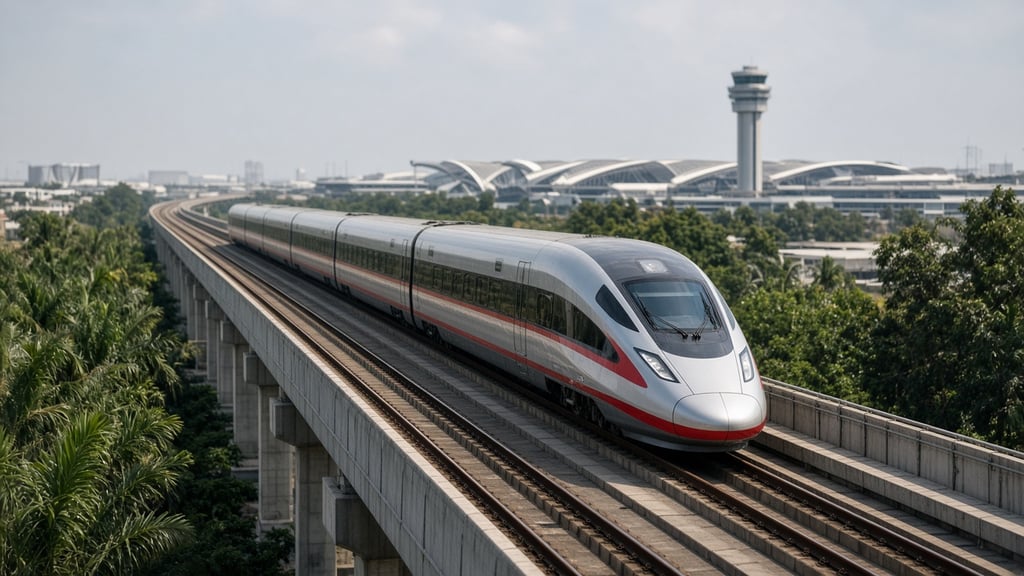
Thailand's promised high-speed railway between Don Mueang, Suvarnabhumi and U-Tapao airports is now nine days from a courtroom test. On 19 November 2026, State Railway of Thailand (SRT) Governor Anan Phonimdaeng said the agency has until 28 November to settle its concession fight with Asia Era One, the CP Group-backed private partner. If those talks fail, SRT will consult the Office of the Attorney General on how to take the dispute through the courts.
The fight is the latest stall in a 50-year public-private partnership signed on 24 October 2019 for a 220-kilometre corridor once valued at about 224.5 billion baht. Construction has barely begun. The private partner wants to walk away. The state railway says the contract still binds both sides.
A Notice to Proceed, and a Refusal
SRT has already issued a Notice to Proceed telling Asia Era One to start work under the existing concession. The company rejected that notice and restated that it had already asked to end the agreement. Under the contract, the two sides have 60 days to negotiate a dispute. That window closes on 28 November 2026.
The private partner's exit bid has been building since mid-year. In early July 2026, Asia Era One told SRT it was exercising a contractual right to terminate, pointing to investment-promotion paperwork, financing gaps, and conditions that it says were never fully cleared. A second letter followed in August. SRT answered in mid-October with the notice to proceed, arguing the state had met its side of the bargain.
Eastern Economic Corridor officials have separately warned that lenders are unconvinced the line can pay for itself at the original specification. Tweaks that pay the state's share as work is certified have been called legally possible. They have not unlocked bank money. One fallback under study, if the concession dies, is a slower 160 kilometre-per-hour design instead of the 250 kilometre-per-hour high-speed plan, or a fully public rebuild.
The Airport Rail Link Is a Separate Clock
While the high-speed fight sits in legal limbo, the existing Airport Rail Link between Phaya Thai and Suvarnabhumi is moving onto a new operator. SRT has told its subsidiary, S.R.T. Electrified Train Company Limited (SRTET), to prepare to run the service from 1 February 2027. An interim deal signed on 29 September covers operations from 1 October 2026 through 31 January 2027. Officials say trains should keep running through the handover.
That transfer is not the opening of the three-airport high-speed line. It is a stopgap for the service passengers already use. SRT has also taken a related money claim to the Central Administrative Court, seeking about 13.34 billion baht in Airport Rail Link rights fees and default interest from the private partner and guarantors. Asia Era One has put a much larger damages figure on the table for years of ARL operations and early works. Who breached first is still the core legal question.
Why the Line Mattered in the First Place
The three-airport railway was sold as the spine of the Eastern Economic Corridor: one train from Don Mueang's domestic and low-cost terminals, through Suvarnabhumi's main international hub, and out to U-Tapao in Rayong, the airport meant to serve eastern seaboard factories and beaches. Transport officials listed land on the Suvarnabhumi to U-Tapao stretch as ready for construction as far back as 2022.
Government messaging has swung. In April 2026 the Transport Ministry publicly favoured keeping both the high-speed rail and U-Tapao airport contracts on original terms, warning that rewrites could invite challenges from other bidders. In 2024 the EEC Policy Committee had backed staged state payments, ARL rights-fee instalments, and a waiver so a notice to proceed could be issued even if some preconditions lagged. Those repairs never fully closed. By late 2026 the private partner was still citing Makkasan site constraints, unfinished amendments, and a financing market that would not underwrite the original commercial case.
What This Means for Expats and Travelers in Thailand
If you fly into Suvarnabhumi and ride the Airport Rail Link, the February 2027 operator change is the date that actually touches your commute. SRT says service will continue. Treat that as an operations handover, not a new high-speed train. Tickets and the Phaya Thai to Suvarnabhumi stopping pattern should look familiar. Watch for staffing and maintenance niggles in the first weeks.
Do not plan 2027 travel around a Don Mueang-to-U-Tapao bullet train. That line is not in service, and a court fight would push any groundbreaking further out. Pattaya, Rayong, and eastern seaboard residents promised a one-seat ride from the two Bangkok airports should keep using buses, vans, and the motorway. Visa runs, inter-airport transfers, and low-cost carrier connections at Don Mueang will stay as they are: taxi, bus, or the existing ARL plus a city hop.
Investors watching EEC land, U-Tapao catchment housing, and logistics parks should treat the 28 November deadline as a legal fork, not a construction start gun. Either the concession is patched and banks still have to be convinced, or the state designs a cheaper public scheme. Neither path delivers a 250 kilometre-per-hour airport hop next year.

Comment verification
Step 1 of 3
Verify your email once to publish your comment. Your email is never shown publicly.
Enter the 6-digit code sent to .
Choose the display name shown next to your comments.