BoT Targets Thailand's 48% Informal Economy
Governor Vitai Ratanakorn splits Thailand's shadow economy in two: bank 2.5 million honest firms, and choke grey-money cash, gold and USDT pipes.
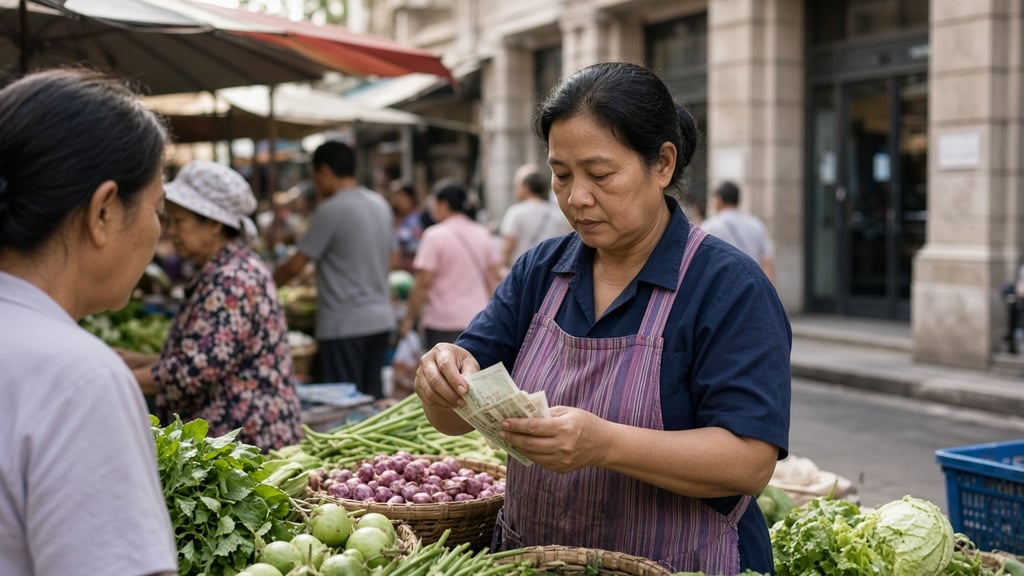
BANGKOK: Bank of Thailand Governor Vitai Ratanakorn opened BOT Symposium 2026 on 24 November with a blunt map of the country's shadow economy. World Bank figures put Thailand's informal economy at 48 percent of GDP, 14th among 158 countries and well above a global average near 33 percent. His point was not that half the kingdom is criminal. It was that the banking system is now where two different problems meet.
The first is honest work that never reaches a bank file. Street vendors, independent traders, family farms and unregistered workshops still create output inside GDP, yet they stay off company registries, tax rolls and the data trail lenders use. About 2.5 million of Thailand's 3.2 million businesses remain unregistered or outside the tax net, roughly 70 to 80 percent of the enterprise stock. The Puey Ungphakorn Institute for Economic Research (PIER) puts that productive informal slice at about 21 to 35 percent of GDP. Informal workers number about 26 million, or 65 percent of the labour force.
How 2.5 million firms stay off the books
BoT is not promising to bank every stall by next quarter. Vitai described an 8 to 10 month grind, not a single package, and said the central bank cannot finish the job alone. PIER's reading of the 2022 business census finds about 230,000 informal firms in the top 20 percent of productivity in their industries. Those are the files BoT wants first: shops stuck in short working-capital loops instead of term loans that buy equipment or a second stall.
The credit math is ugly even before grey money enters the picture. Only about one in three Thai businesses has a loan inside the banking system. Office of Small and Medium Enterprises Promotion data show about 34 percent of funding for indebted SMEs still comes from outside the banking system. Banks decline shops with no accounts and no tax receipt. Wikipedia's background on the Thai economy already flagged the trap: Friedrich Schneider put the shadow economy at 40.9 percent of official GDP in 2014.
BoT's on-ramp is deliberately dull. Keep more payments on PromptPay, give lenders better income signals, and cut the cost of saying yes to a small file. Registered companies per capita are only about one third the level of other upper-middle-income peers. If cheaper credit makes the paperwork worth it, formalisation can pay for itself. If not, firms stay in cash while public debt edges toward 70 percent of GDP.
Pinching the grey-money pipes
The second problem is the leak. A 2012 Havoscope study, the most recent size estimate the central bank cited, put the grey economy at about 13 percent of GDP. That basket mixes tax evasion, illegal markets and corruption. Grey money, in Vitai's framing, is not a second GDP engine. It is value that has to be hidden, which means it needs a bank account, a cash window, a gold shop or a USDT rail to stay alive.
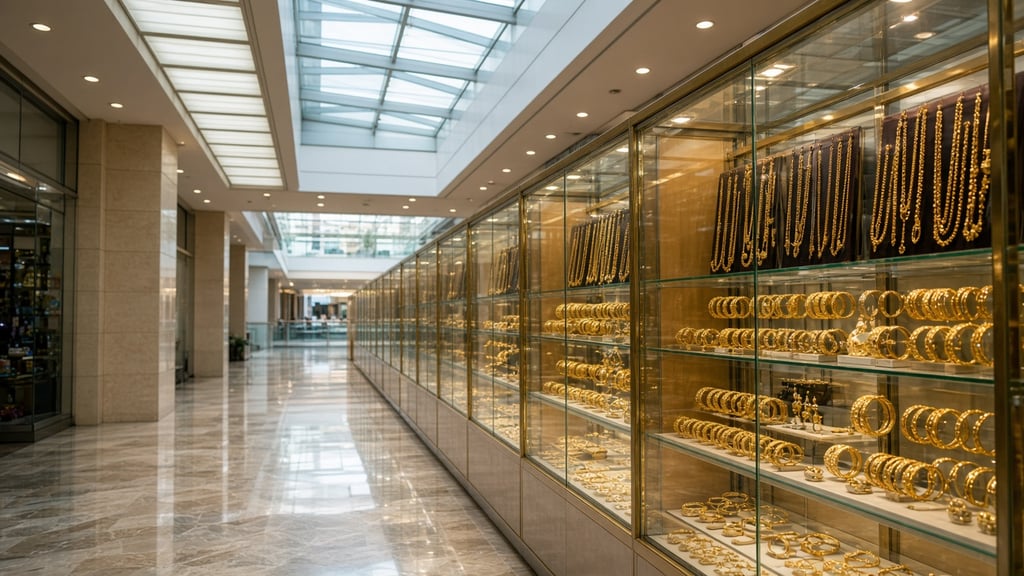
Cash deposits and withdrawals from 5 million baht, mule-account onboarding, gold, foreign exchange, and USDT rails are the first pipes BoT wants to pinch. The same 5 million baht cash threshold already sits in the central bank's FinSafeguard commitments, alongside tighter rules on cash-settled gold deals above 10 million baht. One gold-app channel BoT said had run at about 4,000 kilograms a month later fell to about 700 kilograms. Next come source-of-funds checks on cash deposits from 5 million baht, and harder account opening wherever mule patterns show up.
Choke the pipes too loosely and grey money keeps using banks as a utility. Choke them too tightly and a condo seller or an exporter gets treated like a mule. BoT says finance can only start the cycle: more recorded payments, cheaper credit, a wider tax base. Tax design, labour rules and enforcement still sit with the rest of government.
What This Means for Expats and Travelers in Thailand
For foreigners running a bar, villa or small import shop, the split is the same one Vitai drew. If the business is honest and living on cash plus a personal account, a cleaner digital trail is becoming the price of a working-capital line. Keep invoices, use PromptPay, and expect a source-of-funds story on large cash. That is the realistic path onto the 2.5 million-firm on-ramp.
If you are moving money rather than making som tam, the pinch is already in the branch. Reddit threads in r/Thailand have spent a year swapping stories of frozen accounts after USDT peer-to-peer trades and cash deposits that trigger questions well below 5 million baht. Ordinary holiday cash is not the target. Suitcase deposits, gold bars and USDT recycled into a Thai account are. Bring the sale contract or the wire receipt, and do not use a friend's account as a shortcut.
Vendors and expat operators who stayed informal for tax reasons should assume the carrot and the stick arrive together. Formal credit and welfare are the carrot. Harder cash, gold, FX and USDT channels are the stick. Neither lands in a week. Both are now official BoT work.
Comment verification
Step 1 of 3
Verify your email once to publish your comment. Your email is never shown publicly.
Enter the 6-digit code sent to .
Choose the display name shown next to your comments.