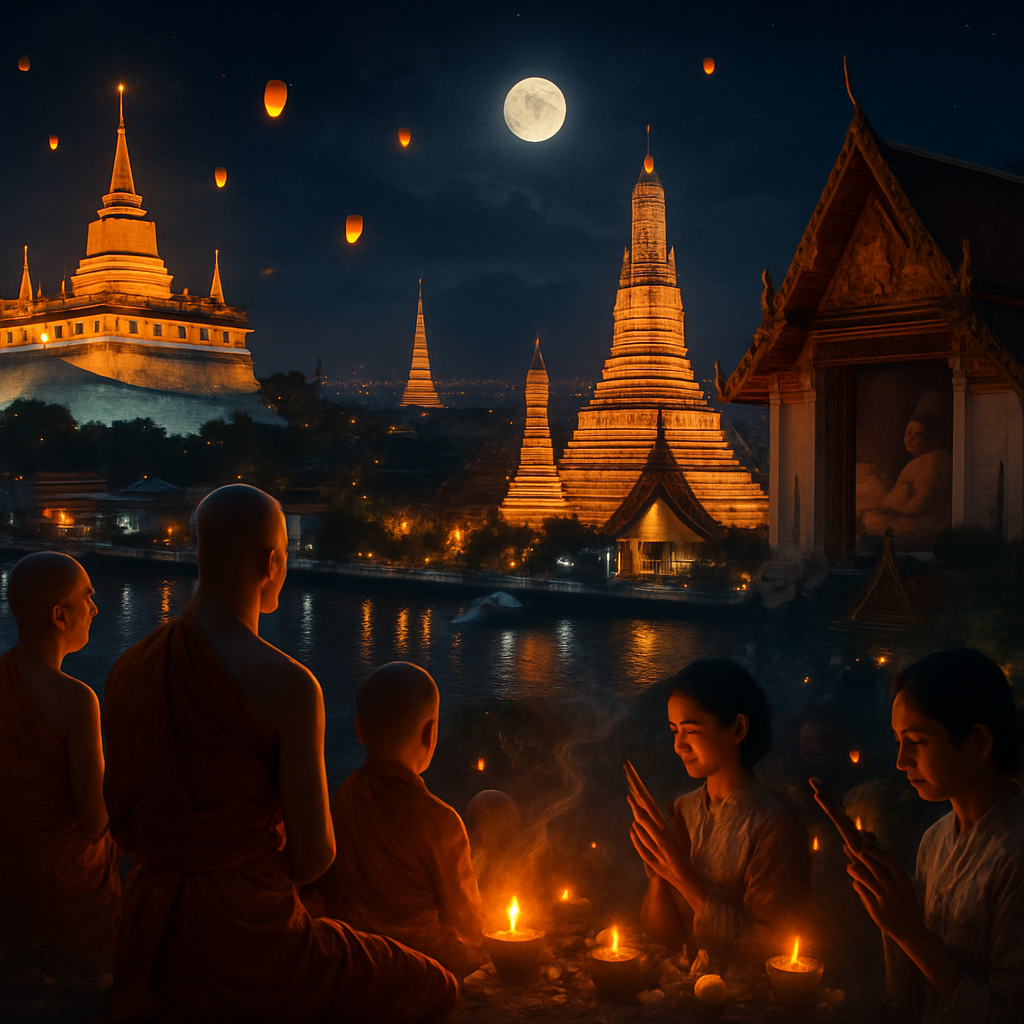
As 2025 winds down and a fresh slate beckons in 2026, Bangkok floods with a gentle, hopeful energy: year-end prayer services at the city’s most beloved temples. For many Thais and visitors alike, staying up through midnight to offer prayers, make merit and welcome the new year is a tradition that blends reflection, ambition and a touch of magic. If you’re planning to join the crowd—or tune in from afar—here’s a lively guide to seven Bangkok temples where New Year prayers are especially meaningful, each with its own flavor of blessing.
1. Wat Saket (Temple of the Golden Mount) — prayers from the city’s high point
Climbing Wat Saket’s gilded peak as the year flips over has become almost cinematic: you emerge breathless on the summit, the city’s lights spread below like a promise. People praying here often ask for recognition, prestige and sustained success—perfect if you’re launching a bold career move or aiming to make 2026 the year your efforts finally get noticed. Pro tip: arrive early to nab a quiet corner on the terrace and enjoy the view before the formal chants begin.
2. Wat Arun Ratchawararam Ratchawaramahawihan — the “dawn” temple for auspicious beginnings
Wat Arun’s riverside silhouette is practically synonymous with new beginnings. Many entrepreneurs, project-starters and those embarking on life changes pick this temple to set intentions for the year ahead. The cool air by the Chao Phraya and the first moments of the new day create a symbolic “dawn” ritual—ideal for committing to fresh plans or partnerships.
3. Wat Phra Chetuphon (Wat Pho) — quiet strength beside the Reclining Buddha
Seeking calm, well-being and grounding for both body and mind? Wat Pho’s serene, historic compound and its famous Reclining Buddha offer a gentle atmosphere for those requests. Pilgrims here often tie hopes for physical health and inner resilience to the temple’s centuries-old aura—so if 2026 is your year to rebuild health routines or deepen mental strength, Wat Pho is a soulful choice.
4. Wat Suthat Thepwararam — sharpen your vision for the year ahead
Wat Suthat is where people go when they want sharper judgement and clearer foresight. The temple’s quiet majesty helps focus the mind, making it a natural spot for contemplative New Year prayers that center on insight, decision-making and spotting opportunities. If next year’s calendar needs smarter choices and fewer detours, bring your intentions here.
5. Wat Mahathat Yuwaratrangsarit — discipline and inner resolve in the old city
Located in historic Rattanakosin, Wat Mahathat is a major royal monastery and a hub for Pali studies and Vipassana meditation. The vibe is resolute and study-oriented—ideal for those who want to strengthen discipline, cultivate spiritual practice, or commit to a year of personal training (mental or physical). Think of it as the temple for steady, sustained growth.
6. Wat Hong Rattanaram — blessings to overcome obstacles
Wat Hong is known for its holy water rituals and a deep tradition of seeking victory over life’s hurdles. Visitors often come here to ask for the courage and luck to push through difficult challenges. If 2026 has a big test—be it a legal battle, a career hurdle, or a personal struggle—Wat Hong’s ceremonies are tailored for people who want blessings for triumph and recovery.
7. Wat Benchamabophit Dusitwanaram (the Marble Temple) — serenity and polished clarity
Elegant, serene and very photogenic, the Marble Temple is a magnet for people who want to enter the new year with calm, aesthetic clarity. Its marble ordination hall and tranquil grounds encourage reflective prayers and intentions aimed at poise, balance and tasteful refinement—whether in relationships, career branding or personal style.
Can’t make it in person? Watch the live broadcasts
Not everyone can stand in a temple courtyard at midnight, and fortunately many services are streamed so you can participate from anywhere. Planned broadcasts for the New Year services include:
- 7HD — late night on December 31, 2025
- 9MCOT — late night on December 31, 2025
- Facebook Live: Department of Religious Affairs
Quick etiquette and practical tips
Want to blend in respectfully and make the most of the experience? Here are a few essentials: wear modest clothing (shoulders and knees covered), remove shoes before entering ordination halls, keep voices low, and keep a small donation or incense/joss sticks ready if you plan to make merit. Arrive early if you prefer a quieter spot; many temples fill up before midnight. And bring a lightweight sweater—the night air by the river or on temple hills can be unexpectedly cool.
Whether you’re asking for recognition atop the Golden Mount, seeking clarity at Wat Suthat, or tuning in from across the world, Bangkok’s temples offer rituals that suit every kind of hope. Pick the place that best matches your intention for 2026, and step into the new year with purpose, presence and a little bit of Bangkok’s timeless charm.















Thanks for reading — I wrote this to help people pick a temple that matches their intentions for 2026. I tried to balance tourist tips with some cultural context. Happy to answer questions about any temple listed.
As a Thai local I appreciate the guide, but please stress that these are sacred sites, not photo backdrops. Many tourists miss the nuance and it hurts the community.
Why even promote midnight prayers with cameras and crowds? Seems like turning rituals into shows. Feels exploitative.
Fair point — I added the etiquette section for that reason and would emphasize respecting boundaries more. The intent is to encourage mindful participation, not spectacle.
I want to go to the Marble Temple because it looks shiny in pictures. Is it okay to bring my mom?
Useful primer, though a brief note on how modern urban rituals adapt in Bangkok would add depth. Temples now negotiate tourism economies and spiritual duties in complex ways.
This reads like a tourist brochure more than a spiritual guide. Temples aren’t theme parks for Instagram clout. Someone needs to call out the commercialization.
As a monk I see both sides: tourism funds maintenance but also risks disrespect. Education and clear rules at sites help, but enforcement is uneven.
Enforcement? That’s the problem — volunteers and monks can only do so much when tour companies herd people through like cattle.
Not all photography is bad; many small businesses rely on travel photos. The issue is manners: dress, noise, and following temple rules.
Beautiful piece — I felt transported. Wat Arun as a dawn temple is poetic and exactly the vibe I want for 2026. Thanks for the broadcast links.
Glad it resonated, Maria. If you plan to stream in, check local time offsets and maybe light an incense virtually to feel connected.
Streaming is fine, but does it really replace the sensory experience? I doubt it, but it’s better than nothing for faraway family.
Live broadcasts are suspicious. Who profits from those streams? Are donations transparent or routed to NGOs? I don’t trust vague ‘department’ pages.
You can usually see donation details at the temple or on official pages, but I agree transparency varies. Ask the broadcast host for details if you care.
That’s not enough. If temples accept global donations they should publish audits. Religious giving shouldn’t be murky.
Transparency is important, yet many temples operate with traditional donation practices. Pushing for modern accounting can clash with local autonomy and resources.
Good etiquette tips, but you left out gendered dress norms and how polite it is to avoid red clothing during certain ceremonies. More cultural nuance needed.
Thanks Larry — I avoided over-prescription but should’ve included common color taboos and gendered expectations. I’ll update the tips.
Gendered norms are complex; visiting respectfully means asking or watching locals rather than assuming rules. A short local guide helps.
In Bangkok, midnight events can strain neighborhoods with noise and litter. Please tell readers to plan transport and be mindful of locals who sleep early.
Absolutely — public transport, taxis, and local community impact are important. I should have emphasized leaving quietly and taking rubbish with you.
If locals don’t want visitors, maybe they should just close the sites. Temples are public and part of the city’s life; visitors come for a reason.
Temples are public, yes, but communities live beside them. Respect means balancing access and neighborhood peace, not exclusion.
I appreciate the categorization of temples by intention; it’s a useful heuristic. Readers should also remember rituals change over time and meanings shift with modernity.
Can you expand on that? I’d like a scholarly perspective but in simpler terms — how do meanings shift?
Meanings shift as temples interact with tourism, state policies, and media. A ritual that once served local agrarian cycles now performs identity and branding functions in the city.
I think the Golden Mount would be cool because of the view. Are fireworks allowed near temples?
Fireworks are discouraged near temple grounds for safety and noise reasons. Offerings of light are fine, but avoid open flames without checking with staff.
Good tip, Sam. I’ll add a note advising against fireworks and explaining safer alternatives like candles in supervised areas.
Thanks! Candles sound safe. I will ask my mom first.
This guide is great for photographers, but an ethics blurb about not using monks or worshippers as props would be essential. Consent matters.
People can take pictures in public spaces — why the fuss? If someone doesn’t want to be photographed they can step aside.
Crowd safety is underplayed here. Temples can get dangerously packed at midnight; mention emergency exits, meeting points, and staying hydrated.
We usually coordinate with local authorities for big nights, but visitors should have a meeting point and carry a basic first-aid kit if possible.
All this temple-hopping for luck feels like superstition dressed up as tradition. People should rely on planning and hard work, not midnight prayers.
Spiritual practices and material planning aren’t mutually exclusive; rituals can support intention-setting and commitment, which help follow-through.
Intentions are fine, but too many people treat temples as shortcuts. That undermines both faith and personal responsibility.