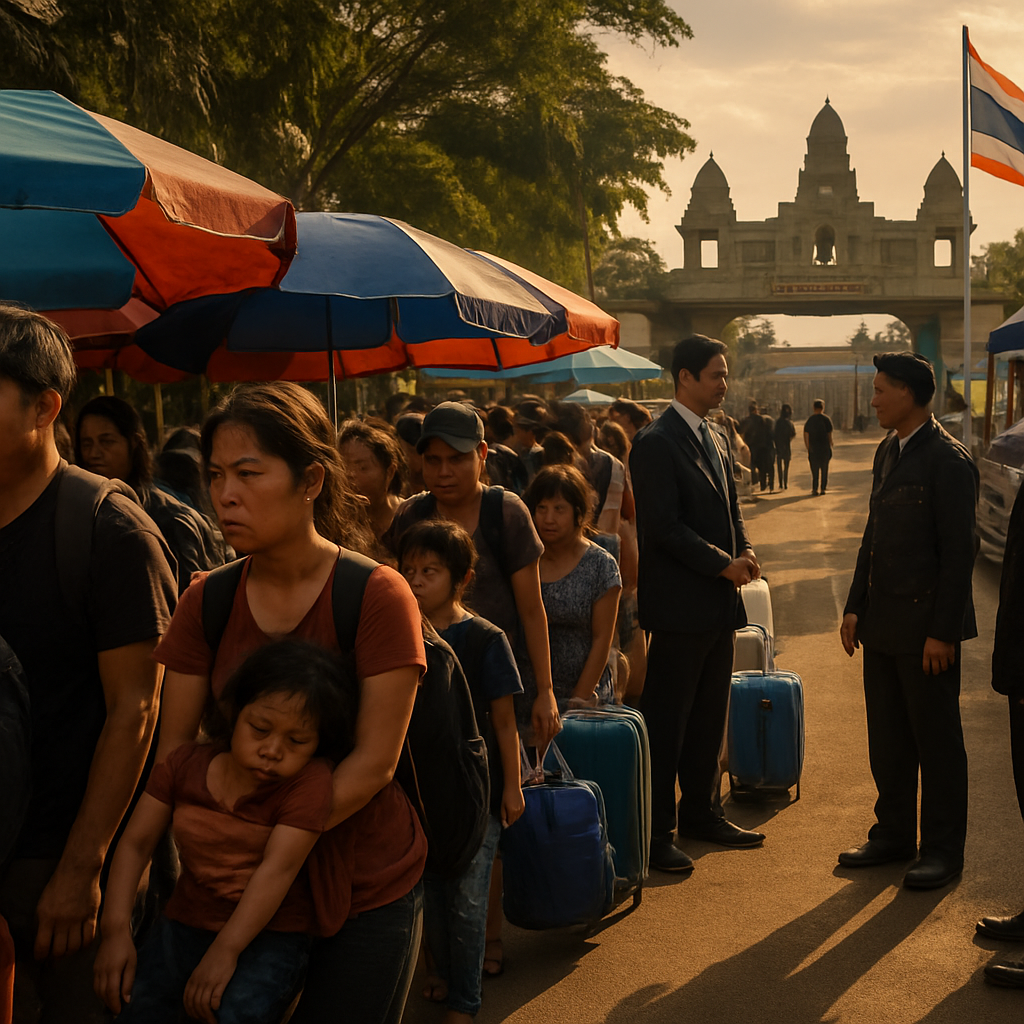
What began as a routine border crossing turned into a tense waiting game at Ban Khlong Luek — and the Royal Thai Embassy in Phnom Penh didn’t waste time sounding the alarm. An urgent letter was dispatched to Cambodia’s Ministry of Interior after reports surfaced that Thai nationals in Cambodia were being prevented from re-entering Thailand through the Sa Kaeo checkpoint. The episode, unfolding in early December 2025, has become another fraught chapter in the already strained Thai–Cambodian border story.
Checkpoint drama: Thai nationals stuck, unanswered questions
On Wednesday, December 11, Thai-Cambodian Border Coordination officials told Thai PBS that Cambodian authorities at Ban Khlong Luek had stopped Thai citizens from crossing back into Thailand. At the time, no official reason was given for the restriction — just confusion, uncertainty and long lines of travelers stuck on one side of the line.
Adding fuel to the fire, relatives waiting with the stranded Thais told Channel 3 that Cambodian officials allegedly demanded 12,500 baht per person to allow passage. That claim — explosive and costly if true — has not been officially confirmed by Cambodian authorities, and the allegation has only deepened public concern and diplomatic urgency.
How we got here: security measures and repatriations
The standoff didn’t occur in isolation. It came on the heels of stepped-up security along the Thai–Cambodian frontier amid escalating bilateral tensions. On December 10, Thai authorities ordered Cambodian nationals in Thailand to return to Cambodia, citing security concerns after alleging some individuals were gathering military-related information and acting as informants. The mass repatriation process moved quickly: according to The Standard, 7,118 Cambodian nationals had already returned home as part of that operation.
In response to reports that Thai citizens were being blocked from returning home, Thai authorities paused further repatriations of Cambodian nationals from Thailand — a tit-for-tat freeze that underscored how fast border incidents can ripple into diplomatic actions.
Embassy steps in — a plea for cooperation
The Royal Thai Embassy in Phnom Penh escalated the matter formally, sending an urgent communication to Cambodia’s Interior Ministry. The letter made two key asks: allow Thai nationals currently living and working in Poipet to cross via Ban Khlong Luek, and ensure the crossings happen safely and without obstruction. In short, it requested clear cooperation so citizens from both sides wouldn’t be left in limbo.
As of the latest updates, Cambodian authorities had not provided an official response to the embassy’s request. That silence left many Thais waiting at the checkpoint, anxious and unsure when — or if — they would be allowed to return home.
How many people are affected?
Numbers matter in cases like this. While just over 7,100 Cambodians have reportedly returned already, estimates suggest between 7,000 and 8,000 Thai citizens currently remain in Cambodia awaiting assistance to cross back. That’s a substantial cohort — families, workers, perhaps even people with urgent medical or personal commitments — all hoping for a swift resolution.
What’s next?
At the moment, the situation hangs on diplomatic channels. The Royal Thai Embassy’s formal plea to Cambodia’s Ministry of Interior is an obvious next step, but what follows depends on the Cambodian response and whether both sides can re-open the Ban Khlong Luek passage without further conditions or fees.
For travelers and families caught in the middle, practical advice is simple but vital: stay updated through official embassy channels, document interactions at the checkpoint (photos, time stamps, names where possible), and seek consular assistance early. If the allegation of extortion is true, those records could be crucial evidence.
A reminder that borders are more than lines
Beyond the immediate human stakes, the incident is a reminder that borders are sensitive seams in international relations. Security concerns, local enforcement decisions, and diplomatic responses all combine to shape outcomes — often in unpredictable ways. For now, whether Ban Khlong Luek re-opens smoothly or remains a bottleneck will depend on swift, transparent communication between Phnom Penh and Bangkok.
Until then, thousands of people wait, embassies coordinate, and the region watches closely. When crossings are blocked, the implications ripple wide — from family reunions delayed to economic hardship for cross-border workers. Everyone involved will be hoping the next update brings clarity, not more questions.
Photo credits: ThaiRath; Facebook/กองทัพภาคที่ 1

















This sounds like blatant extortion at an international border and the Thai government should not stand for it. Thousands of families are being punished because of diplomatic posturing, and that is unacceptable. Phnom Penh and Bangkok need to sort this without using migrants as bargaining chips.
I don’t trust either side, honestly. It could be opportunistic local officials using the tension to make money, and nobody will be held accountable.
Local officials do this all the time, sadly.
Before we jump to conclusions we need verifiable evidence; accusations can inflame an already delicate diplomatic situation. If extortion occurred, coordinated consular documentation and timely publication of affidavits will matter more than social media claims. The embassy’s formal letter is the right first move from a procedural standpoint.
Procedures are fine but people waiting in the cold need concrete action now, not academic caution.
I agree with Dr. Karen that evidence matters, but insisting on proof shouldn’t delay protective measures for stranded citizens. The government can set up temporary safe transit points while investigations happen.
This is another sign that borders are being weaponized in politics. Using people as leverage is inhumane and will hurt ordinary workers the most.
Most of the stranded are laborers with families back home; they didn’t ask to be part of diplomacy. The embassy should bus them to other crossings if Ban Khlong Luek is closed.
Redirecting is costly and chaotic, but better than letting people rot at the checkpoint. Still, where’s accountability for whoever demanded money?
Accountability is the hard part; both countries will likely blame lower-level staff while higher-ups avoid responsibility. We need press freedom to follow up on receipts and witness statements.
7,000 to 8,000 Thais stuck is not a small number — this could become a humanitarian crisis fast. Medical needs, children, and wages lost add up, and fast solutions matter more than statements.
Exactly, imagine someone needing insulin or a job contract that starts next week. Bureaucracy kills in these moments.
If the embassy coordinated temporary medical support and temporary transit letters, some suffering could be avoided. Quick consular clinics at the border would help triage urgent cases.
Temporary clinics are great but who pays? NGOs have limited reach at sensitive borders.
If the 12,500 baht demand is true, that’s theft on a grand scale and borders are turning into toll booths. This needs video, timestamps, and diplomatic pressure now.
Collect evidence and lodge formal complaints with international bodies; also file cases domestically if Thai citizens were coerced. Legal action could force transparency.
Filing helps, but legal processes are slow; people at the checkpoint need immediate relief too.
My cousin is one of the people stuck and it’s heartbreaking to watch from afar. How can governments be so cold when their citizens are trapped and scared?
Emotional appeals are important, but we also need to understand the strategic context: how intelligence concerns and past incidents shaped these security moves. Still, security must not equal collective punishment.
I understand strategy, but where does empathy come in? Strategy without humanity is just cruelty.
This is scary. My mom says we should always help people, not block them.
Empathy is fine, but national security is tricky; if agents were spying, governments have a duty to act. The problem is that civilians shouldn’t be the ones paying for intelligence mistakes.
The embassy asked Cambodia to allow crossings and ensure safety; that’s basic diplomacy. I just hope they also give clear phone numbers and shelter info to those waiting.
If Cambodia is restricting crossings then maybe they have legitimate security concerns. We shouldn’t automatically call everything extortion without knowing the full picture.
That line of thinking easily becomes xenophobic policy: ‘security concerns’ often masks discrimination and abuse. Demand evidence, not excuses.
I want evidence too, but I also want calm. Panicking on social media won’t help solve real threats.
Balancing security and humanitarian obligations is complex; states can restrict movement under certain threats but they must follow international norms and provide due process.
People at the checkpoint should document everything: names, times, photos, and any money requests. Those records will be critical if an investigation happens.
I was stuck at a closed crossing once and the lack of documentation made it impossible to prove extortion. Please collect evidence and share it with consular staff immediately.
Yes, and use multiple channels: embassy email, social media with timestamps, and local NGOs to avoid losing a paper trail.
From an international law perspective, closing a border to citizens of the adjacent state raises questions about non-refoulement and the right of nationals to return. That right is generally protected, so arbitrary blocking could violate customary obligations.
Could Thailand lodge a case at ASEAN forums or use diplomatic protection to assert the right to entry? There are precedents for consular intervention.
ASEAN mechanisms are politically driven and often slow, but diplomatic protection, public international law claims, and bilateral negotiations remain the strongest tools here.
Always feels like the little guy gets crushed. Rich politicians play chess while workers pay the toll. Someone should face consequences.
Consequences? Good luck. These systems protect themselves; any scapegoat will be a low-level officer while the rest smile.
Might be cynical, but we can at least push for transparency and solidarity with the stranded people.